Saturday, July 27, 2013

Art in the heat

Shanghai 上海 continues to be scorching. Yesterday (Friday) the mercury hit 40.6°C (105°F), and today the temperature felt very similar. Coming from the Sacramento valley, I'm used to 100-plus degree summers (it was around 105 when we were in Davis a few weeks ago), but that was a dry heat. Shanghai isn't dry; the humidity here is heavy, and after a just a few minutes walking outside, I find myself drenched in sweat. And, unfortunately, the spell of blue skies that greeted our arrival earlier this month has been replaced by what I expected the atmosphere to be like in China - the air quality index maintained by the US consulate here is now in the "unhealthy" category, and today was the first smoggy day since getting here 22 days ago. The worst is yet to come, of course, though people say Shanghai is nothing like Beijing 北京. Stay tuned...

So on days like this, when you don't want to stay home (especially when you're still by yourself) but you don't want to be out in the heat, humidity and pollution, indoor activities are the thing to do. And while you miss your little girl terribly and can't wait for her to come back from spending time with the Taiwanese side of the family, you know this is a rare chance to do something that would probably bore a seven year-old. And so I ventured out this morning, riding the Metro to People's Square station 人民广场站 (the busiest in all of China) so as to visit the Shanghai Museum 上海博物馆, the city's premier cultural attraction:


The design is supposedly based on a ding 鼎, a "an ancient Chinese vessel shape, a cauldron with legs, a lid and two facing handles", according to Wikipedia. The resemblance is there, but the impact of the building's design isn't enough to clearly mark it from all the other structures that dominate the Shanghai skyline. Still, the museum has five things going for it: 1.) admission is free; 2.) it's air-conditioned; 3.) non-flash photography is allowed; and 4.) most displays are captioned in English (rental audio guides are also available, though I preferred to discover things on my own). And 5.) the collection is interesting, and worth seeing. Following a long wait outside in the heat while the security check proceeded at its own leisurely pace, once indoors (and in the air-conditioning) I made my way to the first-floor gallery of bronzes. Many of the ornamental cooking and drinking implements, weapons and bells on display (none of them were meant for daily use, as far as my untrained eye could tell) were over 2000 years old. Though oxidization has deprived them of their original colors, they were still impressive. A few personal highlights:


An ox-shaped wine urn


Another drinking vessel, this one shaped like a dragon 


I'm not sure what this was, but it had tigers for handles and eight yaks on the lid. I remember it dated from the Han dynasty 汉朝.

From the bronze gallery, I walked to the other side of the floor to check out the sculpture gallery, consisting mainly of Buddhist religious figures, as well as this cute dog:


This was virtually the first time for me in Shanghai to see anything related to religion - unlike Taiwan, there are hardly any temples to be seen, at least in the areas of the city I've been to so far. Much of the statuary on display was similar in appearance, but a few stood out:


A couple of giant heads, dating from the Tang dynasty 唐朝


A pair of wooden figurines, looking almost coquettish

Next, I ventured to the second floor, pausing for an ice cream break in the cafe there. Suitably rested, it was time to see what the ceramics gallery had to offer the (un)discerning eye. Despite the chest-thumping about porcelain having been invented in China, this was one of the more interesting galleries. The tomb guardians were a popular sight...:


...though perhaps a little too popular:


In contrast to the multicolored creatures above, the Song 宋朝 and Ming 明朝 dynasty pots were much more restrained:


The highlight of the third floor for me was the painting gallery, especially as I decided to pass on the calligraphy and carved seal rooms:


Landscapes, unsurprisingly, made up the majority of the scroll paintings. It was hard to reconcile the idyllic natural scenes on display at the museum with the reality of modern-day China to be seen outside the museum.


Birds and Flowers in Spring  春禽花木图轴, by Bian Jingzhao 边景昭 (early 15th century)

How to view a vertical scroll painting (though a steadier gaze than what you see here is highly recommended). This one is called Sight-seeing of Autumn Mountain 秋山旅览图卷, done in the 16-century by Wen Boren 文伯仁 :


On to the fourth and top floor, and the gallery on China's minority peoples. There are 55 recognized minority groups in China, 54 on the mainland and "one" on Taiwan (more on that later). The wording on the introduction to the gallery might imply that they are all part of "China", but from the clothing, lacquerware and other items on display, it's clear that many of these peoples have cultures very distinct from the majority Han 汉族. It's also clear that at 93% of the population, the Han are obviously running the show, as the Tibetans and Uighurs could probably tell you. And considering the nature of my new line of work, this is probably all I should say on this matter. Enjoy some photos:


A suit made from salmon (as in the fish) made by the Hezhen people of northeast China
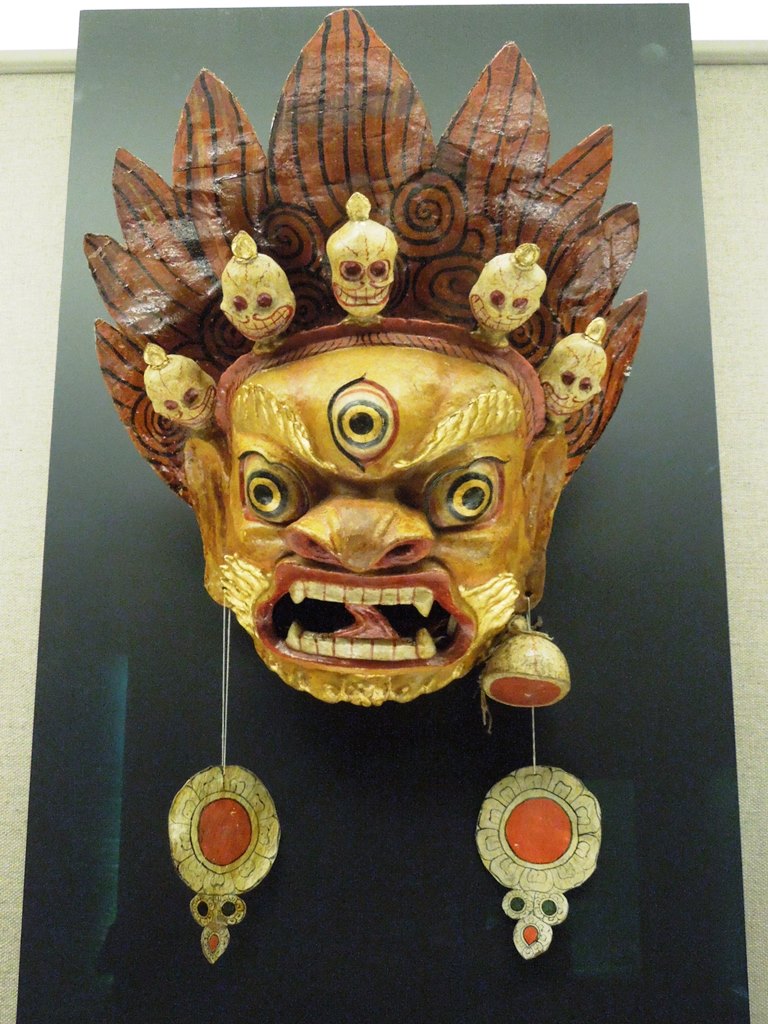

A rather intimidating mask from Tibet


Examples of lacquer 漆 made by the Yi (who also live in Vietnam and Thailand) on the top, and by the Dai below.


Anyone who has spent time on Taiwan might recognize these boats. Even if you haven't been to Lanyu (Orchid) Island 蘭嶼 (and I haven't), you've probably seen these traditional boats of the Tao people in tourist literature. Here's the interesting part: according to the caption at the Shanghai Museum, these fishing canoes were carved by the "Gaoshan" 高山族 people. Who are the Gaoshan? According to the Chinese government, the 14 aboriginal groups on Taiwan (as recognized by the Republic of China 中華民國 government) are all one minority grouping dubbed the "high mountain ethnic group". And, again, I probably should shut up at this point, and move on...

...to the furniture gallery, the last exhibition room I checked out the museum (I passed on the jade gallery, which is also on the top floor). I'm not the biggest fan of Chinese furniture, having always found it to be too heavy to move and uncomfortable to sit on, opinions formed from first-hand experience living in Taiwan. As works of fine craftsmanship, however, the Ming and Qing  清朝 pieces were things to be admired:


And that was it for my morning and afternoon at the Shanghai Museum. The obvious comparison is with Taipei's 台北 National Palace Museum 故宮博物院, but I find the two buildings difficult to compare, and not for diplomatic reasons. The last time I visited the Gù​gōng​ Bó​wù​yuàn was in 2001/2002, and the museum has undergone a major revamping since then. Also, to be honest, I don't really know enough about Chinese art to judge one collection over the other (I'm a greater admirer of Japanese art), except to say the museum in Taipei has a much larger and broader collection. Suffice it to say, if you have any interest in the traditional arts and crafts of China and you find yourself in Taipei, you should visit the National Palace Museum. The same goes if you come to Shanghai - make some time to see the Shanghai Museum. Just be sure to get there in the morning so that you don't have to wait too long outside to get through the security check.


Lunch in the restaurant on the ground floor of the Shanghai Museum. A plate of shrimp, egg and rice, plus a can of Tsingtao Beer  青岛啤酒 was only 48 yuan ($7.80). The beer itself was only 10 yuan ($1.60).
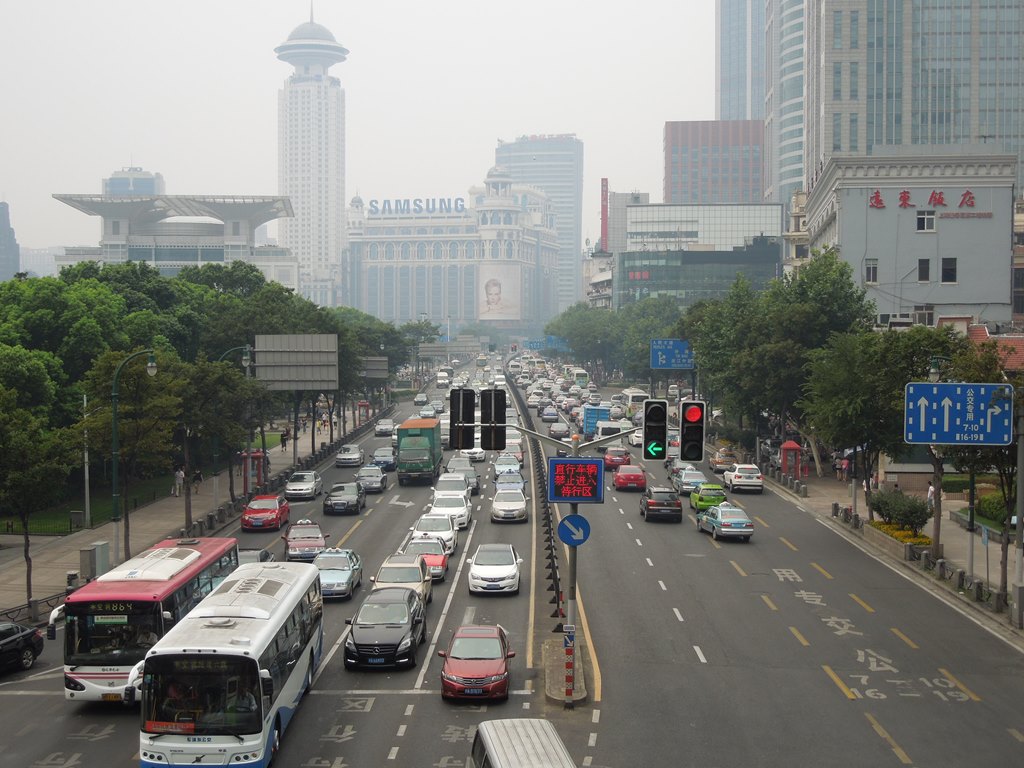

South Xizang Road 西藏南路 ("Xizang" is the Mandarin name for Tibet). Note the air quality.


Had I not eaten lunch inside the museum, I could've found something to eat on Yunnan Road Food Street.


Saturday, July 20, 2013

Self-Bunding

Two observations so far about life in Shanghai 上海:

1.) I'm lonely. Amber and Pamela are currently in Taiwan visiting the family there, and won't be back until the first week of August, shortly before my daughter starts her new school. I'm glad they're able to spend time with the folks on Formosa, but the house feels empty without them here. 

2.) I'm sweaty. We're in the midst of a heat wave, with the temperature today (according to the Shanghai Daily newspaper, which I've started a subscription to) reaching 35°C (95°F), though it felt much hotter this afternoon. And that's not to mention the humidity, which is seemingly as high as the temperature. Today was one of the sweatiest days ever for me, and that was without doing anything other than the simple act of walking around outdoors.

Despite the heat outside and our personal effects currently piled away in the living room and awaiting some kind of sorting and distribution throughout the house, I decided to check out more of Shanghai's Bund 外滩 area, the former International Settlement that is now the city's premier sightseeing spot and home to its finest (albeit Western-style) architecture. I actually began the day north of the Bund, getting out of the Tiantong Road Metro station 天潼路站 (and right into the heat) and making the short walk to the Main Post Office 国际邮局:


The building has been used as a post office ever since it was built in 1931. It's a striking structure, but that wasn't the reason for going there. On the second floor is the free-of-charge Post Museum 邮政博物馆. Actually, philately wasn't the reason, either - what drew me there was the prospect of getting a great view of the Bund from the rooftop garden. Alas, the roof area was under renovation and thus closed off, but the displays inside the museum were interesting. Best of all, it was air-conditioned.


A rare stamp issued (and then withdrawn) during the Cultural Revolution 文化大革命. On display in a special climate-controlled room were stamps put out between 1888 and 1978, with one glaring gap in the timeline - the 1960's.


The interior of the Post Museum. On the floor was an example of a mail train car, which had samples of letters being sent all over China...including Taiwan.

From the Post Museum, I crossed Suzhou Creek and entered the Bund (again; see last week). Following lunch in an air-conditioned Subway, I checked out the exterior of the former British Consulate (1873):


The old building is now some kind of private club and while the grounds are open to the public, white and black-shirted guards keep an eye on you as walk by the expensive luxury cars parked inside. The atmosphere was more than a little intimidating, while everything seemed a little, um, suspicious. The darker side of Shanghai appears to have taken over what the Brits left behind.


The former consul's residence (1884) was also well-guarded

Walking out of the consulate grounds, I came across a couple more examples of the bad old days (for the Chinese, of course):


The former Shanghai Rowing Club, built in 1905, used to have a swimming pool as well as docks for tying up the rowboats. Today it's a teahouse.


The former Union Church, dating from 1886

The street next to the church, Yuanmingyuan Road 圆明园路 was lined with both historic buildings and security guards. They didn't bother me while I was taking pictures (it is a public street, after all), but their presence was still a disturbing sign of the New China.


The China Baptist Publication Society building (1932) 


The Italian Renaissance-style Lyceum Building, finished in 1927


The Missions Building (1924)


The YWCA Building (1932)


The Yuanmingyuan Apartments, the date of which I forgot to note at the time, but thanks to Google, I now know is 1934.

Unfortunately, the 1933 Royal Asiatic Society Building was covered up in scaffolding. I couldn't find an entrance to check out the Rockbund Art Museum 外滩美术馆 housed inside, which I had wanted to visit today. Another time perhaps. 

There is a lot more to the Bund than what I've seen so far, but I decided to leave it for another day and walked over to Nanjing East Road 南京东路, stopping en route to practice my bad Mandarin with a couple from Shandong Province  山东省, who had asked me to take their picture. Instead of doing the sensible thing and heading home via the Metro, I made the stupid decision to see how far it was on foot from there to Nanjing West Road Station 南京西路站, the closest Metro stop to where I work. Dumb because I wasn't properly dressed for the weather (I was wearing a heavy pair of jeans as all my shorts and sandals are still waiting to be unpacked), and because it was damned hot and humid. This was the point where my shirt became drenched in sweat as I walked along the pedestrian walkway between Nanjing East Road 南京东路站 and People's Square 人民广场站 Metro stations.


I now know where single men can easily find female company. Walking along Nanjing Road, I was constantly being approached by people asking me if I wanted a "massage", with a couple of them also mentioning "girls". One, er, "recruiter" even tried to give me his card in case I changed my mind, though when I told him my wife wouldn't like that, he seemed to accept that as a reasonable excuse. Though I didn't get any massages or girls, I did discover the not-so-imaginatively named Foreign Language Bookstore 上海外文书店 (Communists were never known for their clever marketing strategies) a few blocks away on Fuzhou Road 福州路. Four floors of English-language titles (plus a Japanese section), including a ground-floor section devoted to books on China, mean I'll probably be back several times during the next couple of years.


The end (or beginning, depending on your perspective) of Nanjing Road's pedestrian-only zone, as seen from the entrance to the People's Square Metro station. From here, I continued to plod on, stopping to have a Tiger Beer at a bar called Windows Garage, a happy-hour bargain at only 15 RMB ($2.40). As wasn't the case with the Post Museum rooftop garden and the Rockbund Art Museum, this time my timing was good.


The interior of the Westgate Mall. The visa section where I now work is located in the same complex. The shopping center is full of high-end designer-brand outlets, but were empty despite the number of shoppers inside (most of them checking out Isetan 伊勢丹 Department Store, which anchors the mall). As a colleague explained it to me earlier, building owners make their money from apartments and condos, with store rents being surprisingly reasonable. As a result, foreign designers open up shops in these complexes knowing they aren't going to sell anything, looking at these outlets as a way of getting themselves noticed in China. Chinese consumers prefer to go overseas to buy their 名牌产品, the cost being cheaper than back home thanks to China's high tariffs. No wonder we're so eager to issue visas to Chinese tourists.

Next weekend I hope to do some more exploring. I also hope to be better prepared for the heat.


Saturday, July 13, 2013

Welcome to Shanghai: The Bund

Taiwan: China under Japanese management.

A strange statement to begin my first blog entry regarding life in Shanghai 上海, but that was one of the first impressions that formed in my mind soon after we arrived on the afternoon of July 5, and made our way to our new home. I can't claim credit for the above observation as I'd read it online somewhere a long time ago and had dismissed it at the time as being somewhat ridiculous. Now, however, I'm starting to see it makes a certain amount of sense. Compared to what I've seen so far, Taiwan is far more organized, and the standards of service much higher (at least in terms of politeness), compared to this side of the Taiwan Strait. It'll be interesting to see how my perception of Formosa will have changed (and I'm sure it will have) the next time I visit there.

But that's there and we're here, and it's been over a week now. Things have been busy, of course, which is to be expected when settling into a new lifestyle, a new job and a new country. There's so much to learn about visa work, and at this point I can't imagine how I'm going to remember it all, but hopefully I'll get the hang of it once I'm on the visa line. For now, though, I'm still in training, taking it all in and trying to remember the Chinese I've somehow forgotten since passing my Mandarin test back in late June.

Amber and Pamela are also in the process of getting settled in, though next week the two of them will return to Taiwan for about three weeks to see the family there before coming back to Shanghai next month. Amber will start school here in early August, and hopefully she'll quickly make some new friends. For now, we're waiting for the bulk of our stuff to arrive from the U.S. so we can stop living out of our suitcases (though the girls will continue to do just that while they're in Taiwan).

Today (Saturday) was the first day for us to venture out of our neighborhood (or workplaces, in my case) and do some sightseeing in China's commercial capital. Our initial foray naturally had to be to the Bund 外摊, site of Shanghai's former International Settlement and home to a number of European buildings. Though the history of this area is one of humiliation for most Chinese, the buildings were surprisingly left alone during the Cultural Revolution and today the Bund is home to fancy restaurants and high-end stores. It's also a popular sightseeing spot for Chinese tourists, so the three of us certainly didn't lack for company while we wandered around the area.


When in Rome, do as the Shanghainese. In this case, it meant wandering along the waterfront next to the Huangpu River 黄埔江 up to Huangpu Park 黄埔公园, supposedly the site of the infamous "No dogs or Chinese" sign that every Chinese fervently believes existed (it didn't, though Chinese other than servants initially weren't allowed into the British-administered park). And, of course, Amber and I had to have our photo taken with the Pudong  浦东 area in the background.


Another view looking across the river to Pudong. The building on the far left is the iconic Oriental Pearl Tower. I'm sure we'll check it out at some point during our two-year stay here. The clouds in the sky are the result of an approaching typhoon, which is predicted to miss Shanghai, but will unfortunately probably result in some destruction in the region south of the city.


This Art Deco monstrosity is the Broadway Mansions 上海大厦, built in 1933, at which time it was the highest building in Asia. Located across Suzhou Creek via Waibaidu Bridge 外白渡桥, it was initially an apartment building but now operates as a hotel.


Hideous though it may be on the outside, the interior of the Broadway Mansions was actually not too bad, as we took an elevator to the top floor (the 18th) to admire the view of the Bund.


Back at ground level, we walked over to the nearby Astor House Hotel 浦江饭店 (built in 1846, enlarged in 1910). Back in it's early 20th-century heyday, this hotel saw such famous guests as Charlie Chaplin, Albert Einstein and even a young Zhou Enlai 周恩来. Here, Amber stands next to some mannequins modeling qipao 旗袍.


While admiring the lobby of the hotel, we took our first steps toward becoming Old China Hands by purchasing some items from one of the gift shops inside. We hadn't planned on doing so, but the shop was in the process of liquidating its stock before closing at the end of this month, and the prices were just too good to pass up.


Back in the Bund proper, I took this photo looking across Suzhou Creek. The white edifice is the Russian Consulate. Unlike the American Consulate, the Russians work out of a far more accessible building. Thanks to the worldwide popularity of American foreign policy, our diplomats tend to labor in far-more fortified compounds than the foreign legations of those of our friends (and other countries). Behind the Russian Consulate building is the Pujiang Hotel.


Amber poses for a picture inside the Peninsula Hotel, one of the newer (and swankier) buildings along the Bund. While the restaurant was busy with customers enjoying their afternoon tea, the ritzy shops filled with designer brands were largely empty. I've only been here just over a week, but I've already noticed that Shanghai's top-end stores, while numerous, seem to be largely devoid of customers. Apparently, it's much cheaper for Chinese to travel overseas and buy name-brand items, a fact the U.S. government is only all too happy to take advantage of, which is why I'm probably going to be approving the vast majority of the visa applicants I'll eventually be interviewing.


No. 27 on the Bund was once the base of Jardine Matheson, a trading house with a history in Shanghai going back to the Opium War.


No. 24 used to be the Yokohama Bank, but is now a branch of the Industrial and Commercial Bank of China. A careful look above the windows reveals the chrysanthemum symbol of the Japanese Imperial House. Considering the feelings of many Chinese toward their neighbor to the east, I'm surprised they haven't been removed from the exterior.


Next door at No. 23 is the Bank of China, built in 1937 in the Chicago school style of architecture but with a Chinese-style roof.


Amber stands opposite the Peace Hotel 和平饭店, which was once the Cathay Hotel. It's also known as Sassoon House, after Victor Sassoon, whose family was the major player in Shanghai's International Settlement in the early years of the 20th century. The interior is supposedly well-worth checking out, but it was getting late in the afternoon, so we decided to head back along Nanjing East Road 南京东路 to the subway station of the same name. The Bund continues on beyond the Peace Hotel, but we didn't want to see or do too much our first time out sightseeing in Shanghai.


Before heading home, we had dinner and took a walk along the pedestrian-only street in the area around the Metro station. Bee Cheng Hiang is a Singaporean foodstuffs company that has a number of retail outlets in Taiwan. Next to it (but almost impossible to see in the picture) is a shop selling Taiwanese snacks. Taiwanese street food and drinks appear to be popular in Shanghai, as we've seen several such places even in the area where we live. I've yet to find a milk tea that could match the taste of Balance, however.