Wednesday, September 3, 2014

Laboring in Xi'an - Part 2: Terracotta Warriors

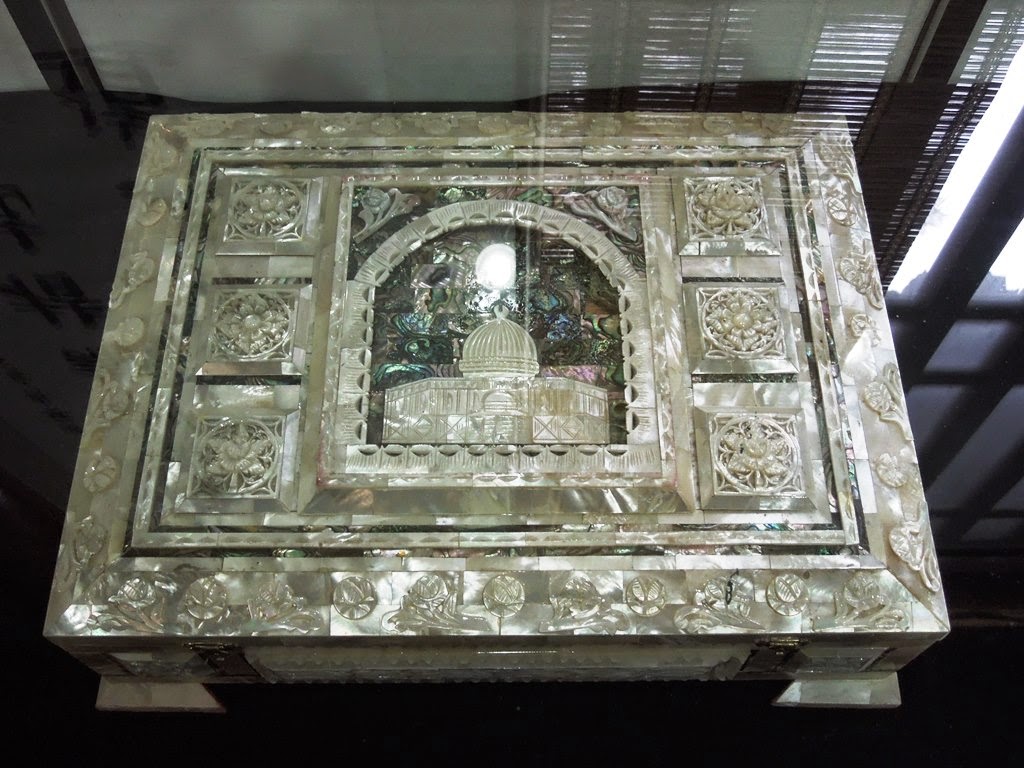
My daughter poses by one of her favorite artworks in the hallway of the Sofitel Hotel

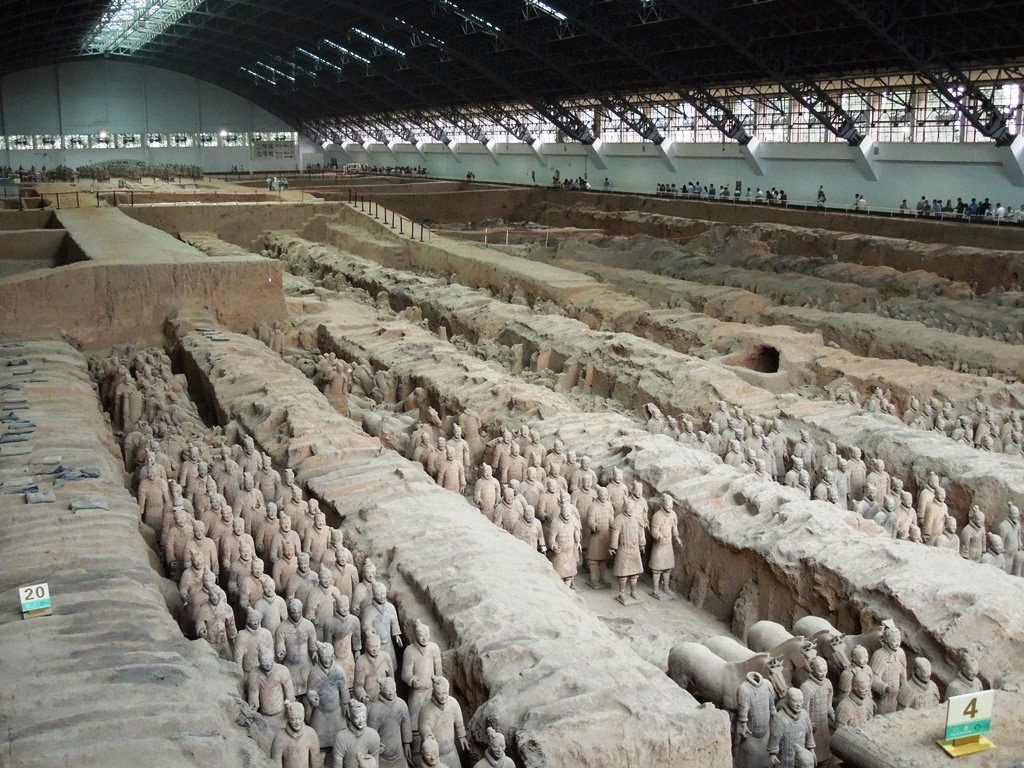
The Army of Terracotta Warriors 兵马佣: of course you know what I'm talking about. Who hasn't heard of the Terracotta Army, those 8000 statues that stood guard of the tomb of the first emperor of China, the tyrant Qín Shĭ Huáng 始皇帝, remaining unknown to the outside world for more than 2000 years until they were discovered by farmers drilling for a well in 1974. It's been said many times that no two clay soldiers are alike. The Terracotta Army is definitely one of the world's premier archaeological sites, and you would be foolish to travel to Xī'ān 西安 and not make the effort to see it. We were not fools.

The scenery has changed somewhat since Qin Shi Huang's time

Hiring a driver for the morning and afternoon, we set off for the site outside the city. Like the Forbidden City and the Great Wall, the Army of Terracotta Warriors does not disappoint. Without further ado, I present you with the Emperor's tomb and his warriors:


We started off by checking out Pit 3, the smallest of the three vaults open for public viewing. It contains 72 warriors and horses, and apparently served as the field headquarters for the clay army.


Many of the statues had broken apart or had been decapitated, but were no less impressive.


Pit 2 was larger, with 1300 warriors and horses, but much of the vault is still encased in dirt, waiting to be excavated. Many of the figures were broken or smashed.


Five of the warriors are displayed in individual cases, giving visitors the chance to admire up close the astonishing craftsmanship and attention to detail. It should be noted that the soldiers were originally painted in bright colors, but the paint has almost all flaked off, with only traces remaining on some of the statues.


Weapons excavated from the tomb are also on display in Pit 2


Yang Shihua, one of the farmers who discovered the army, was supposedly on hand to autograph souvenir coffee table books. In China, you can never be too sure what (or who) is genuine. That didn't stop us from buying a book and having him sign it, however.


Finally, Pit 1 - the huge aircraft hanger housing upwards of 2000 soldiers. It was an amazing scene.


As you walk around the vault, you can see the army arrayed in formation as if it were preparing to go into battle, or to be reviewed by its sovereign. 


By her own count, Amber took almost sixty pictures at the three vaults


Like the Forbidden City and the Great Wall, the Terracotta Army shows the Chinese fascination with large-scale projects requiring enormous amounts of human labor. Probably the most amazing fact about the warriors is that their existence was able to remain hidden from view for so long. 


A pair of bronze chariots and their horses and drivers are on display in an adjacent museum.


After all that clay, it was time for lunch, washed down with a couple of bottles of Hans Beer, brewed locally in Xi'an under the auspices of the Tsingtao Brewery.


While the Army of Terracotta Warriors didn't fail to impress, the same couldn't be said of the Tomb of Qin Shi Huang 亲始皇陵. Located about 2 kilometers west of where the Terracotta soldiers were found, the mausoleum hasn't yet been excavated, meaning all there is to see is a small hill. Still, admission is free with the Terracotta Warrior ticket, so...


Pamela buys some pomegranates, a local specialty


Had we more had more time and better weather conditions, we could've rented some bicycles and ridden along the top of some of Xi'an's 14th-century Ming-dynasty city walls.


Back at the hotel and time for a quick dip in the (cold) swimming pool...


...then it was off in a three-wheeled motorized pedicab to Xi'an's Muslim Quarter for dinner.


Dinner was more an exercise in snacking as we feasted on kebabs, dumplings, quail eggs and ròujiāmó 肉夹镆, fried beef in pita bread.


Xiyang Shi Jie and Beiyuanmen were thronged with visitors checking out the action


The Drum Tower 鼓楼 (top) and Bell Tower 钟楼 (middle and bottom) were beautifully illuminated. Xi'an is a city that definitely looks better in the night light.


Walking back to the Sofitel, my wife had to stop for some stinky tofu 臭豆腐, which she inexplicably pronounced as being delicious.


Tuesday, September 2, 2014

Laboring in Xi'an - Part 1

The Bell Tower 钟楼

Xī'ān 西安 - a city once known as Cháng'ān 长安, back in the days when it was the terminus of the fabled Silk Road and one of the Four Great Ancient Capitals of China. Nowadays, Xi'an is a provincial capital home to 6.5 million people, and is like many Chinese cities - congested, dirty, noisy, polluted and just plain ugly in many parts. But within its still-standing ancient city walls are several sites that evoke a China of days gone by, while beyond the city limits lie the Army of the Terracotta Warriors and other relics of the imperial past. For anyone spending time in China, or just traveling through, Xi'an is a worthwhile stop, one that we found time for during this just completed (U.S.) Labor Day holiday weekend.

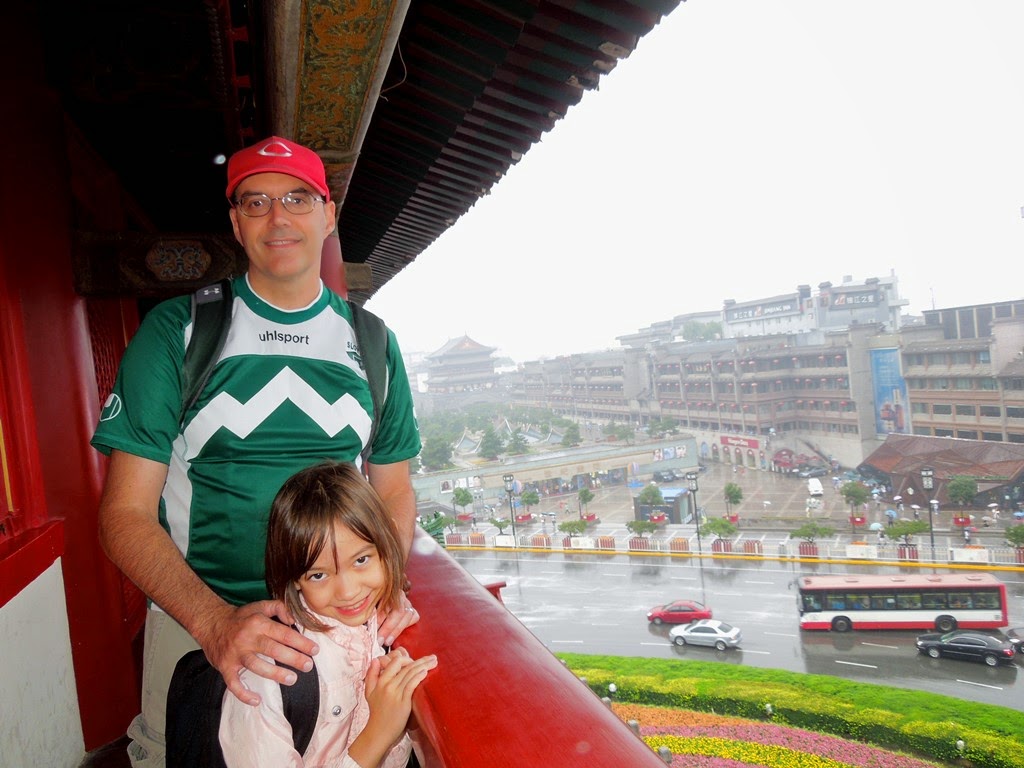
We flew into Xi'an late on Friday evening and took a taxi to our hotel, the Sofitel. On Saturday morning, we awoke to the rain that would last throughout the day, putting a damper on our sightseeing to some extent, but at the same time cleansing the air of Xi'an's notorious (even by Chinese standards) smog. First stop on our itinerary was the Bell Tower (pictured above). Originally built in the 14th century (and rebuilt in the 18th), it was once home to a large bell that was rung at dawn each day. Even in the rain, the views from the tower were impressive:


Looking down Bĕi Dàjiē  北大街


Our next destination - the Drum Tower 鼓楼


The South Gate, part of the 14-kilometer (8.7 miles) perimeter of the old city walls surrounding Xi'an


Father and daughter take in the view

Inside the Bell Tower, there was a short musical performance, one of six given daily:


The Drum Tower was just a short walk away. Finished around the same time as the Bell Tower, it was used to house the drum that marked each nightfall. We arrived just in time to see another performance:


Once the drumming display was over, we checked out the inside and outside:


Different kinds of drums were on display (当然!)


The rain was really coming down at this point


Looking down on the Muslim Quarter, home to the predominantly Muslim ethnic group known as the Hui  خُوِذُو / حواري.


Mother and daughter take in the view


From the Drum Tower, we descended into the Muslim Quarter. The covered alley was full of stalls selling tourist crap, but at least we weren't being rained on. On the other hand, our feet still got soaked wading through some deep puddles. The effort was worth it, however, as came to the Great Mosque 清真大寺, one of the largest in China. It was an oasis of calm and contemplation from the chaos just outside its walls. 


The first mosque I've ever visited looked very Chinese in its design and layout...


...but the Arab influence could be seen in places


The giant Prayer Hall was not open to visitors (read non-Muslims) demonstrating once again the inclusiveness that is the hallmark of the major Western religions, but it was still an impressive structure. Plus it was possible to get a peak of the interior. 


Leaving the house of worship behind, it was time to descend back into the Muslim Quarter and sample some the eats the Hui like to dine on...


Lunch consisted of noodles, kebabs and naan bread, washed down with an Ice Peak orange soda (very halal, I'm sure). It all tasted good, but my infidel intestines were to pay a heavy price later that afternoon.


Pamela bought some tasty nut cakes for dessert


Beiyuanmen, the street that runs through the Muslim Quarter, is lined with Muslim restaurants and the usual souvenir shops.


Back at the traffic circle surrounding the Bell Tower, we flagged down a taxi to go to our next destination, the Big Goose Pagoda 大雁塔. Xi'an's traffic is a nightmare of clogged streets, honking horns and insane drivers...like our cabbie. 


The pagoda sits within the precincts of Dàcíēn Sì temple, Xi'an's largest, first established in 647. The pagoda was built at the behest of Xuánzàng 玄奘, a 7th-century Buddhist monk who traveled to India and returned to China carrying a treasure trove of Buddhist texts. The brick pagoda was erected as a fireproof storehouse for these sutras. The seven-story-high tower stands over 60 meters (nearly 200 feet) tall.


The views from the top floor were worth the hike up


The area around the temple has been developed into a large tourist shopping mall, with souvenir stores, cafes and restaurants all catering to the non-spiritual needs of the tour bus visitors. A big draw is the large fountain behind the temple, where a nightly musical show pulls in the visitors.


Dacien Si and the Big Goose Pagoda were the end of our sightseeing activities. We had trouble finding a taxi willing to take us back to our hotel, but a private vehicle soon pulled up to the curb and offered to take us anywhere in the city for 30 RMB ($4.90). Despite the fact that as part of our outreach program I've been warning American visitors to Shánghăi 上海 of the risks of taking such "black taxis", my wife immediately said yes and hopped in. In any event, we found ourselves back at our hotel, where we relaxed for the rest of the evening after having dinner in preparation for the next day's journey to see the Terracotta Warriors.