Sunday, November 27, 2016

Going Dutch - the second day

Rembrandt's "The Night Watch" (1642) at the Rijksmuseum 

With just one full day on our brief visit devoted to seeing (a few of) the sights of Amsterdam, the question was where to go first. Perhaps inspired by the fact that we had spent the night in the Vermeer Room at the Hotel Brouwer, the decision was made to see some of the works of the noted Dutch masters, and that meant paying a visit to the city's famed Rijksmuseum (National Museum), "the Netherlands' premier art trove" (according to Lonely Planet). So following breakfast, we took a walk along the Singel canal in the direction of the museum. Some of the houses have a distinct tilt to them:


Blessed are the cheesemakers...:


If the exterior of the Rijksmuseum bears a resemblance to a certain central train station in Amsterdam, it's because both buildings were designed by the same architect, Pierre Cuypers:


The museum was opened in 1885. It holds more than 7500 works of art displayed in over 1.5 kilometers of galleries. In other words, there's a lot to see. Crowds must be horrendous in the summer, but in late November we were able to get tickets without having to wait in line. We began in the Asian Pavilion:


The massive Battle of Waterloo by Jan Willem Pieneman (1824), depicting the Duke of Wellington receiving the news that the Prussians are on their way:


A mock-up of the Dutch trading post on the artificial island of Dejima 出島, which was located in the bay of Nagasaki 長崎. From 1641 to 1853, the Netherlands was the only Western nation permitted to trade directly with Japan during the Edo period 江戸時代:


There were three prints by Vincent Van Gogh on display at the Rijskmuseum, which went a little way toward making up for the fact that we didn't have time to visit the nearby Van Gogh Museum (more on that later). Self-Portrait with Grey Felt Hat (1886-7):


I neglected to note the titles of the other two works, however, but here they are:


The main reason to visit the Rijksmuseum, of course, is to see the works from the Dutch Golden Age, such as The Milkmaid (1657 or 1658) by Johannes Vermeer:


Woman in Blue Reading a Letter (1663-4), also by Vermeer, a reproduction of which was hanging on the wall of our hotel room (we were staying in the Vermeer Room, after all):


The Merry Family (1668), Jan Steen:


The Jewish Bride (1667), Rembrandt:


And, of course, Company of Frans Banning Cocq, or as it's better known these days, The Night Watch. The popularity of Rembrandt's masterpiece meant that it was difficult to get a shot without the admiring crowds:


The amazing library:


A view of the outside from one of the upper-floor windows:


An intricately-detailed dollhouse:


Two examples of Delftware with Chinese themes. The Dutch, of course, played a major role (albeit a not always positive one) in the early development of Taiwan through their colonization of Formosa from 1624 to 1662:


Having lunch at a restaurant down the street from the Rijskmuseum and discussing where to go next. I was hoping to visit the Van Gogh Museum, but the girls had had enough masterpieces for one afternoon, with my wife claiming not to understand "Western art". Amber, to her credit, expressed an interest in traveling to Den Haag in order to see Vermeer's Girl with a Pearl Earring at the Mauritshuis museum (and I would've liked to have seen the Escher in Het Paleis Museum to see the works of one of my favorite artists, MC Esher), but our itinerary was such that it wasn't possible on this trip:


And so the decision was made (by my daughter) that we should next visit KattenKabinet (Cat Cabinet), an offbeat museum devoted to cats in art. The collection is housed in a building dating from 1667, and was founded by financier Bob Meijer in 1990 in memory of his red tomcat John Pierpoint Morgan III. The presence of three very much alive felines complemented the artistic renditions:


In the KattenKabinet's collection can be found Picasso's Le Chat...:


...and a small etching by none other than Rembrandt, entitled Madonna with Child, Cat and Snake (1654):


The KattenKabinet is located in a neighborhood known as the Golden Bend (Gouden Bocht), which Lonely Planet describes as "the most prestigious stretch of real estate in Amsterdam, a monument to the Golden Age, when precious goods swelled in cellars of homes already stuffed with valuables. The richest Amsterdammers lived and ruled their affairs from here.":


We took a walk around the neighborhood near the Golden Bend, where I purchased a new raincoat for more euros than I care to admit (our trip to the Netherlands served as a reminder of how relatively cheap it is to eat out and shop in Lithuania!), before returning to the Hotel Brouwer:


After dinner, Shu-E wanted to wash her hair and relax in the room, so Amber and I strolled over to the Dam, in Amsterdam's central square, dominated by the massive Royal Palace (Koninklijk Paleis), to admire the evening lights in the cold night air:


Amsterdam is one of those intriguing cities in which we only had time to scratch the surface of what there is to see and do. I wouldn't hesitate to put it on the list of places to return to someday, though my wife didn't seem to share my enthusiasm (she preferred Maastricht, not to mention the Dutch countryside):


Dutch treat:


Going Dutch - the first day

The view from our room at the Hotel Brouwer

Thanksgiving - a time for American families to get together over a sumptuous turkey feast...or an opportunity to take the week off from work and do some traveling. Which explains why my family and I have just returned from a six-night sojourn to the Netherlands, which began the previous Sunday morning with our arrival from Vilnius first at Amsterdam Airport Schiphol, and then at Amsterdam Centraal station. The exterior of the station is a Gothic/Renaissance Revival beauty completed in 1889, and the influence on Tokyo Station 東京駅 was immediately obvious:


Our home in Amsterdam was the Hotel Brouwer, where we stayed three nights. A short walk from Amsterdam Centraal, the hotel occupies a house that dates back to 1652. All the rooms are named after famous Dutch painters (ours was Vermeer) and have views overlooking the Singel, one of the city's numerous canals (see above). To reach our floor, we had a choice of using a tiny elevator or going up and down a narrow spiral staircase:


After checking in and dropping off our bags, it was time for lunch. Our first choice, the Pancake Bakery, unfortunately had a long queue of diners standing outside in the cold and the rain, so we retreated to a nearby Dutch/Indian cafe, where I lunched on uitsmijter, fried eggs placed on bread over ham:


We finished lunch, and then walked over to the Anne Frank Huis, arriving with a few minutes to spare before our reserved 1:15pm time slot (before 3pm, tickets must be pre-purchased online for a specific time period; after three, tickets can be purchased at the door but the lines to enter can be long). A good thing, too, for while the rain had stopped, the wind started blowing with a typhoon-like intensity. My portable umbrella was rendered useless by the gusts, which didn't stop someone from making off with it while we were touring the house (the joke was on them). As for the museum, we all know the story of Anne Frank and what eventually befell her and the rest of her family hiding out in the secret annex (her father Otto was the only one to survive the camps), but seeing the reconstruction of the bedroom where Anne wrote her diary, and the actual book itself (sitting in a glass case; no photography permitted inside the museum) is still an extremely moving experience. My daughter is familiar with the tale, but hadn't read the diary, so we bought a copy for her from the gift shop:


Needing to see beauty after the Anne Frank Huis, we crossed the Prinsengracht canal and made our way over to the small but very informative Amsterdam Tulip Museum, where I was surprised to learn the country's national flower isn't native to the Netherlands (it originates from Central Asia). Though small, the displays cover not only the history of tulip cultivation (including the notorious episode of tulip mania in 1637), but also goes in depth on the particulars. Everything is rounded off, of course, with a well-stocked gift shop, though my wife somehow managed to fight the urge to buy some bulbs to bring home (though she did end up purchasing a flower holder at the airport this morning before boarding our flight back to Vilnius):


Crossing back over the Prinsengracht from the tulip museum. In the background can be seen the Anne Frank Huis and the Westerkerk church:


When in Amsterdam, do as the tourists, so we finished the afternoon by taking an hour-long boat ride through some of the city's World Heritage site canals, passing numerous houseboats, bridges, cafes and shops along the way:


We had dinner at an Argentinian steak house near the Westerkerk before returning to the Hotel Brouwer. It had been a long day (having woken up at five am in order to catch our early-morning flight to Amsterdam), so it was early to bed, but not before taking in the night view of the Singel canal from our room:


Dutch treat:


Saturday, November 19, 2016

Foreign Formosan follies?

I went on a bike ride to the other side of the Neris River this afternoon

The Trump team is starting to take shape, and it's makeup is depressingly unsurprising, including a borderline white supremacist as his senior counselor and chief strategist. In a year in which the British (or to be fair, the English and the Welsh) opted to leave the European Union, at least Americans aren't alone in voting against their best interests. Our Canadian friends have only just recently emerged from nine years of Stephen Harper, while the city of Toronto, of course, had their own Trump-like leader in Rob Ford. Australians, too, have had a run of bad luck in recent years when it comes to prime ministers.

Russian Orthodox church

Taiwan, on the other hand, seems to be doing things right these days. The Kuomintang 國民黨, with its long history of authoritarianism, brutality and corruption, lost both the presidency and its majority in the legislature at the beginning of 2016 as the country selected its first female leader. Many of the Western expats there seem to enjoy life in their adopted homeland, content in the knowledge that a Trump-like figure emerging as a serious presidential candidate would be highly unlikely. But contentment has a way of turning into hubris, and hubris inevitably leads to bitter disappointment and disillusion. Taiwanese voters are not immune when it comes to shooting themselves in the foot, electorally-speaking - they did it in 2008 and 2012, and given the unpredictability of what could happen on the domestic and international fronts in the next four years, who's to say another KMT candidate couldn't convince enough voters to return the party to power in 2020 (or 2024)?

Some neighborhoods in Vilnius appear to have been left behind

But there are facets of life in Taiwan other than politics that could prove disillusioning to the satisfied expat. The health care system is a great value, delivering quality care at low cost. But in an age of declining birth rates and and an aging population, how long can the system continue to function in its present form before cracks start to appear? Already there are surprised gasps coming out of the Taiwanese blogosphere at the images of 10,000 anti-gay rights protesters on the streets of Taipei just as the country is on the verge of becoming the first Asian nation to legalize gay marriage. A mass stabbing spree on the Taipei MRT in 2014 and the beheading of a four year-old girl outside a subway station earlier this year are two incomprehensible acts of violence that sadly remind us that Taiwan is not immune from these kinds of tragedies, yet some people find it difficult to reconcile this reality with the preconceptions that underlie their lives in their homes away from home. A friend wrote on his blog at his relief that Taiwan has strict gun control laws, but isn't that an admission that such restrictions are needed, because of what would be result without them? Another blogger I follow writes often of her admiration for all things Taiwanese and her desire to get Republic of China citizenship, yet bemoans the family-based discriminatory naturalization regulations that make it almost impossible for her to do so, which begs the question: why would anyone want to be a citizen of a country that clearly doesn't want people like him or her to become compatriots instead of remaining as long-term expats?

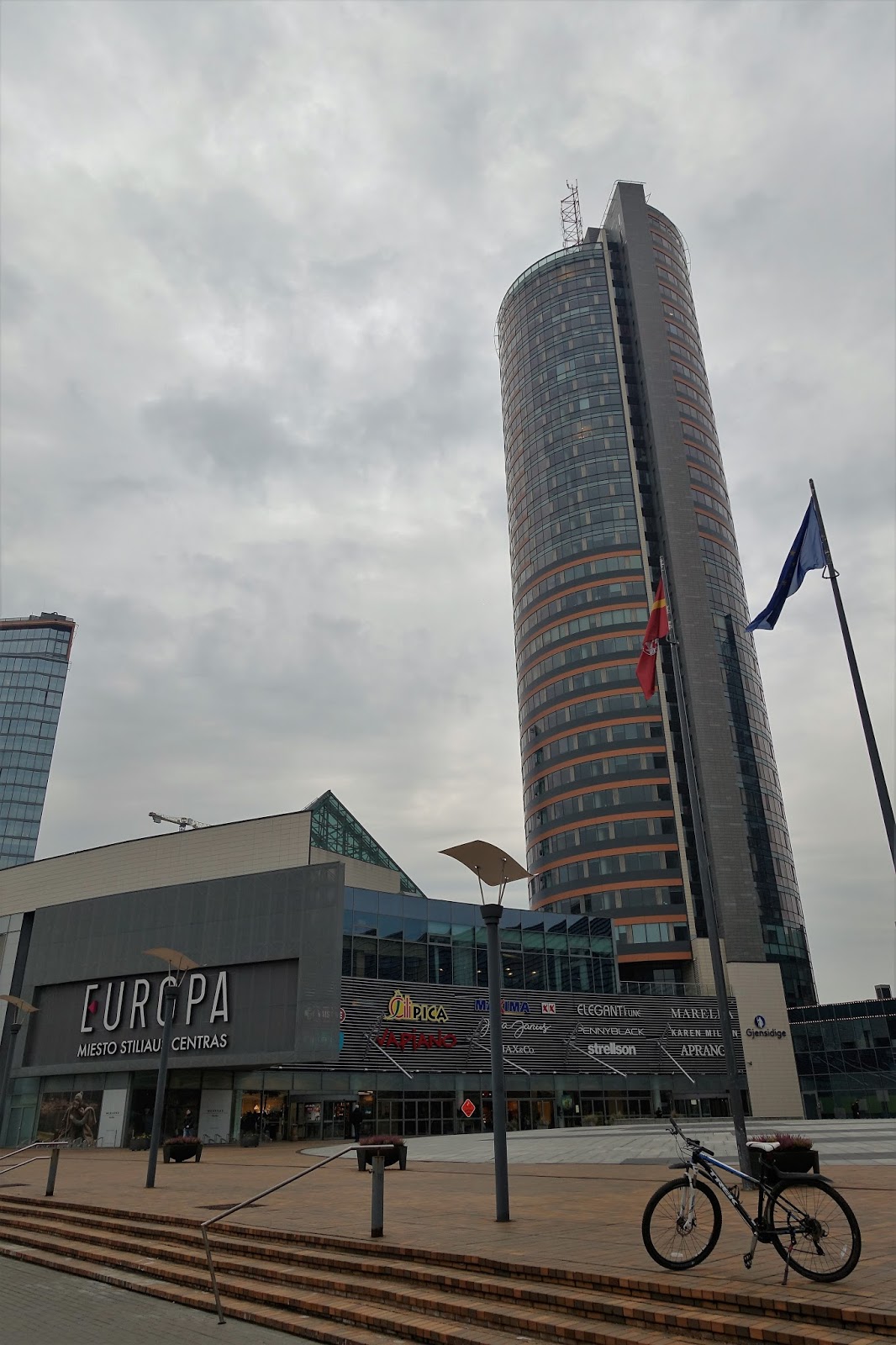
My bike parked outside a shopping mall

The vast majority of contented Westerners in Taiwan live in Taipei, or at least close to the capital city. Taipei would be a fine place to live, I'm sure - great restaurants and nightlife, a relatively cosmopolitan populace and ever-increasing recreational opportunities. But what is true for Taipei is quite often not the case for the rest of the country. And just as Americans in San Francisco and New York were left dumbfounded by what their fellow citizens in between the two coasts voted for in this last election, it certainly could happen that Taiwanese voters in the rest of the island may make choices that leave Taipei-based expats wondering what these people could be thinking.

Another old church (St. Raphael)

Western expats sometimes forget how relatively easy it is to get set up in Taiwan - English-teaching jobs are still plentiful, and while wages have stagnated, teachers are still better-paid than the average Taiwanese worker (though the latter does have some significant economic advantages). People are also generally friendly towards visitors from overseas, which often manifests itself in the delusion among some in the expat community that Taiwanese are somehow uniquely kinder than people in other countries. But this friendliness shown to foreigners masks the very real social tensions that exist in Taiwanese society, while at the same time serving as a reminder to the visitor (even if they don't get it) that they are just that, a temporary guest who can never be a fully-accepted member of the community, no matter how many years they have lived in the country, or whether they have married a local, settled down and started a family.

Stalinism on the other side of the Neris

And then there is the Orientalist factor. After all, would expat life be just as satisfying if the natives were considered to be no different than the folks back in the home country, with the same dreams, frustrations and outlook on life? It's doubtful. What makes living in Taiwan endlessly fascinating is the idea that one has become accepted (albeit to a limited degree) by the locals, while still able to stand back and observe the fascinating goings on. And what's the point of being in Taiwan if you can't explain it to those who couldn't otherwise possibly understand this mysterious, exotic isle? So the expat Facebook user or blogger will zero in on some aspect or another of the local society, be it politics, architecture, food or what have you, and then fend off those whose interpretations of the same subject are somewhat different. But posting dozens and dozens of photos of the same aboriginal festival in a single day on Facebook, for example,  feels uncomfortably voyeuristically creepy, an exaggerated attempt to remind readers and followers that the expat is in a strange land with strange people performing their strange customs, and how fortunate it is for all of us that he or she is there to share it with the rest of the world.

Playing around a bit with the filters

So what's the point of this rant? None, really, other than to remind anyone bothering to read this far that they might be setting themselves up for a disillusioning day of reckoning with reality at some point down the line. Being the jaded cynic that I am, I've managed to avoid that particular pitfall, at least when it comes to my two previous lands of exile, Japan and Taiwan. But what happened in the U.S. was uncomfortably jarring, and reading the at times wishful thinking of friends, acquaintances and almost-complete strangers back in Taiwan makes we wonder if they're only setting themselves up for a bitter fall one of these days.

How the other half lives