The last time we were in the United States for the Thanksgiving holiday, we eschewed the traditional turkey dinner at home and instead took the train to New York for a short holiday (see here and here). This time around wasn't much different. Instead of returning to Gotham City, however, we rode the train to Philadelphia on Thanksgiving Day. I really would like to say only kind words about Amtrak, the national passenger rail service, but the train was more than a half-hour late pulling into Alexandria:

We arrived at Philly's 30th Street Station and its impressive Art Deco main passenger concourse late on Thursday afternoon:


The entire East Coast was feeling the chill on Thanksgiving - the temperature in Philadelphia was a brisk 27° Fahrenheit (-3° Celsius) as we walked from the 5th Street SEPTA station to our hotel. This was the late afternoon view from our room on the top floor of the Wyndham Philadelphia Historic District:


The same view after the sun went down. That's a full moon rising over the Benjamin Franklin Bridge, but you wouldn't know it from the best my camera could do without a tripod:

The camera also couldn't do justice to the massive Art Deco United States Custom House shining brightly in the twilight:

Just as in New York three years previously, we were able to find a table at a nearby restaurant for Thanksgiving, thanks to a list of dining options provided by the hotel cross-referenced with a Google search in our hotel room. My gratitude to Jones for providing me with all the fixings (the girls, however, both chose to have beef brisket. Bloody foreigners...):


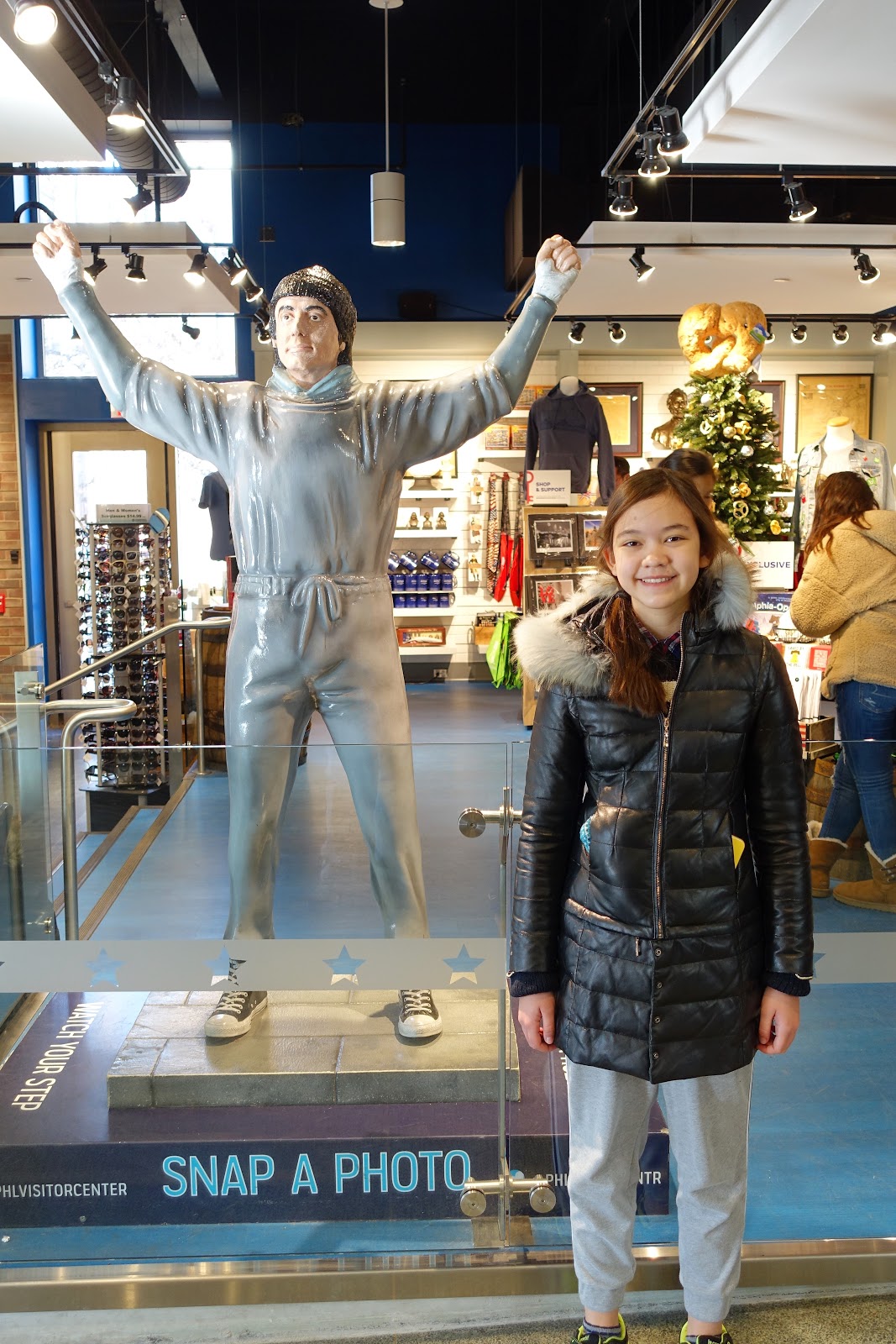
It was an even brisker 19°F (-7°C) outside as we awoke on Friday morning, though it had warmed up to 27°F (-3°C) by the time we had breakfast and left the hotel (the temperature would never get above freezing the entire day). Our first stop was the Independence Visitor Center, in Independence National Historical Park. There, my daughter and I posed with one of Philadelphia's most famous citizens, though we wouldn't have time on this trip to run up the steps of the Philadelphia Museum of Art:

With tickets in hand, the three of us walked over to Independence Hall:

The colonial-era Georgian building began life in 1753 as the Philadelphia State House:

One of the rooms on the ground floor served as a courtroom:

But it was the other room on the first floor that is considered as the birthplace of the American government. It was here that delegates from the original 13 colonies met to approve the Declaration of Independence on July 4, 1776, with the Declaration being read aloud to the public outside in what is now known as Independence Square. And if that wasn't enough, this room was also the site of the Constitutional Convention of 1787, where delegates ended up creating a new U.S. government by agreeing on a Constitution:

As our Park Service guide explained, there are two correct answers to any question about Philadelphia: the Declaration of Independence and Rocky:

An original copy of the Declaration can be viewed in an adjoining building:


Philadelphia was at one time the second-largest city in the British Empire and was a center of opposition to British rule during the American Revolution. It was the capital at the start of the war, and then for a ten-year period from 1790 to 1800 until Washington, D.C. took over. You can visit Congress Hall, and the see the chambers where the House of Representatives...:

...and the Senate met:
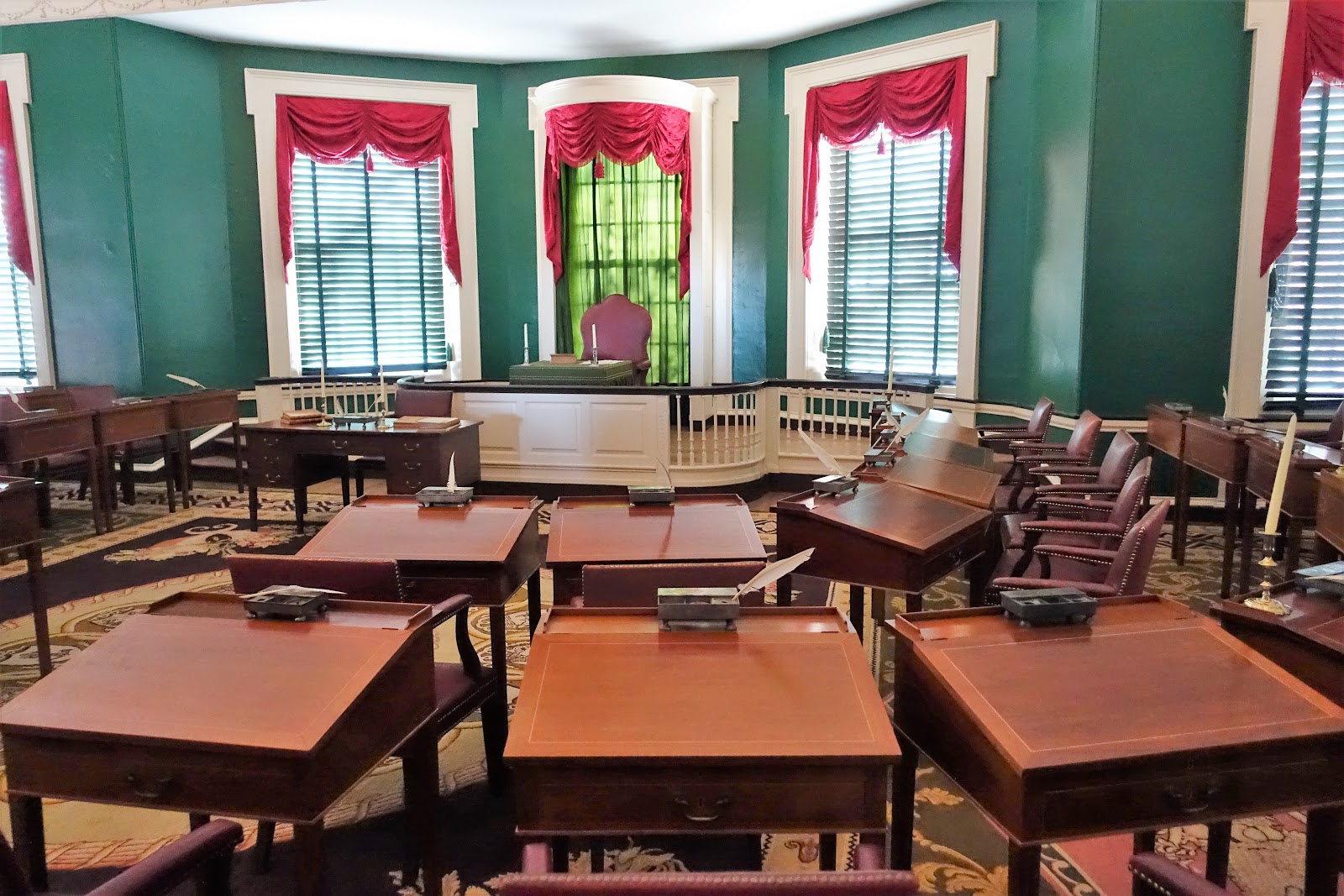

A committee room:

Portraits of Marie Antoinette and Louis XVI, in honor of the assistance given by France during the Revolution. Without French troops and materiel, the colonists wouldn't have prevailed. In the first of many moral compromises that have afflicted U.S. foreign policy over the ensuing centuries, the U.S. government didn't look on too kindly when the French monarchy was overthrown in 1789:


After Independence Hall it was on to see the Liberty Bell. This sign was displayed prominently in the distance as we waited in line at the Liberty Bell Center:

Informative displays on the history and significance of the Bell greet visitors on the way to the icon:


The Liberty Bell, one of the most recognizable symbols of the United States and Philly's top tourist attraction. The 2080 pound (943 kilograms) bell was cast in London in 1751 and hung in the belfry of the Pennsylvania State House across the street, and tolled on important occasions (probably including the first public reading of the Declaration of Independence). The famous crack developed in the 19th century, and the bell became unusable in 1846 after being rung for George Washington's birthday. It was first called the Liberty Bowl by anti-slavery abolitionists in the 1830's:


Independence Hall as seen from inside the Liberty Bell Center:


A closer view of the crack:

After performing our patriotic duty as tourists, it was time for lunch. Heading east from Independence National Historical Park, we passed by the Customs House building, the one seen from our hotel room:

Philadelphia is known, of course, for cheesesteaks. Famous eateries serving up the sandwich include Pat's King of Steaks and Geno's Steaks, but "must eat at" restaurants often mean "must wait for a table", so we ended up at Philly's Gourmet Steaks. For those keeping score at home, I'm drinking a Dogfish Head, not Philly's own Yuengling. I've had it before and wasn't all that impressed:

I soaked up Philly like a sponge:
Back to Independence National Historical Park and the National Constitution Center, with a theater-in-the-round performance that made the governing document interesting, except for my wife, who fell asleep. No photos or videos allowed:

Photography of the exhibits is permitted, however. Here, Amber tries her hand at voting...:


...while I took the Oath of Office for President of the United States:

Former President Jimmy Carter apparently found my choice of wardrobe to be amusing:

My daughter doesn't seem too impressed with the robes Supreme Court justices wear:

My attention was drawn to the Go 囲碁 board made by a "resident" at one of the internment camps where Japanese (and Japanese-Americans) were confined in the hysteria following the attack on Pearl Harbor:

The 14th Amendment, which our current president seems to think can be changed with a flourish of his executive pen:

Signer's Hall contains lifelike bronzes of the signers of the Constitution. Here Amber poses with local hero George Mason, who we were surprised to learn didn't sign the final document:

Yours truly converses with Nicholas Gilman and John Langdon, both of New Hampshire:

Alexander Hamilton all by himself:


State flags are arrayed in order of their ratification of the Constitution. The final flags are those of U.S. territories, the residents of which lack some of the key rights enjoyed by their fellow U.S. citizens:

Independence Hall stands opposite the National Constitution Center:


The rest of the day was Shu-E's, and so we headed to Philadelphia's Chinatown (the fourth-largest in the U.S.). It has been around since the 1860's, but these days many of the residents come from Malaysia, Thailand and Vietnam:

My wife tries out a lychee tea at Vivi. There's a branch very close to our apartment, but the one we went to in Philly had a more extensive menu as well as Mandarin-speaking staff.


My daughter poses with an ornamental plant my wife purchased. Shu-E doesn't know what it's called, but it apparently is very auspicious:

For dinner we went to Empress Garden, which bills itself as a Taiwanese restaurant. "Let's go out for Taiwanese" isn't something you hear very often in the U.S., though I've been to several Taiwanese restaurants in Japan. For the record, Amber had dumplings, Shu-E beef noodles and your humble scribe shrimp fried rice, while all of us shared an oyster omelette 蚵仔煎:

Pennsylvania's confusing alcohol laws (neither the restaurant nor 7-Eleven sold beer) necessitated a long walk to find a liquor store. On the way back to the hotel we walked through Washington Square, with its eerie but poignant Tomb of the Unknown Revolutionary War Soldier:


Independence Hall and the Liberty Bell in the cold night air:


My beer of choice back in the hotel room:

As we had tickets for the 14:18 train back to Alexandria, there was time for a bit of sightseeing on Saturday morning. We headed down to the Penn's Landing waterfront area, passing by the Merchants' Exchange Building:

Looking back as we reach the Delaware River:

Posing with the Ben Franklin Bridge in the background:

The morning belonged to our daughter, and she had chosen the Independence Seaport Museum:

I wasn't very impressed at first with the River Alive! exhibits...:

...but once we moved to the displays on the presence of African-Americans on the Delaware River, beginning with the horrors of slavery, the decision to visit the museum proved to be an educational one:


Amber tries out what it would be like to hide in a cramped box for 18 hours in a bid to reach freedom:

The displays on Philadelphia's maritime history are fascinating:


My daughter did a lot better at steering than she did at raising a sail:


I was interested in this map of Yokohama 横浜 dating from the 1860's:


An exhibit on "Crazy" Eddie Funk, a pioneer American tattoo artist:

We ended our visit to the museum by hopping aboard two ships, the first being the USS Olympia, which served as the flagship for Commodore Dewey in the Battle of Manila Bay in 1898, during the Spanish-American War:


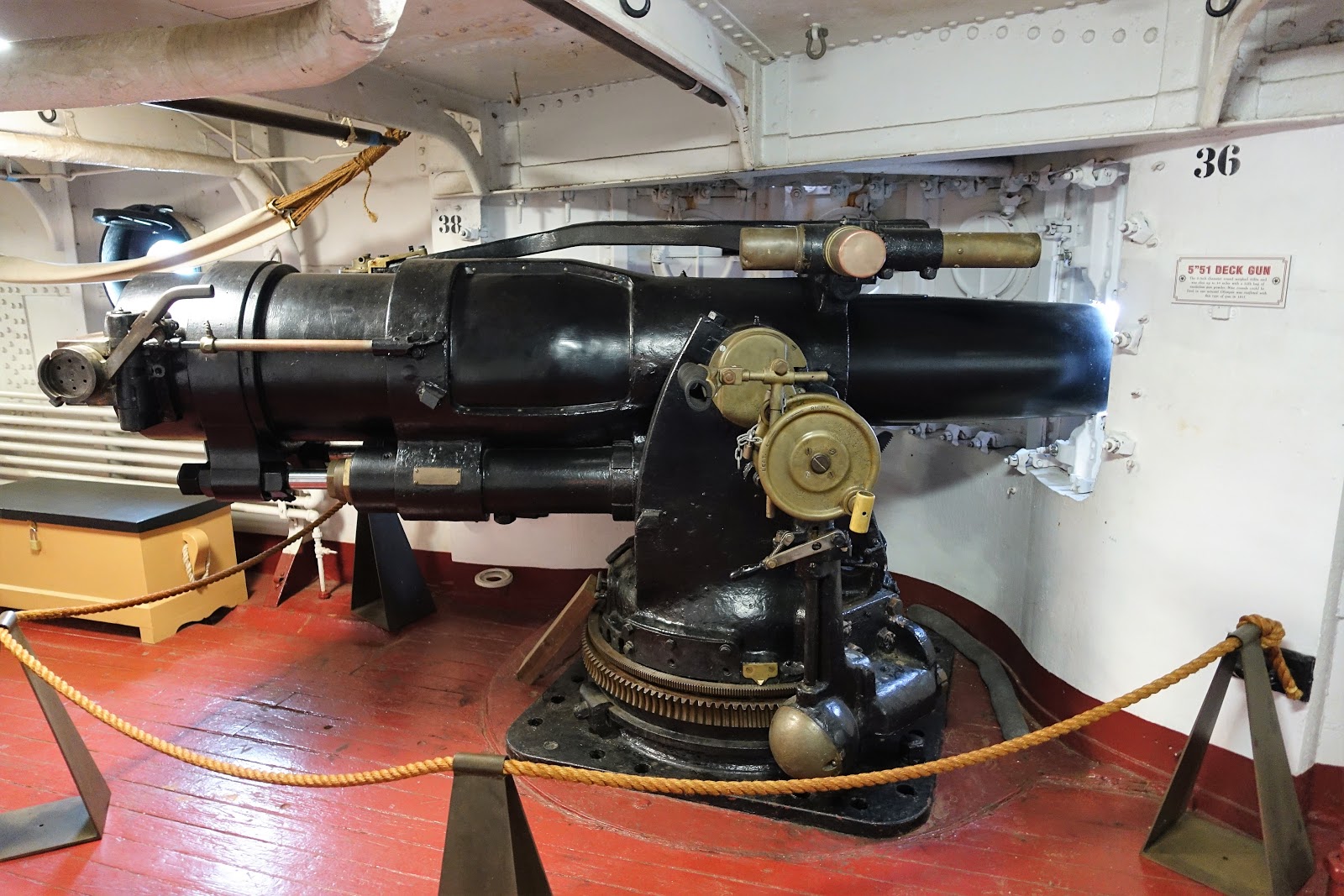
Battle Memorial:


The battleship USS New Jersey, now a floating museum across the Delaware in Camden, New Jersey:


The other ship that can be visited is the submarine USS Becuna. Amber poses in front of the torpedo tubes:


Fighting claustrophobia in the cramped quarters of the sub:


On the way back to the hotel to retrieve our bags, we passed by the Museum of the American Revolution, which only opened in April 2017. By all accounts it sounds like an interesting place to visit, so it's at the top of the list of things to see should we visit Philly again:

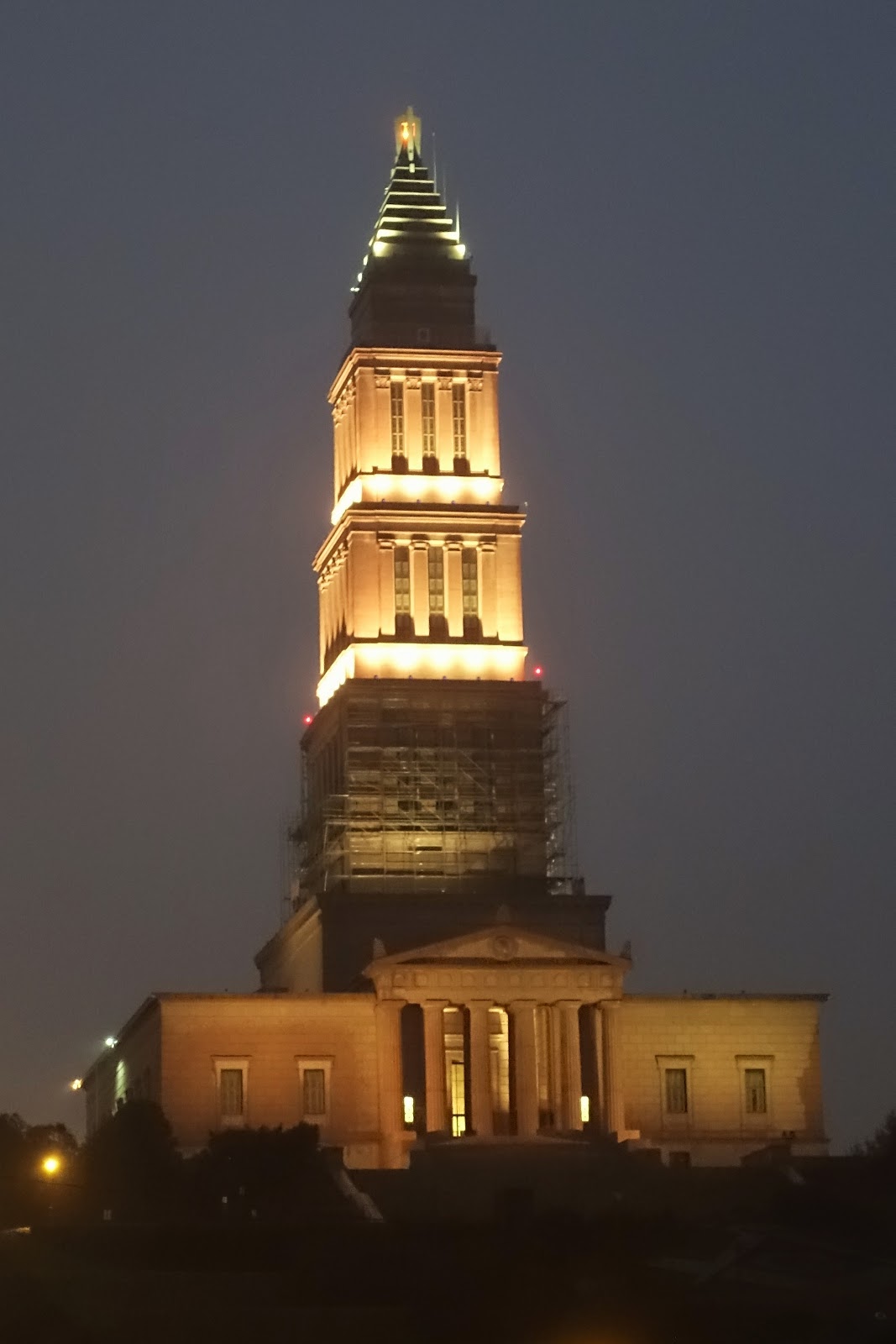
And so we returned to Alexandria in heavy rain on a very crowded Amtrak train, with the three of us having to sit in separate seats until the train emptied out in Washington, D.C. The George Washington Masonic Memorial greeted us as we walked out of the station and got into our Uber:
Philadelphia has a reputation for being on the gritty side, but it was very attractive in the historic section of the city where we stayed. I would like to see more of it, though any future visits might be better made by car than train. If I do go again, I'll fight the urge to do like Sly: