Tuesday, June 24, 2025

Kicking the bucket...list: Day 3 - Reaching Shikoku


Sumiyoshi Taisha 

It was time to leave Ōsaka 大阪 on the morning of my third day in-country, but not before doing a bit of the sightseeing. For decades I was aware of a Shintō shrine 神社 in the city known as Sumiyoshi Taisha 住吉大社, but hadn't given it much thought despite my many visits over the years to Osaka. Recently, however, a blogger I follow online began posting on Facebook numerous photos of the jinja, proclaiming it to be their favorite; interest piqued, I reread my guidebooks and found Sumiyoshi Taisha to be prominently featured. Learning it was only twenty minutes away by streetcar from my hotel sealed the deal, and so after checking out I found myself taking the Hankai Uemachi Line 上町線 from Tennōji-eki-mae 天王寺駅前 to Sumiyoshi 住吉駅:


Founded in the early 3rd century and dedicated to the kami 神 of the sea and sea travel, Sumiyoshi Taisha serves as the head of all the Sumiyoshi jinja in the country. Though the oldest buildings "only" date back to 1810, the present structures are faithful replicas of the originals, showcasing architectural styles that predate the Buddhist architectural forms that would later arrive via China:


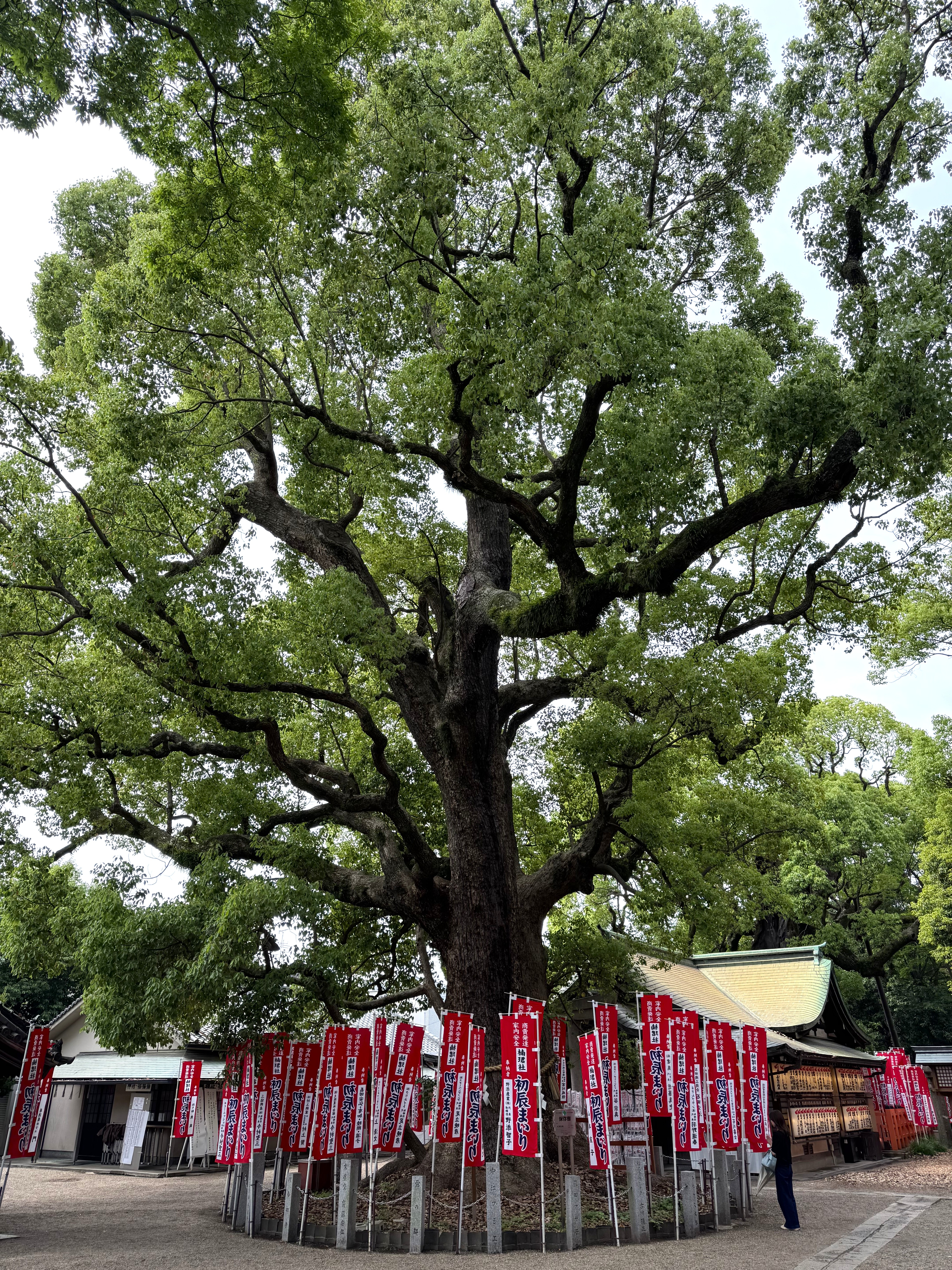
A preserved camphor tree クスノキ 19.8 meters/65 feet high and 7.9 meters/25.9 feet in circumference. Called the "couple kusunoki" 夫婦楠 it's around 800 years old:


All told it was an interesting shrine to visit. However, having stepped foot inside literally thousands of jinja over the decades I wouldn't go so far as to single out any one Shinto shrine as my favorite, and that includes Sumiyoshi Taisha. When it comes to shrines, my preference remains for the smaller, local jinja, with the ones found at the foot of mountains or standing like small islands in the middle of rice paddies being the most atmospheric.

After visiting the shrine, I returned to my hotel to retrieve my bags and then took the subway to Shin-Osaka Station 新大阪駅. With a bit of time to spare before my Shinkansen 新幹線 bullet train would depart, I decamped to a nearby MOS Burger モスバーガー for a quick lunch:


My route had me traveling first on the Shinkansen to Okayama 岡山駅. From there, I changed trains to the Marine Liner マリンライナー rapid service. This was a train that I had taken way, way back in the summer of 1990 when I traveled from Kyōto 京都 to Kotohira 琴平 on the island of Shikoku 四国. With the exception of a day trip I had made to Sakaide 坂出 in late 1997 (also from Okayama), that one night in Kotohira (the purpose of which was to visit Kompira-san 金刀比羅宮) had been the only time I had set foot on Shikoku prior to this trip: 


This craft beer I purchased in-between trains at Okayama Station helped set the mood:


The Marine Liner takes travelers over the Seto Inland Sea 瀬戸内海 via the massive Great Seto Bridge 瀬戸大橋. Completed in 1988 the 13.1 kilometer (8.1 miles)-long bridge was the first rail/road connection between the islands of Honshū 本州 and Shikoku. I remember well the great fanfare the accompanied the opening of the link; I also recall feeling disappointed that I couldn't see much from the train as I made my way to Shikoku that August in 1990. The view is still restricted but I did take some short videos (plus a few photos) as the train made its way to the smallest of Japan's four major islands: 


And so it was that in the middle of the afternoon on my third day in Japan I arrived at my first stop on Shikoku, the city of Takamatsu 高松 (population 414,000), capital of Kagawa Prefecture 香川県 (one of the four that constitute the administrative makeup of the island). The momentous occasion was celebrated with a snack break at the station's Mister Donut ミスタードーナツ outlet, to which I would return several times during my four-night stay in the city:


The view from my room on the eighth floor of the Takamatsu Tokyu REI Hotel: 


With time remaining in the afternoon before the first dinner pangs would be felt, I made my way from the hotel back to the station area, and to the Takamatsu Symbol Tower 高松シンボルタワー, where I checked out the (free) views from the 29th and 30th floors: 


The views from the equally free outdoor terrace on the 8th floor were also pretty nice (as well as a haven for local smokers):


Back on the ground I went for a walk where I was reminded Takamatsu is a port city:


Kitahama Alley 北浜アリー is a former warehouse district that has been converted to a shopping center of cafes, galleries, shops and the like, but most of the businesses were closed: 


Probably the first of the countless number of udon うどん restaurants that I would come across in Shikoku. By far the most popular dish on the island, I would find myself at times while driving desperately looking for something other than these noodles to eat for lunch:


Feeling tired at the end of a busy day, for dinner I settled on a Matsuya 松屋 gyūdon 牛丼 restaurant near the hotel, completing a Japanese fast-food triumvirate that began with MOS Burger and included Mister Donut. Dinner when traveling solo in Japan can be a challenge at times, as many restaurants in the evenings are filled with couples, coworkers, families, friends or other such groupings, making the lone diner stand out (especially when that person is a foreigner). Which is where chain restaurants like Matsuya step in to feed the hungry traveler:


The Matsuya was located in the Hyōgomachi shopping arcade 兵庫町商店街, one of at least eight in the city, and Takamatsu lays claim to having the longest shōtengai in the country. Covered shopping arcades are a vestige of an earlier time in Japan, and I would come across several while traveling through Shikoku. Sadly, most of them have clearly seen better times, though the reason this particular shopping street looked quiet was probably due to the fact it was a Tuesday evening:


And so my first evening on Shikoku ended quietly as I did laundry back at the hotel. The next three days would be spent exploring Takamatsu and some of its surrounds, before I would rent a car and began a circuit of Shikoku that would last for 2½ weeks. 

Tomorrow I would visit Yashima 屋島...


Saturday, June 21, 2025

Kicking the bucket...list: Days 1 & 2 - the journey begins


The view of Osaka from the Harukas 300 observation desk 

The journey for me started the day before the U.S. Memorial Day holiday, as I flew from Beijing Capital International Airport 北京首都国际机场 on an Air China flight to Kansai International Airport 関西国際空港, landing at the not at all unreasonable hour of 15:30, and subsequently checking into my accommodations (the Hotel Trusty Osaka Abeno ホテルトラスティ大阪阿倍野, close to Tennōji Station 天王寺駅) well before dinner time. In the days prior to my departure stories had been circulating on social media of foreigners canceling their visits to Japan because of a devastating earthquake prediction made in an obscure graphic novel twenty-six years ago, but unfortunately all I could see during my short stay in Ōsaka 大阪 were the continuing signs of the record-breaking numbers to tourists traveling Japan's golden route. To which I have to reluctantly admit is a problem I was now a part of. 

For my first meal in-country I treated myself to some Naniwa pork tonkatsu なにわポークロースとんかつ at a restaurant in the nearby Abeno Q's MALL あべのキューズモール:


And then after dinner I did something that I hadn't done in more than twenty-five years - have a beer at a HUB. Years ago the HUB chain was the cheap pub of choice for legions of yen-pinching Eikaiwa 英会話 teachers like myself looking to meet up with friends (usually fellow gaijin 外人) while eyeing the young women also out enjoying an evening refreshment. Either times have changed or HUB has revamped its image, because at the Abeno branch at least there were few obvious English teachers in attendance: 


After dinner and the digestif I went for a short walk in the area around the hotel. From one of the pedestrian overpasses I spied the Tsūten-kaku 通天閣 off in the distance, which I'd visited back before the dawn of civilization, otherwise known as the winter of 1991-2. Going for a walk in the neighborhood around the tower, Shin-Sekai 新世界, was (and remains) the only time I've ever felt uncomfortable in Japan. At that time the streets around Shin-Sekai were still areas of flophouses and seedy businesses catering to a floating population of day laborers. While I wasn't overtly threatened, the looks I was being given by the rough-looking men drinking cheap sake 日本酒 on the street corners made it clear I wasn't welcome. Since then it's apparently become a "must-visit" area, which is all the more the pity:


This particular Japanese journey began in earnest the following day, with a train trip from Tennoji Station to Asuka 飛鳥, a semi-rural village in Nara Prefecture 奈良県 that was once a cultural and political center of the emerging Yamato 大和 polity. Asuka is home to some of Japan's best-preserved kofun 古墳, tombs built for emperors and high-ranking nobles between the 3rd and 7th centuries. Asuka is also the site of the country's first Buddhist temple. The best way to take in these sights is on a bicycle, so I rented a bike for the day from a shop outside the train station:


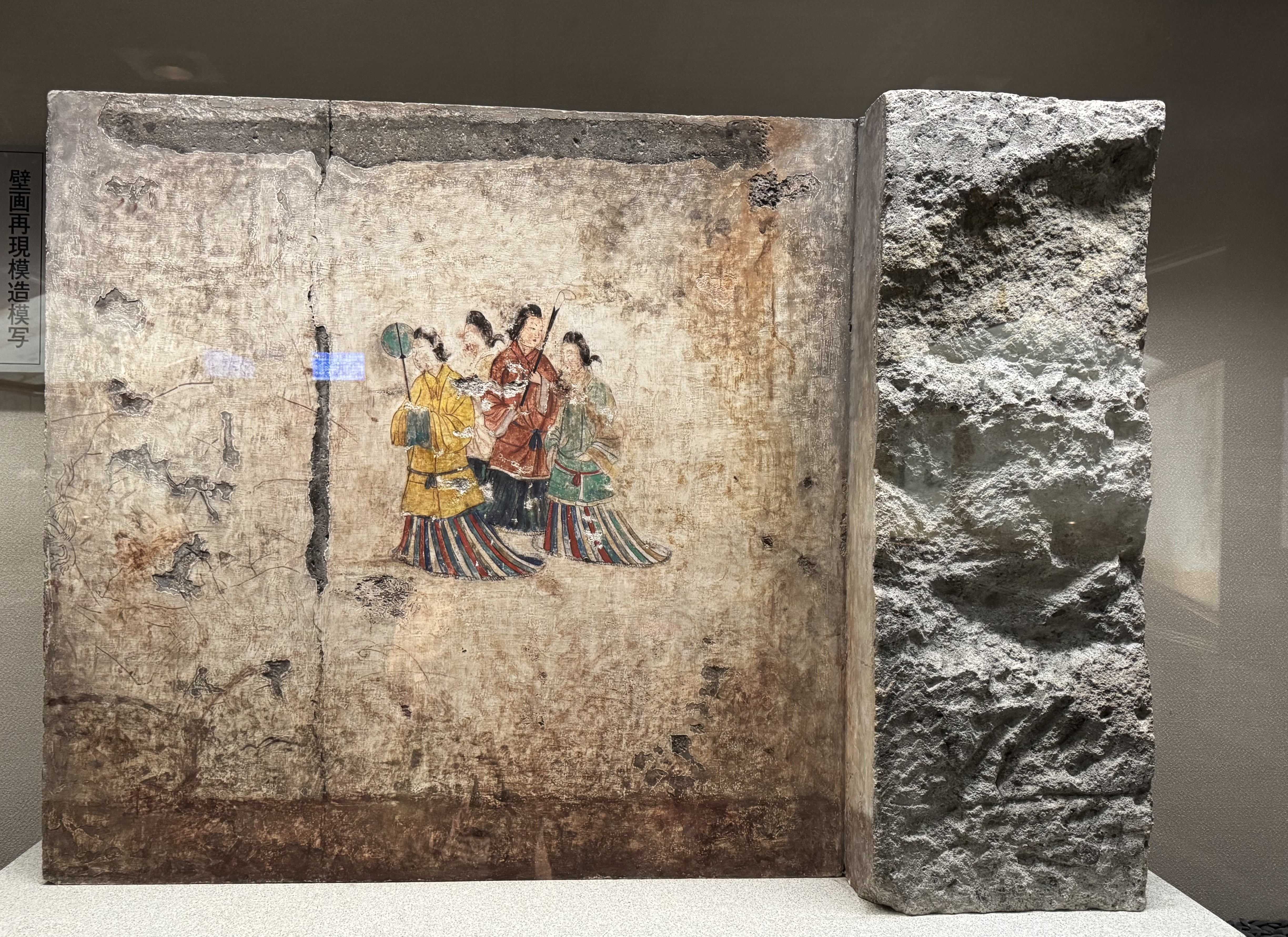
My first stop was at the Takamatsuzuka Mural Hall 高松塚壁画館, where visitors can see reproductions of the frescoes that were found on the walls of the nearby tomb when it was excavated in the 1970's: 


Replicas of goods found in the tomb, such as this mirror, are also on display:


The actual Takamatsuzuka-kofun 高松塚古墳 is a short walk from the mural hall. The images that had been found within bear many similarities to murals discovered in ancient Chinese and Korean burial mounds, suggesting close connections at that time between the Japanese and the Asian mainland. The occupant of the burial tomb remains unknown: 


The view from the area around the kofun and the mural museum:


Moving on from the kofun it was time to seek out a lunch locale, eventually settling on Yumeichi-chaya 夢市茶屋, a shokudō 食堂 where I ordered the black rice curry:


From the restaurant it was a short walk to the Ishibutai-kofun 石舞台古墳, Japan's largest stone burial chamber and one of the few visitors can step inside. The tomb was looted long ago and it isn't clear who the occupant was, though according to my guidebook a likely candidate is Soga no Umako 蘇我馬子, a member of the then-powerful Soga clan who died in 626:


A concrete replica of a sarcophagus: 


Taking time to enjoy a local craft beer, one of the modern-day pleasures of traveling in Japan:


After the beer I walked away from the Ishibutai-kofun, following signs leading uphill to a lookout point:


This was the idyllically rural view from the East observatory 東展望台:


It was very relaxing cycling among the rice paddies:


Herons are a common sight in farming villages:


My last destination on the cycling tour was the aforementioned Asuka-dera 飛鳥寺. Founded in 596, it's considered the first Buddhist temple in Japan:


While the original temple was long ago damaged and lost to fire, with rebuilding taking place in 1632 and 1826, the Asuka Daibutsu 飛鳥大仏, Japan's oldest existing Buddhist statue, has remained in place since 609:


The 15-tonne/16.5 ton, seated bronze image of the historic Buddha is flanked by Amida Nyorai 阿弥陀如来...:


...and a mourning statue of Prince Shōtoku 聖徳太子:


After returning the bike but before heading back to Osaka, I relaxed at the Matsuyama Cafe with a slice of carrot cake and an ice chocolate latte:


Watching the trains on the Kintetsu Line 近鉄線 go by:


Feeling a little tired after a day of cycling and sightseeing I splurged a bit for the limited express to take me back to Osaka:


Back at the hotel (pictured below), and the plan for the evening was to see the view from the Harukas 300 observation deck. However, it was still light outside and I was getting hungry, so first things first:


Dinner was an omu-rice オムライス with beef tongue set meal at the charmingly retro-looking Grill Maruyoshi グリルマルヨシ:


And then I was ready to take in the scenery from the Harukas 300 observation deck, with 360-degree views of the surrounding region from the high glass windows:


And I had timed the visit just right, as dusk segued into night:


I'd long wanted to visit Asuka, and the historical sights and furusato ふるさと landscapes were a winning combination that lived up to expectations. The next day the heart of the journey would begin as I left Osaka to travel to Shikoku 四国, the smallest of Japan's four major islands and the one region of the country I had yet to explore in depth. That would soon change.

Stay tuned...