Thursday, December 22, 2011

Sticks and stones may brake my bones, but bricks are really heavy

The onset of a cold combined with my usual gastrointestinal troubles have left me with some unexpected free time this morning. Seeing as I'm not in the best of moods right now, it seems like a good time as any to rant and rave, so here goes...

A rather disturbing letter was published in yesterday's edition of the Taipei Times newspaper. You can read it here, but to summarize things, a non-Taiwanese man was out for a walk one recent evening with his Taiwanese wife and bicultural children. Seeing a local man on a scooter with two kids, he stopped to upbraid the gentleman for the latter's failure to see to it that the children were wearing helmets. As anyone who has been here for a while can tell you, kids riding on scooters without any kind of protective headwear is a sadly all-too-common sight in Taiwan. The Taiwanese man didn't take kindly to a foreigner telling him off, and proceeded to call a couple of his friends, who soon showed up at the scene. One of his mates was armed with a brick, which he proceeded to use on the back of our hapless 外國人's head. Fortunately, no serious injury occurred , but an ugly incident will no doubt result in some unpleasant memories of life in Taiwan.

It's probably only a matter of time before the blogosphere is lit up with comments from local foreign residents pointing out that the letter writer was "arrogant" and somehow "had it coming". There is some truth to this, as I wonder as well why he felt he the need to remark to the Taiwanese man on what the latter should or should not have been doing. I wouldn't have said anything, and not because I would be afraid of getting a brick to the head. Basically, it's none of my business. Taiwanese adults are not naive innocents who have little clue as to the dangers of riding a scooter without a helmet (many adults do, in fact, wear helmets while their kids go without!). They know the perils, but have chosen to ignore them, and take the risk of a serious injury (or worse) happening to their offspring. It isn't my place to tell them otherwise, but if something nasty should occur, they won't be getting much sympathy or understanding from me (I'll feel sorry for the children, of course, but nothing for their parents). I don't allow my daughter to ride on scooters, except for short trips in the neighborhood with her mother, and then only if she's wearing her bicycle helmet. Had I been in the letter-writer's shoes, I would've just kept on walking without saying a word, and just hoped that nothing terrible would happen to the kids.

What will bother me about the inevitable remarks from my fellow non-Taiwanese residents will be the feeling that the foreigner in question will have somehow "deserved" what happened. For no matter how arrogant someone might be, or appear to come off as, there is no excusing a violent physical assault as the one described in the letter to the Taipei Times. Unfortunately, there are too many 外國人 here living in a different world than the one I'm familiar with. These souls inhabit an alternate Taiwanese universe where all the locals are warm, friendly and fuzzy, and every experience is worth treasuring and sharing with others via the various forms of social media available online. The fact that unpleasantness does occur even on the Beautiful Island is a threat to the Orientalist lifestyle they have worked so hard to establish, and any outbreaks of xenophobia, racism or just plain, good old fashioned thuggery has to be quickly contained and isolated. This is usually done by blaming the victim ("the obnoxious white guy"), and finding excuses...er, I mean reasons for why the local person acted the way they did. After all, one of the keys to being a contented foreign resident in Taiwan is the opportunity to explain the Local to the Outside (i.e. Western) World, though only within the narrow parameters that the happy foreigner has set up. 

Now, I'll be the first to say that I have met a lot of great people here in Taiwan. But by the same token, I've also encountered a lot of boorish louts (and their equally repulsive offspring). I've had a number of unpleasant encounters over the years, many of which I admit were my fault, or which I certainly could've handled in a much better manner than I did. However, there have also been many cases where the only thing I did wrong was to have been born outside of Taiwan. Luckily, I've never encountered anything as serious as the experience of the letter-writer. I like to think this is due to the fact that I keep to myself most of the time, limiting my interaction with the natives to only those times when communication is required. I'm also taller than most people here, which no doubt intimidates some would-be troublemakers, especially when they are by themselves. And some of these folks probably can sense that I'm a tightly-wound individual who doesn't react well to stress, and therefore decide I'm not worth the trouble of fucking with. Certainly, if anyone came at me with a brick, an altogether different story would have appeared in the Taipei Times, and not in the Letters to the Editor section. 

In any event, I don't harbor any fantasies about what a wonderful place Taiwan is, and how swell the people here are. Like anywhere else in the world, there are good and bad, and all kinds in between, and you have to deal with all of them (and they with you). The Old Tea types might revel in how wonderful their lives are here, but I'm all too aware of the undercurrent of violence that runs through Taiwanese society. As the letter-writer learned the hard way, when some Taiwanese are made to feel "humiliated" or "wronged" by someone else (a feeling made even worse if the other person is a foreigner), they will resort to violent means to restore their honor. Such folks are hardly the norm here, but at the same time they are far from rare anomalies, either. And as the letter makes it very clear, status in this society isn't earned by standing up for yourself, it comes from being able to get others to do it for you. The father of the helmet-less children didn't attack his criticizer himself; instead, he got a couple of buddies to do it for him. And it's not just hapless outsiders that are on the receiving end of this. In today's China Post, there's a story about a group of (admittedly drunken) civilians who attacked and injured 9 military personnel on Kinmen Island 金門. The reason? Apparently someone named Chang 張 had a dispute with an officer at a military base, and

"...instigated his friends to come to the base's front entrance which ultimately ended in assault..."

The moral of the story is...well, I don't know, actually. I'm sick, and just rattling off whatever pops into my head right now. I guess the point is to enjoy your stay in Taiwan, but be aware that it isn't all brightness and sunshine out there. Keep a low profile, and more importantly, keep your cool and mind your own business. If trouble does arise, do your best to extricate yourself and your family from the situation. 

And, most important of all, watch your back.


Tuesday, December 20, 2011

Merry critters

For some reason, there were lots of big, green grasshoppers to be seen along Trail 6 in the Dakeng 大坑 area this afternoon. Perhaps the cooler temperatures are making them lethargic, because it was very easy to get up close to them. It must be a good time of year to be a bird. It definitely is a good time of year to hit the trails, as the afternoons are warm, the air is dry and the skies are sunny and relatively clear:


The Japan Times ジャパンタイムズ has an interesting article in its Tuesday edition on the experiences of an American who was at the Fukushima Dai-ichi nuclear power plant 福島第一原子力発電所 on March 11 when the earthquake and tsunami struck 東北地方太平洋沖地震 (3/11 memories haunt American at No. 1 plant). There's a local connection as the man is based in Taiwan, and is married to a Taiwanese woman. 

Sunday, December 18, 2011

Taiwan hikes, like Taiwan girls, are easy

In 1993, Japan's Tōkyō Broadcasting System 東京放送ホールディングス aired a "documentary" on the "Yellow Cab" イエローキャブ  phenomenon , with footage purporting to show Japanese girls in Hawaii doing drugs and sleeping with local Lotharios, as well as young women cruising bars in Roppongi 六本木 and Yokosuka 横須賀 on the prowl for American men. The camera followed one older woman going into a love hotel ラブホテル with her foreign pickup for the night, and there was even a scene that alleged to show an African-American man looking and acting like a pimp. It wasn't long after the program was shown on TBS, however, that it emerged that many of the events depicted on the show were staged. The so-called "pimp", for example, turned out to be a local gaijin 外人 actor who was under the impression that he was doing a scene for a TV drama. What was meant to be an exposé of the scandalous behavior of Japanese women turned out to be a scandal involving deceptive and misleading "investigative journalism."

I was reminded of the TBS affair this morning when I followed a link on Facebook that led me to this report on the sexual availability of Taiwanese women to Western men. You don't have to understand Chinese to be able to follow what the program is talking about. 15 seconds into the clip it becomes clear the report is going to focus on "easy" Taiwanese girls:


As one of the comments on Facebook put it, "It's bullshit news from a bullshit news source". Unfortunately, it's the kind of story that goes over well in this country, playing up to the stereotypes of the oversexed foreign male preying on the virtuous local female, and corrupting her pure Confucian morals in the process. It's no wonder that the average Taiwanese is, to put it bluntly, a dumbass when it comes to perceptions of the outside world and the people that inhabit it. Of course, mention is rarely made of the countless numbers of brothels masquerading as KTV's and "barbershops" dotted all over this island, where sex is readily available at reasonable prices.

OK, perhaps I'm being a little too harsh. After all, I come from the country that considers the likes of Michele Bachmann and Herman Cain as serious presidential candidates, and where far too many people have their views of the world shaped by Fox News. So, on a gloriously warm late fall afternoon such as the one today, it's better to stop thinking about stereotypes and instead focus on the great outdoors, which is what I and my daughter did this Sunday.

If you're looking for an easy walk in central Taiwan, you can't go wrong with the Tianti Hiking Trail 天梯健康步道 in Dongshi 東勢, a 2.6 kilometer (1.6 miles) mountain path of wooden stairs and stone lanes that winds it way through orchards of bananas and persimmons. Though Amber complained at times of feeling tired, she managed to complete the walk without any discernible loss of energy. The bamboo walking stick no doubt helped:


There were some good views to be had of Dongshi below:


There was also some nice scenery on the other side of the mountain:


In addition to the fruit orchards, groves of betel trees dotted the mountainside:


Amber crossed that bridge when she came to it:


The trail begins and ends at the Tiangong Temple 天公廟:


There was nothing wrong with the camera when I took this photo. The small room to the right of the main hall of the temple was filled with incense smoke.

For directions on how to get to the trail, read this Compass Magazine article. Here's a video showing the walk that Amber and I did today.


Thursday, December 15, 2011

All's Quiet on the Eastern Front


As you may (or, more likely, may have not) noticed, things have been a little quiet in Kaminoge's small corner of cyberspace. Partly that's because not a whole lot has been happening lately - mostly the usual stuff, such as work, broken up with the occasional hike and time spent with my daughter. We've also been devoting our efforts to getting ready for Christmas, as in setting up the (artificial) Xmas tree, and buying and wrapping presents. But mainly it's because, instead of publishing new posts, I've been concentrating on the old ones. For you see (and you should, because you're reading this on Blogger), I've thrown in the towel on Sponge Bear. It's been a good run, and not to toot my own horn (but I will anyway), I did win a couple of awards ("You like me, you really like me!"), but the hassles of dealing with LiveJournal have become too much to bear. If it isn't the constant string of technical problems, it's the deluge of spam, much of it in Cyrillic, that floods my humble little blog on an almost daily basis. 

So instead of focusing on what's new, I've been devoting much of my computer time to bringing this blog up to snuff. After a great deal of effort, and with thanks to Michael Turton and, especially, my old friend and coworker from my Tōkyō days (懐かしい) S.T., I was finally able to import my old blog postings from Sponge Bear to A Curmudgeon Abroad. I wasn't able to carry the comments and videos over, unfortunately, but the entries are intact, along with most of the photographs. Now I'm going through all of them, one by one, cleaning up the text and deleting things that are no longer relevant (or have gone missing over time). It's slow going, but my goal is to do one months' worth each evening, and I'm now up to September 2007. It's an exercise that's both fascinating and depressing - on the one hand, it's been fun going over the old photos, and watching Amber growing up in those posts. But at the same time, it's hitting home how much of a rut I've been stuck in for the past several years, and of how I always seem to be whingeing about the same old things. Do I really sound like a broken record? (Don't answer that, and you young 'uns out there please don't ask me what a record is.)

At the risk of exemplifying what's written above, here's a sign I came across this evening in Taichung 台中:


The owner of this massage establishment (I hesitate to say "parlor", because this place seemed aboveboard) has gone for the trilingual approach, with the sign presenting the menu in three languages - Mandarin (not visible, but off to the left), English and Japanese. What's more than a little odd is the choice of hiragana 平仮名 for rendering the Japanese words. Why write ぜんしん when 全身 would be understood by any potential Japanese customers? Why use まっさーじ when a.) it should be written in katakana 片仮名 (i.e. マッサージ); and b.) you've neglected to include the part about feet (足 aka あし)? Then there's the use of えん, as in "yen" or ¥. Is the owner hinting that, while I need to pay NT700 (about $23) for a body massage, a Japanese visitor only has to fork over ¥700 ($9 or NT270)? A clear case of discrimination...unless the writer of the sign didn't know that 元 is pronounced as gen げん in Japanese. And, finally, just what the hell is a "Gua-sha" or かっさ? Now I wish I had included the Mandarin when I was framing the photograph.

Kaminoge - still as anally retentive as ever over things no one else would ever care about.


Saturday, December 10, 2011

Signs

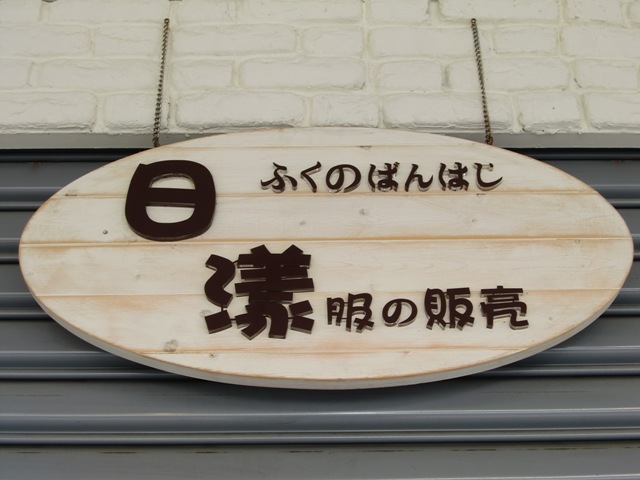
On Tianjin Road 天津路 in Taichung 台中, a street lined on both sides with clothing wholesalers:

 Dharma 


 Just say の


One block over is Beiping Road 北平路. The first place I lived after moving to Taiwan was in an apartment building located on a side street of this road:

Curr?

 Continuing the Dharma theme


Sunday, December 4, 2011

Moving Pictures

Taiwan, Ilha Formosa, "The Beautiful Island" - a strong case can be made for here being the undiscovered gem of Northeast Asia. Most travelers to this region overlook Taiwan on their way to China, Hong Kong, Japan and South Korea. However, it looks like things are starting to look up for the "renegade province" - Lonely Planet, for one, has listed Taiwan as one of the top ten countries for travel in 2012. 

Nevertheless, there is one thing that Taiwan can't change - the fact that it's an island, and not necessarily a large one at that. What this means is that there are a finite number of things to see and do, and places to visit, before ennui sets in. Before you start pitying the jaded foreign resident, however, spare a thought for the locals, who went through all the major possibilities long ago (in many cases, more than once), and have truly "been there and done that". What this means is that when something genuinely new appears on the leisure front, everyone, plus their grandmother and the family dog, has to go and see it. And seeing as most folks are working 5 days a week plus a couple of Saturdays per month, this leaves just one day - Sunday - to get out and do something different. Which is a long-winded way of saying that we were part of the crowd this afternoon at the "River of Wisdom: Moving of the Riverside Scene at Chingming Festival" (yes, that is the official English title; link) exhibition 智慧的長河: 會動的清明上河圖, located in what looked like a warehouse near the Taichung High Speed Rail Station 高鐵台中站 in Wuri 烏日.

Like everyone else, we decided it would be best to get there in the morning, you know, in order to "beat the crowds". Which meant that we ended up waiting for about 90 minutes in a long line that snaked its way from the parking lot to the other side of the building housing the exhibition. Fortunately for me (though not for many of the locals) it was sunny and warm today, and I came prepared to kill some time:


Eventually we made it inside (for a Taiwanese queue, things were relatively well-organized). At this point you may be asking yourself "What is the River of Wisdom?". A fair question, but one to which I'm still not sure of the answer. From what I could work out, several hand-painted scrolls, the original dating from the Song Dynasty 宋朝 in China, and a couple of updated versions from the Ming 明朝 and Qing Dynasties 清朝, illustrating daily scenes from Chinese life from long ago, have been brought together in one place. The scrolls were very interesting to see, if you could make out the images through the mass of humanity trying to get a close-up view. Large projections on the walls overhead helped somewhat, but it's times like these that I'm truly thankful for being 6'3" (189.5cm). Here is the official English explanation:


Now that you fully comprehend what was going on, here are a few images I was able to capture:


As fascinating as the images on the scrolls, they were not the main reason why everyone came today. The crowd-puller was in another room: a long diorama that reproduced the scenes from the scroll with moving images of people and animals that strove to bring to life just what things were like in the China of yore. Fortunately, there are good-quality clips to be found on YouTube:


Eventually we made our way out of the exhibition room, and filled our famished stomachs on thoroughly unhealthy but extremely satisfying fried food stand grub. "The River of Wisdom" was fascinating to see, but was it worth the time and crowds? Unless you're a true Sinophile, I'd have to say no. Although the crowd was pretty well-behaved by Taiwanese standards, it was still hard to appreciate the spectacle, not to mention all the small details, over the loud din, while trying not to bump into, or get bumped by, other visitors. The light show created by all the digital cameras and cell phones was also a distraction, though I have to admit I was as guilty as everyone else in this regard. Perhaps if "The River of Wisdom" were a permanent fixture, and not a temporary exhibition, there would the space to walk slowly along the long diorama and really take in what all the figures on the screen are doing. But here in the cultural wasteland of central Taiwan, you have to take advantage of the few opportunities that come your way, even if it means having to plunge headfirst into a sea of humanity.

Having gained wisdom, we strolled over to the HSR Station, where Amber was excited to see a couple of trains pull out, as well as to have the chance to run around on the lawn outside:


My wife, being a true Taiwanese, then suggested we go back to Fengyuan 豐原 in order to do some shopping at the Taipingyang Department Store 太平洋百貨公司 there - apparently, her daily horde quota hadn't been satisfied at "The River of Wisdom" exhibition. After making a few purchases, she suggested having dinner in Miaodong 廟東夜市, a "food street" that is Fengyuan's only claim to fame in Taiwan:


Which just goes to show that in Taiwan, you can never have enough elbows to rub while you're out and about. And as if to prove the point, on the way home, we passed by, you guessed it, another throng of people, this time listening to a campaign speech by a candidate for the Legislative Yuän 立法院, whose image on a video screen I was able to grab as we drove by:


The candidate, Jacky Chen 陳清龍, is running as an independent, but he has received the backing of the People First Party 親民黨. This explains why I was able to get a glimpse of the leader of the PFP (and candidate for president in the Jan. 14 elections), James Soong 宋楚瑜, standing on the stage as our car passed by.


Saturday, December 3, 2011

Portrait of a Saturday done in Amber

So it's a Saturday, there's no school today and you're five soon-to-be-six years old. How do you spend the day? Well, if you're my daughter Amber, you start by watching a Wiggles DVD over breakfast, then play some of the games on the Nick Jr. website while your dad does some housework. Soon there's a long-distance telephone call from the USA - it's your Nanny and Grandad, calling to say "hello". You're looking forward to seeing them in Washington next month! Following your conversation with your grandparents, you play a few more games, whereupon it's then time for lunch with your parents. After Mom goes back to work, it's time to roll up your sleeves and get down to some work yourself, for Christmas is coming soon! Now that Thanksgiving has passed (even though it isn't observed here in Taiwan, you were still able to eat a turkey dinner on that day at a place your father refers to as an "expat cafe" in Taichung), the work of setting up the tree must now be tackled, but you're up for it. You quickly unpack the plastic tree from its box in the storage room, and after Dad sets it up, you set to work hanging up the decorations:


It isn't long before you're finished, but it soon become apparent the artificial tree is looking a tad barren. So off you go with your dad to the local Carrefour hypermarket, but not before making a detour to a nearby park first. A girl needs her exercise after all, and if you want to have those training wheels removed someday, you'll need more practice on how to ride a bicycle, which you do this afternoon, making a circuit of the park. Despite the colder temperatures, the day was sunny, so you brought along one of your teddy bear friends for the ride on your Hello Kitty ハローキティ bike:


Having stretched your legs, it's off in the car to Carrefour. You and Dad spend a lot of time there, for in addition to more ornaments, there are several other things that need to be bought, such as bananas, cereal and milk, all of which you keep track of by putting a check next to the items on the shopping list you and your father made up beforehand. You also take a look at the toys - with Christmas looming over the horizon, it's time to let Santa know what you would like him to bring you on the night of the 24th/25th:


After everything has been paid for, you push the shopping cart back to the where the car is parked, but not before playing a quick game of Whac-A-Mole first. Back outside, it's now dark, and you reach home just minutes before Mom gets back from work. Without further ado, you take the new ornaments out of their packages, and commence hanging them up in the tree:


Mission accomplished, and a job well done! The day is concluded with dinner at a neighborhood restaurant, where you help yourself to Mom's hot pot 火鍋 and Dad's steak dinners. Back at home, you have time to watch some Pink Panther clips on YouTube before you take a bath, and then it's off to bed, warm and cozy under your Ampamman アンパンマン comforter, surrounded by all your stuffed animals.

Life is wonderful when you're five-going-on-six years old. Sweet dreams 波ちゃん.