Showing posts with label Japanese. Show all posts

Wednesday, March 21, 2012

Saying yes and の


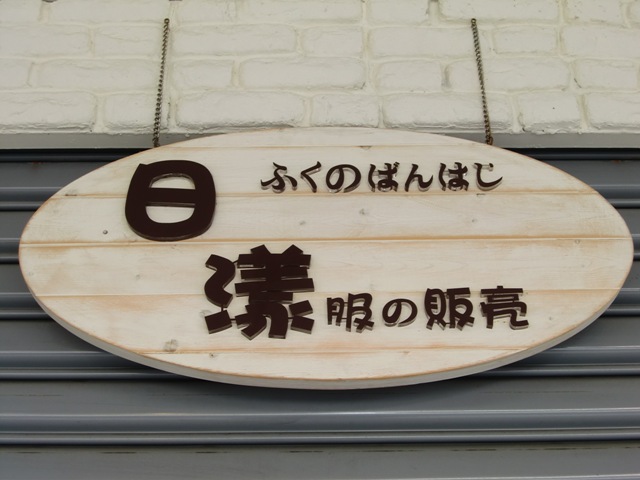
Taiwanese love to say, or at least write, "no" - as in the Japanese kana 仮名 syllable の, which is read as no. The words 筆柿の家 (bǐshì no jiā) refer to a stand selling persimmons in the Sintian 新田 area of Greater Taichung's 台中 Tán​zǐ District 潭子區.

Saying the English word "no" this evening was me, unfortunately, as in "I'm sorry, but there is no way I can go into work tonight." Not only is my cold not getting any better (my nose this evening is like a waterfall), but the doctor confirmed that the discomfort I'm feeling around my left eyeball and left upper row of teeth is the result of sinusitis. To add insult to injury, I'm also suffering from the effects of diarrhea. Yesterday's four-hour hike was apparently only a momentary blip of normality.

Not saying "no" is the National Palace Museum 故宮博物院, according to this Kyōdō News 共同通信社 article from today's Japan Times ジャパンタイムズ:

Taiwan's National Palace Museum is likely to lend Chinese antiquities for exhibition in Japan in 2014, Taiwan President Ma Ying-jeou 馬英九 told visiting Diet 国会 members.

Ma told Takeo Hiranuma  平沼赳夫, head of the Japan-Republic of China Diet Members' Consultative Council, during a visit Monday at the Presidential Office that if all goes well he hopes the exhibition will take place at the Tōkyō National Museum 東京国立博物館.

Ma also thanked Hiranuma for keeping his promise to help push legislation to guarantee the return of the national treasures.

The Diet passed legislation last year to address Taiwan's concern that China could seek to have artifacts and artworks impounded if there were no such law.

Hiranuma later told Japanese media at Taipei Songshan Airport 臺北松山機場 that details of the exhibition are still being arranged, including the dates.

National Palace Museum director Chou Kung-shin 周功鑫 said last month that Diet members would come to Taiwan to discuss plans for the exhibition with her ahead of a visit by Masami Zeniya 銭谷真実, executive director of the Tōkyō National Museum. The date for Zeniya's visit has not yet been set...

...The exhibition in Japan will be the first of its kind in Asia.

The treasures have only been exhibited in four foreign countries — the United States, France, Germany and Austria — all of which enacted laws beforehand to guarantee their return to Taiwan after the exhibitions.

Monday, March 12, 2012

Play ball!

Street sign in Fēng​yuán 豐原

Yesterday was March 11, the one-year anniversary of the triple disaster - earthquake, tsunami and nuclear meltdown - that affected Japan's northeast region 東日本大震災. A number of media outlets ran stories on how the country and its people have been coping one year on, and there have been endless repeat showings of the many video recordings of the waves and the havoc they caused. In the midst of all these remembrances and commemorations, the Daily Yomiuri ザ・デイリー読売 ran a short story yesterday on a charity baseball game Saturday played between all-star squads from Japan and Taiwan:

On the eve of a day sure to bring back a lot of painful memories, the members of Samurai Japan made it their mission to offer a little bit of relief, if only temporarily.

Tōhoku 東北地方 native Kenta Kurihara 栗原健太 came through with the biggest hit of the night, a two-run homer in the third inning, and Tōhoku Rakuten Golden Eagles 東北楽天ゴールデンイーグルス ace Masahiro Tanaka 田中将大 got the win, as Japan routed Taiwan 9-2 in a charity game in front of a crowd of 35,505 on Saturday at Tōkyō Dome 東京ドーム.

"I was able to swing the bat the way I wanted," said Kurihara, who hails from Yamagata Prefecture 山形県 and is the star slugger for the Hiroshima Carp 広島東洋カープ. "For me, who is from Tōhoku, this game means more. I am happy I was able to have a good result."

The game was held on the eve of the one-year anniversary of the Great East Japan Earthquake, which devastated a large swath of northeastern Japan, as a way to help aid ongoing relief efforts.

A total of 12,000 tickets were given to residents from disaster-stricken areas and a portion of the proceeds will be donated to disaster relief.

"In a charity game like this, or in a pennant race, I hope to be able to show some courage by playing well," said Chūnichi Dragons 中日ドラゴンズ pitcher Kazuki Yoshimi 吉見一起, who tossed a pair of scoreless innings for Japan.

The Taiwanese team consisted of an All-Star squad from the Chinese Professional Baseball League 中華職業棒球大聯盟, led by CPBL MVP and home run leader Lín Hóng-yù 林泓育. The game marked the first time NPB has invited the CPBL, which began in 1990, to Japan for an exhibition.

Prior to the game, Japanese players' union head and Hanshin Tigers 阪神タイガース star Takahiro Arai 新井貴浩 urged everyone to continue to do their part to help the relief efforts and popular vocalist Masayuki Suzuki 鈴木雅之 sang a poignant rendition of "Kimigayo" 君が代 (the Japanese national anthem).

A better writer than myself could probably wax poetic on the symbolism of this game - of how baseball and life itself both start anew in the spring, and of how a love of the American national pastime is also shared by both Japan and Taiwan, therefore making the baseball diamond an appropriate place for two cultures to come together in a shared cause. So I won't. Instead, I'll let the last paragraph of the article stand on its own, without comment:

The Taiwanese team took the field following the game and bowed to the Japanese supporters then to their own, receiving a standing ovation in the process.

 A stall at the Féngjiǎ Night Market 逢甲夜市

In the aftermath of the disasters in Tōhoku, many people in Taiwan donated generously to help the victims there (as did we, at my daughter's insistence). I was here in Taiwan when the horrors unfolded, and like many Taiwanese, I watched it all live on TV. I was indirectly affected by what happened - one of my former students from Yokkaichi 四日市 in Japan had to be rescued from a building near Sendai Airport 仙台空港, losing his car to the tsunami (though fortunately he was unhurt), while I had to cancel my plans to visit the Tōhoku area in the summer of 2011 (one of the stops I had planned to make on that trip was to the island of Kinkazan 金華山, itself largely spared, but accessible only by train and ferry from Ishinomaki 石巻 and Ayukawa 鮎川, two of the worst-hit towns by the tsunami), going to Okinawa 沖縄 instead. I was intending on trying again this summer, but a sudden change in plans will have me traveling to Hiroshima 広島 and some of its surrounding area next month instead.

Féngjiǎ

It's remarkable how well the Japanese people as a whole have endured the events of a year ago - a testament to the spirit of the society. I, on the other hand, am finding myself at home this morning, unable to cope with something as simple as the common cold and a headache. I'm not worthy.

Monday, March 5, 2012

Light at the end of the tunnel?


A not uncommon scene in my neighborhood on a Sunday morning - a Taoist procession slowly making its way along the narrow streets. This happens several times a year, and comes complete with firecrackers, drums and gongs (the firecrackers had all been set off by the time I had grabbed my camera). Someone in this area obviously pays for these affairs, because the processions almost always stop for a while at the entrance to our apartment building, with the noise getting amplified as a result (both daughter and cat are none too happy about this). This particular procession also featured a female "singer" standing in the back of one of the lead trucks. Though I wasn't able to get a glimpse of her from my window, most likely she was clad in "hot" clothing - "hot", that is, if your idea of "sexy" was formed during the Eisenhower administration. Though I didn't get to see her, I had no problem hearing her, as she "sang" for the benefit of the gods.

But I'm not complaining. I don't want to jinx anything, but it appears that my wife's pleas to the Taoist gods may have finally been answered. In fact, on Saturday afternoon she traveled back to her hometown of Siluo 西螺 in Yún​lín County 雲林縣 to pay gratitude to them. Details will be divulged later once things start to firm up.

For now, though, life in this part of the world goes on as usual, both at the local level and in the political arena, as this AFP article from Japan Today makes clear:

China and Taiwan on Saturday criticized Japan for giving Japanese names to disputed islands in the East China Sea claimed by all three parties in a long-running diplomatic row.

China and Japan have a lengthy dispute over an uninhabited but strategically coveted island chain known as Diào​yú​tái 釣魚臺 in Chinese and Senkaku 尖閣諸島 in Japanese.

China’s foreign ministry said moves by Japan to rename scores of islands in the chain was “illegal and invalid,” according to a statement posted on the ministry’s website.

“No matter what names Japan has given to the islands affiliated to Diào​yú island, it will not change the fact that these islands belong to China,” Chinese foreign ministry spokesman Hong Lei said in the statement.

China’s State Oceanic Administration has released names in Chinese for the islands in the chain, which it put at 70, the official Xinhua news agency said Saturday.

Separately, Taiwan protested to Japan for renaming four islets in the contested chain and unveiling the names on Friday.

“We have lodged a stern protest and reaffirmed our stance that the Diào​yú islands are part of our territory,” Taiwan’s foreign ministry said.

Japan has said it plans to finish naming 39 uninhabited islands by the end of March.

The islands, which are believed to be surrounded by oil and gas reserves, have long been a source of friction between China, Japan and Taiwan.

China considers Taiwan to be part of its territory and has long sought political reunification with the island. Japan officially recognizes China rather than Taiwan but maintains close trade ties with the island. 

Notice the sentence "which are believed to be surrounded by oil and gas reserves" in the next-to-last paragraph of the above article. Japan took over control of the islands in January 1895 as Terra nullius, or "no man's land", and administered them as part of Okinawa Prefecture 沖縄県 until the United States took over control of the Ryūkyū Islands 琉球諸島 at the end of the Second World War. The U.S. returned the Senkakus to Japanese control along with the rest of Okinawa in 1972. From the time of the Japanese annexation in 1895 until the late 1960's, neither the Republic of China 中華民國 nor the People's Republic of China governments contested the claim to ownership. Not, that is, until oceanic surveys in the mid-to-late Sixties suggested the potential for those above-mentioned oil and gas reserves. Naturally, of course, it turned out the Senkaku Islands have always been a part of China, and must someday be returned to the loving embrace of the motherland. Along with all that potential gas and oil, plus a lot of fish as well.

Other things that go on as usual here is the Taiwanese love of the Japanese language. I haven't bothered much lately with taking photos of signs, but they are still out there, and as abundant (and in some cases misused) as ever. Here are a couple of recent examples:

I'm not sure if the 名屋 on this sign is supposed to be read as the Chinese míngwū or the Japanese naya, but the intention behind ラーメン, rāmen noodles, is fairly obvious.

Umm, barbecue バーベキュー

Saturday, December 24, 2011

When the chips are down


Christmas is almost upon us, but you would have a hard time knowing so here in Fengyuan 豐原. Sure, there are a few stores with some Xmas decorations up, and the occasional Yuletide jingle can be heard from a loudspeaker, but for the most part the scenery downtown is as usual. Now don't get me wrong - I don't expect this non-Western, non-Christian society to fully accept what is, after all, an alien holiday, and I'm not feeling any disappointment or sadness about this situation. Rather, I just know that somewhere out there in the blogosphere, there is a Westerner who has posted something about the bright decorations he/she can see in Taipei 台北, noting that the Taiwanese have embraced Christmas with a passion (I recall one overly enthusiastic blogger a few years ago who remarked that the people here were even more excited about the holiday than the folks back in his/her home country. This person was writing from Taipei, of course). I had planned after work to walk into downtown Fengyuan and take a photo of how it was mostly business as usual in these parts, but due to the effects of the full-blown cold I've come down with, in the end I just sneaked a quick picture of this food vendor's sign before getting on my scooter and going home. Hiding among the characters for yibao 刈包 and rùn​bǐng 潤餅 (photo) is the Japanese word わさび, wasabi.

Tis the season for goodwill to all men, or at least it seems so for Japan's Elpida Memory エルピーダメモリ , according to this Kyōdō News 共同通信社 article from today's Japan Times ジャパンタイムズ:

"Chipmaker Elpida Memory Inc. is thinking of forming a capital and business alliance with Taiwanese semiconductor maker Nanya Technology Corp., sources close to the matter said Thursday.

Elpida aims to take advantage of the tie-up to improve its business performance, which has deteriorated from the strong yen and falling prices for its mainstay dynamic random access memory chips, the sources said.

But it remains uncertain whether such an alliance will form because Elpida has sued Nanya in Taiwan and the United States for infringing on its DRAM patents.

Under the plan, Elpida will consider licensing Nanya to manufacture Elpida products, while focusing on cutting-edge products at its plant in Hiroshima Prefecture 広島県, the sources said."

Chips are big business in Taiwan, and Elpida is a major player here. It might seem kind of odd to be simultaneously suing and wooing a bitter rival/potential partner, but losing ¥56.76 billion ($726.6 million/NT22 billion) over a six-month period earlier this year might have something to do with this move. In any event, it appears that Nanya isn't very interested at this stage, at least according to the Taipei Times:

"Nanya Technology Corp (南亞科技), the nation’s biggest PC DRAM chipmaker, (Thursday) denied any knowledge of a plan to engage in technology and capital tie-up talks with Japan’s biggest memory chipmaker, Elpida Memory Inc, as has been reported in the media.

The Taoyuan 桃園-based chipmaker’s comments came after the Nikkei Business Daily 日本経済新聞 reported yesterday that Elpida Memory was set to start talks next month with Nanya to form an alliance. Creating a holding company was one of approaches being studied, the Nikkei said.

The speculation came after most local DRAM chipmakers drifted into deep losses because of weak chip prices, which have plunged over 55 percent since May this year..."

Apparently there isn't much peace on earth when it comes to Japanese/Taiwanese chipmaking operations. Let the chips fall where they may!


Thursday, December 15, 2011

All's Quiet on the Eastern Front


As you may (or, more likely, may have not) noticed, things have been a little quiet in Kaminoge's small corner of cyberspace. Partly that's because not a whole lot has been happening lately - mostly the usual stuff, such as work, broken up with the occasional hike and time spent with my daughter. We've also been devoting our efforts to getting ready for Christmas, as in setting up the (artificial) Xmas tree, and buying and wrapping presents. But mainly it's because, instead of publishing new posts, I've been concentrating on the old ones. For you see (and you should, because you're reading this on Blogger), I've thrown in the towel on Sponge Bear. It's been a good run, and not to toot my own horn (but I will anyway), I did win a couple of awards ("You like me, you really like me!"), but the hassles of dealing with LiveJournal have become too much to bear. If it isn't the constant string of technical problems, it's the deluge of spam, much of it in Cyrillic, that floods my humble little blog on an almost daily basis. 

So instead of focusing on what's new, I've been devoting much of my computer time to bringing this blog up to snuff. After a great deal of effort, and with thanks to Michael Turton and, especially, my old friend and coworker from my Tōkyō days (懐かしい) S.T., I was finally able to import my old blog postings from Sponge Bear to A Curmudgeon Abroad. I wasn't able to carry the comments and videos over, unfortunately, but the entries are intact, along with most of the photographs. Now I'm going through all of them, one by one, cleaning up the text and deleting things that are no longer relevant (or have gone missing over time). It's slow going, but my goal is to do one months' worth each evening, and I'm now up to September 2007. It's an exercise that's both fascinating and depressing - on the one hand, it's been fun going over the old photos, and watching Amber growing up in those posts. But at the same time, it's hitting home how much of a rut I've been stuck in for the past several years, and of how I always seem to be whingeing about the same old things. Do I really sound like a broken record? (Don't answer that, and you young 'uns out there please don't ask me what a record is.)

At the risk of exemplifying what's written above, here's a sign I came across this evening in Taichung 台中:


The owner of this massage establishment (I hesitate to say "parlor", because this place seemed aboveboard) has gone for the trilingual approach, with the sign presenting the menu in three languages - Mandarin (not visible, but off to the left), English and Japanese. What's more than a little odd is the choice of hiragana 平仮名 for rendering the Japanese words. Why write ぜんしん when 全身 would be understood by any potential Japanese customers? Why use まっさーじ when a.) it should be written in katakana 片仮名 (i.e. マッサージ); and b.) you've neglected to include the part about feet (足 aka あし)? Then there's the use of えん, as in "yen" or ¥. Is the owner hinting that, while I need to pay NT700 (about $23) for a body massage, a Japanese visitor only has to fork over ¥700 ($9 or NT270)? A clear case of discrimination...unless the writer of the sign didn't know that 元 is pronounced as gen げん in Japanese. And, finally, just what the hell is a "Gua-sha" or かっさ? Now I wish I had included the Mandarin when I was framing the photograph.

Kaminoge - still as anally retentive as ever over things no one else would ever care about.


Saturday, December 10, 2011

Signs

On Tianjin Road 天津路 in Taichung 台中, a street lined on both sides with clothing wholesalers:

 Dharma 


 Just say の


One block over is Beiping Road 北平路. The first place I lived after moving to Taiwan was in an apartment building located on a side street of this road:

Curr?

 Continuing the Dharma theme


Monday, November 21, 2011

Fearing Not

I know of certain bloggers here in Taiwan who might like to eat and drink at this establishment ;-)

From yesterday's (Sunday's) edition of the Japan Times ジャパンタイムズ comes this Kyōdō News 共同通信社 news story:


A TransAsia Airways 復興航空 chartered flight with 180 tourists on board landed at Fukushima Airport 福島空港 Saturday morning, the first international flight to arrive since March 11, giving the region's badly-hit tourism industry a much needed lift.

The tourists are participating in a four-day tour organized by several travel agencies in Taiwan, and will visit sites mainly around the prefecture's scenic Aizu 会津 region.

The airport's regular services to Seoul and Shanghai remain suspended because of radioactive fallout from the Fukushima No. 1 nuclear plant 福島第一原子力発電所.

To reverse the plunging number of foreign visitors to Fukushima 福島県, the prefecture has been running promotional campaigns in Taiwan, as well as in China and South Korea.

The chartered plane will carry Japanese tourists to Taiwan on its return flight.

Operations at the airport, about 50 km (30 miles) inland from the prefecture's coast, were not affected by the March 11 earthquake and tsunami 東日本大震災.

Taiwan's airlines have started operating chartered flights to Fukushima Prefecture in recent years.

It certainly is encouraging to see the Tōhoku region 東北地方 slowly getting back on its feet. It will take time, but eventually all the debris will be carted off, transportation links will be resumed (though some damaged train lines may be converted into exclusive bus lanes - see this Yomiuri Shimbun 読売新聞 article from today's Daily Yomiuri ザ・デイリー読売  and, yes, the damaged nuclear reactors will be achieve cold shutdown. Visitors are gradually making their way back to the area, though for the residents who suffered through that terrible day and its aftermath, the emotional scars may never heal. Before March 11, I had been thinking about visiting Tōhoku at some point in 2012, and despite all that has happened, I see no reason for changing my plans. Sightseeing spots such as Hiraizumi 平泉 and the Tōno 遠野 Valley appear to have emerged relatively unscathed from the disaster, while I'm confident that Sendai 仙台, the region's hub, will quickly recover much as Kōbe 神戸 did in the aftermath of the Great Hanshin earthquake 阪神・淡路大震災. The one alteration to my plans would probably have to be Kinkazan 金華山. I haven't heard anything about the state of the island itself, but I do know that the city of Ishinomaki 石巻 and the town of Ayukawa 鮎川, the two main transportation points to Kinkazan, were devastated by the tsunami.

 A new store in Fengyuan 豐原 selling old clothing for old women


Tuesday, November 15, 2011

Autumn Almanac

Fall is here in Taiwan, all two weeks' of it (according to one well-known local blogger), and the weather has been very nice (with the exception of a few days' worth of rain). Today was especially pleasant, and I made good use of the sunshine by going for a walk in the area around the Kuanyin 觀音 temple atop the hill behind the Central Taiwan University of Science and Technology 中台科技大學. The walk up to the temple is a short and easy one, but fortunately there is a network of trails in the area behind the temple, and I was able to make a two-hour loop around the hills.

The two little kissing duck figurines were complemented by recorded quacks being played on a continuous loop. Tres Buddhist, non?


Whatever the structure in the photo is, its position atop a small hillock made it look like an island fortress

This lizard was quite literally hanging around

One thing I sometimes wonder while stomping around in the hills and mountains of central Taiwan is what would I do in the event a large earthquake suddenly struck the area (probably scream like a baby). According to this AFP article from Japan Today, I'll now a few seconds warning before the trails collapse from under my feet:


"Taiwan said Monday it had put into service its first undersea seismic observation system, giving the island life-saving extra seconds or even minutes to brace for earthquakes and tsunamis.

The NT420-million ($14 million/¥1.07 billion) system, built by NEC Corp 日本電気株式会社, consists of equipment ranging from ocean-bottom seismographs to tsunami pressure gauges and even underwater microphones.

'The system gives a much clearer picture of what’s happening. We can even hear the sounds of dolphins swimming by,' Kuo Kai-wen, director of the Seismology Center 地震測報中心, told AFP.

'With the help of this system, we’ll be able to attain an average of 10 seconds’ extra warning if earthquakes hit off the east coast, and an extra 10 minutes to issue tsunami warnings,” he said.

Taiwan is regularly hit by earthquakes, as it lies near the junction of two tectonic plates. In September 1999, a 7.6-magnitude tremor killed around 2,400 people in the deadliest natural disaster in the island’s recent history.

The new alert system is centered around a submarine cable beginning at the township of T'ouch'eng 頭城 in the northeast of Taiwan and stretching for 45 kilometers (28 miles) into the ocean in a roughly easterly direction.

Nearly 70% of the earthquakes that strike Taiwan hit this area, according to the seismology center.

The system is deployed at a depth of around 300 meters (980 feet), sending real-time digital information to land via submarine optical fiber cable 24 hours a day, NEC said in a statement.

Taiwan began considering an undersea alert system after the Indian Ocean tsunami in late 2004 killed almost a quarter of a million people.

Another undersea earthquake, as powerful as that which caused the 2004 disaster, triggered a tsunami that struck Japan in March, leaving about 22,000 dead or missing.

'The power of the two quakes was pretty much the same, but the much lower toll figure in Japan shows that early warning systems are very effective in the battle against unexpected natural disasters,' Kuo said.

Now the workers at those three nuclear power plants on Taiwan's northeast coast (two in operation, the other nearing completion) will have a few more minutes to run for their lives before a massive tsunami 津波 swamps the facilities, already badly damaged from the earlier earthquake, leading to catastrophic meltdowns and the irradiation of the entire island. Time to head to the local いざかや (izakaya, or Japanese-style pub) for a round or two before it all comes to an end, On the Beach-style.


Saturday, November 12, 2011

That's what Edward said

In this age of globalization, Japanese tourists apparently will fly to Taiwan in order to have Thai-style massages. Or is just the misspelling of "Tai" that is confusing them?

Life isn’t easy on the mean streets of T'aipei 台北. Fortunately, having both talked to a lot of expatriates in Taiwan and read a number of Taiwan-centered blogs over the years, I have been able to glean several easy steps that can be taken to help you cope with your difficult living environment:

First of all, forget the fact that in Taipei all you have to do is ride the subway for a few minutes (a convenience unavailable elsewhere in Taiwan, with the possible exception of Kaohsiung 高雄) before finding yourself in a world teeming with upscale department stores, ritzy boutiques, fusion restaurants, cafés serving imported beers, hopping nightclubs and specialist stores stocking many of the familiar comforts of home. Focus instead on your immediate environment and on the need to integrate into your new surroundings…or at least as much as any foreign barbarian can in these circumstances. This can be done by making an attempt to learn the local lingo and trying some of the more “exotic” dishes (don’t eat anything familiar, even if your neighbors seem to enjoy do so.) Later, when talking to fellow expats, you will be able to toss in local words and phrases into your conversation, and identify things like food items only by their local name, without any accompanying definitions. This will force your foreign friends and acquaintances to ask for clarifications and explanations, thus giving you “street cred”.

Second, try not to think of the people around you as flesh-and-blood human beings who share many of the same likes and dislikes, hopes and dreams, and fears and worries as you. Instead, always remember that they are stock characters, Exotic Others in your Asian (Taiwanese) Experience. This will help to enhance the excitement of your life abroad, and impress the folks and friends back home who will marvel at your descriptions of life in Taipei/Taiwan, and marvel at photographs such as this one:


Once you have located your local comfort zone, be sure to stress how much better life in Taipei/Taiwan is compared to your country of birth and/or nationality. This can be done by deliberately overlooking the more unpleasant or seamier sides of life in Taiwan, and ignoring the fact that on such a compact island everything will be much closer than in vast, continent-wide states such as Australia, Canada or the United States. All that personal space and freedom in the latter countries are vastly overrated anyway.

Now you are ready to assume your role as an interpreter of all things Taiwanese to the outside world. This can be done in conversation, blog entries and postings on Internet forums. Remember while explaining Taiwan to those on the outside to always stress the differences, not the similarities, and of how much you understand and have adapted to these cultural shocks. Be careful of boasting, but do try to pepper your conversation with local words, and try to bring up as often as you can the exotic dishes you enjoy eating (and, if necessary, force yourself to drink Taiwan Beer on a regular basis), as well as the “incredibly beautiful” places you have visited. Make a habit of watching local soap operas and listening to the latest pop hits by artists that no one outside of Greater China has ever heard of. Be sure to get your news fix from TVBS, not CNN or BBC. Always keep your focus on the “unique” aspects of Taiwan, and don’t concern yourself with context. Most importantly, never forget that every experience with a local, especially when conducted in the local language, is an experience worth not only treasuring, but sharing with others.

Finally, always keep in mind that you are the sole interpreter of Taiwan. It’s a heavy responsibility – there are plenty of people in the West who rely on you to define Taiwan for them. Do not try to accommodate differing opinions and/or observations, even though they may be the result of another individual’s experience that could be very different from your own. Explaining the Exotic Other of Taiwan is a zero/sum game, and you need to be adamant when standing your ground. Giving even an inch could mean ceding your turf to another barbarian observer.

Oh, and should you ever come across a book called Orientalism, don’t pick it up and start reading. It’s heavy-going and humorless, and, besides, you might not like what is written inside.

Now you're ready - go forth and pontificate!

A colorful native tries to work out the meaning of しょくえいぼう (shokueibō)...or not


Tuesday, November 8, 2011

X-nay


It all started innocently enough, as these things usually do. A few days ago, on a popular forum where people can post Taiwan travel-related questions, and have those questions answered by fellow netizens, someone asked about what they should do given a 26-hour layover in T'aipei 台北. One respondent, whom we shall call “G”, replied that the OP (original poster) should visit the popular sites such as the Chiang Kai-shek Memorial 中正紀念堂, Lungshan Temple 龍山寺, Taipei 101 台北一零一, the Shihlin Night Market 士林夜市 and, wait for it, the National Palace Museum 國立故宮博物院 (more on that later). All perfectly reasonable suggestions, IMHO.

G’s response was soon answered by someone whom we will refer to as “X”, for I don’t want to be accused of taking “cheap shots” again. X replied that:

I would skip the National Palace Museum with just one day - it is worth seeing but not worth wasting your one day in Taipei on...I personally would rather see the actual city than see some artifacts that came from China, which isn't even Taiwan!

All bolded words that you will see here are X’s own. G, in turn, answered by writing:

I think the NPM should be on the list for any one-time visitor to Taiwan. It is one of the best and most famous museums in the world, so it's worth the trip for simply having been there. That said, the experience has been diminished somewhat by the hoards of mainland Chinese tourists that now crowd the place with their loudness, pushing and shoving, and body odor that is uncharacteristic of the local Taiwanese population. (The Taiwanese have an indoor voice and are generally more polite and deferential in their mannerisms.) If limited to one-day in Taipei, I would skip the temporary galleries on the first floor and try to limit the visit to 2 hours, but I wholly disagree that it should be skipped entirely.

X then answered back by saying:

I'm going to still respectfully disagree. The NPM is great, I'm not disputing that, I just personally prefer to spend more time in an actual city if I have limited time rather than going to a museum, especially one full of artifacts that aren't even from the country you are visiting.

It was at this point that yours truly decided to add his NT2 worth by opining:

So if you visit London, you should pass on the British Museum, especially because it's full of artifacts that aren't from the UK?

If the OP has an interest in Chinese art, the NPM is worth even a short visit. Otherwise, the limited time would be better spent taking in the other well-known spots (e.g. CKS Memorial Hall, Longshan Temple, Shilin Night Market etc.).


OK, I admit I’m a smart ass, and it doesn’t take much to get me started. I can understand skipping the National Palace Museum if one’s time was very limited, or they had little interest in the subject of traditional Chinese art, but I found the (il)logic of omitting the NPM from an itinerary because it wasn’t “Taiwanese” too good to pass up. In any event, I thought I had kind of neatly summed up the situation for the person who posted the original query, and figured that was that.

Not quite.

X, it seems, doesn’t appreciate sarcasm:

No...if I visit London once, for one day, I will bypass the British Museum (and the Victoria and Albert). If I had one day, I'd choose to see London itself, not a museum full of stuff.

It so happens that I've been to London three times, and one of those visits was a week long (the other ones were short stays). In that week I did go to three museums, because my time there made it possible.

But no, not with just one day. Cities themselves are much more interesting than museums in my opinion - they're full of life, activity, people, good food, and if you want to see something historic there are always historic sites.

If the OP has 24 hours in Taipei, going to the NPM effectively ensures that he won't see much of Taipei at all.


Fair enough, but I just couldn’t let the chance for another snarky analogy go just yet:

Darn, I guess I'll just have to give the Louvre a miss on that 24-hour layover I'll have in Paris. :-)

See, I even inserted a smiley face, to serve as a reminder that this really isn’t that big of a deal. Looks like I was wrong:

yeah...I would do that, too.

In fact, I had two days in Paris and I did skip the Louvre, and I'd advise anyone else to do the same.


…And the NPM isn't even Taiwanese...

I guess some people just aren't into museums. I don’t know about you, but should I ever find myself with a limited amount of time in Paris, I would do my best to squeeze in a visit to the Louvre, even it is filled with works of art by Italians and Dutchmen (i.e. non-French people). X, on the other hand, is almost proud of the fact they didn’t go to the world’s most famous house of art. Which means, of course, that I couldn’t resist again:

Let's see, more museums to cross off on future travels...the Guggenheim and MOMA in New York City, the Prado in Madrid, the Tokyo National Museum...and, oh yes, the Holocaust Museum in Washington, D.C. - all that stuff happened in Europe. :-)

At this point, I should stop and say that I’m somewhat familiar with X. I’ve been in Taiwan too long, for I can remember when X was a newbie to this island, and was asking for advice in the very same forum. Only X wasn’t too pleased with the suggestions that they were being given (“This isn’t what I want!”), and I was somewhat taken aback at the idea of people who were just off the boat taking a good, hard look at the proverbial gift horse’s set of dentures. Time has taught X some courtesy – they’ve now been in Taiwan long enough, and can speak Mandarin well enough (a fact that X likes to often bring up), that they are now a useful source of wisdom for travelers wondering about what there is to do in Taiwan (X’s suggestions are quite often very good ones).

X loves living in Taiwan, a result, no doubt, of the fact that they live in Taipei. As I’ve written before, Taiwan’s capital often serves as a protective cocoon for its Western residents, shielding them from the unpleasantness that lies in wait in the rest of the country, hereby referred to as The Real Taiwan®. X exhibits all the classic symptoms of the bubble – what is true in Taipei must be true for all of Taiwan – and draws all the typical conclusions about how wonderful life on Formosa truly is. When pointed out by others that Taipei isn’t Taiwan, X will bring up such “Taiwanese” images as old women in her neighborhood speaking impenetrable dialect and eating the kinds of food that only Andrew Zimmern could get excited about. It’s almost as if someone in an urban American city was trying to prove their street cred by pointing out how close they live to the ‘hood, and does it by describing the denizens there in stereotypical terms gleaned from watching too many rap videos.

But I digress (and I’m good at doing that). I live in The Real Taiwan©, and while I am surrounded by おばさん like the ones X describes, I also live among doctors, convenience store clerks, sales reps, factory workers, farmers, civil servants, homemakers, bank clerks, mail carriers, office workers, teachers and students…the list goes on and on. Many of them do speak in Taiwanese much of the time, but many more use Mandarin as a means of daily communication (and quite a few converse in both). Yes, they do occasionally eat “exotic” foods, but most of their meals are easily digestible rice or noodle dishes, with occasional forays to places like McDonald’s and KFC, or to the local Japanese or Italian restaurant. In short, they are ordinary human beings, living ordinary lives in ordinary ways, and are no different, in fact, from the majority of their countrymen residing in the greater Taipei metropolitan area.

Unlike many Taipei expats, X has traveled extensively throughout Taiwan, which is why their travel suggestions are often very helpful to posters in the forum. Unfortunately for X, they have to rely on public transportation to get around the island, for it appears that X has never ridden a scooter or driven a car in Taiwan, and appears terrified of the idea of doing so. This is a shame, because some of the most interesting places to visit in Taiwan are difficult, if not impossible, to reach without your own set of wheels, but this doesn’t stop X from trying to discourage people from driving. Out here in The Real Taiwan®©, where public transportation systems are not as extensive in comparison to what there is in Taipei, we have little choice but to rely on cars, motorcycles and scooters to get around. Yes, driving conditions can be less-than-optimally-safe here, but I wouldn’t hesitate to recommend to those who are confident enough in their driving skills to rent some kind of vehicle while in Taiwan in order to get more out of their visits (e.g. driving from Hualien 花蓮 to Taroko Gorge 太魯閣).

X makes no bones about how much they enjoy it in Taipei Taiwan Taipei, and I have to admit I wish I could muster the same level of enthusiasm (curse you Japan!). However, X can go to extremes at times in order to “prove” that Taiwan/Taipei is somehow the “best” place to be in Asia. Instead of relying on boring trivialities like statistics and other data, X will draw on very broad generalizations regarding other Asian societies from their friends and acquaintances in order to demonstrate that the Taiwanese, and by extension X themselves, have it good here.

But once again I digress. In all fairness to X, they have one of the better Taiwan-related blogs, certainly much better than mine. X is a good writer who has posted many interesting articles (again, superior to the dreck I usually churn out), and if I had the chance, I would love to sit down together in a café (probably in Taipei) and share anecdotes and impressions about Taiwan with them. So, I would just like to humbly pass along to X these two pieces of unsolicited advice:
  1. Lighten up a bit;
  2. Always keep in mind that Taiwan means different things to different people.
For the final word on the topic of the Palace Museum (though I don’t think this will be it), G posted this today:

…you might as well advise the OP to skip Taipei entirely and head south from the airport because a third of the residents of that city are either refugees who arrived from mainland China in the late 1940s or their descendants, so the city is not really "Taiwanese" enough. You should also remind the OP to stay away from the CKS Memorial Hall, because Chiang Kai-shek was not Taiwanese. ;-)

Like the doujiang people have for breakfast, and the dongporou people order for dinner, that the museum is located in Taipei is very much part of the modern history of Taiwan. Whether the stuff inside is "Taiwanese" is not a concern: the displays consist of the cream of the imperial collection - there isn't a better one elsewhere.

I would suggest skipping a NPM if one had only half a day, following only half of the itinerary I posted above. But I would not skip it if I had a full day in Taipei - it is possible to see both the city and the museum in a full day. A stay as short as 2 hours at the NPM (which doesn't cost much to enter) can be worthwhile. Of course, it all depends on personal interests. If you have any interest in China, art, art history, Chinese history, and Chinese art history, I'd say go. As far as Chinese history museums go, you won't find a better one in the world.

Peace out.

Saturday, October 15, 2011

Rinky-dink

Shopping for something as mundane as milk at a hypermarket in Taiwan like Carrefour or A-Mart 愛買 can be an ordeal that brings out some of the worst traits in the Taiwanese national character. As soon as you approach the dairy section, a horde of middle-aged female milk touts will descend upon you. Small plastic cups filled with samples of milk or a yogurt drink will be shoved in your face and/or hands, and the women will aggressively vie with one another to deliver their sales pitches in an attempt to get you to purchase their particular product. Some of the more annoying aspects of this competition include placing milk jugs in the hands of young children, knowing that the kids won’t refuse an adult, and rudely interrupting the conversation I’m trying to have with my daughter. But, hey, it’s English, after all, and not Mandarin or Taiwanese, so it’s perfectly acceptable to butt in.

Which brings me to the subject of English, for the most annoying thing about the above dairy shills is the tendency of some of them to speak in broken, horrible English to Amber. I’m probably overly sensitive on this subject, but I’m careful to ensure that my daughter is exposed to correct, natural English while she’s living in Taiwan, and I don’t appreciate less-than-fluent natives trying to undo all my hard work. This afternoon at the local A-Mart I actually had to tell one saleswoman to speak in Mandarin to Amber because her English was too poor. 

My daughter is a citizen of the Republic of China 中華民國, and a holder of an R.O.C. passport. She speaks Mandarin as fluently as any 5½ year-old child can. But she looks a lot more like me than she does her mother (sorry, Amber), and when the two of us are outside, many people will insist on using English to talk to her (or at her, in some cases). Unfortunately, the English language skills of many of these folks are worse than my Mandarin ability. Funnily enough, though, when Amber is out with just her mother, almost everyone will speak to my daughter in Mandarin, despite the fact her appearance hasn’t changed one bit just by being with the other parent. 

What really irritates me are those parents who try speaking to their children in English when they are in our presence. They’re not talking to us, but the fact that we are close by triggers an urge in some Moms and Dads to get their kids using the international lingua franca. Of course, in most of these situations, the sentences the parents are using are riddled with strange constructions and poor usage of grammar, and spoken in peculiar accents and intonations. If the intent is to impress me with how cosmopolitan their offspring are, the results are usually mediocre at best.  You can color me unimpressed.

Finally, there are the weird hybrid sentences, such as this one I heard today on the streets of downtown Fengyuan 豐原: as Amber and I were getting ready to go into a bookseller’s, we passed by a mother and her young son. Mom saw us, then asked her boy “你要去 bookstore 嗎?”

Amber and I might have some fun in the event we encounter some Taiwanese tourists on our next visit back to the States. 


It's hard to read the words in the above photograph, but I found them to be of interest. Not the name of the business, although it's kind of cute: Taiwan Boo-Boo. No, I'm referring to the descriptive sentence underneath: Taiwan Dinkey Railway Bento. I have no idea what "dinkey" means, but my attention was drawn to the word "bentō" 弁当 (I've anally retentively added the macron), which is Japanese for "single-portion takeout or home-packed meal(s) common in Japanese cuisine" (according to the Wikipedia entry). Bentos were introduced in Taiwan during the Japanese period 台灣日治時期, and have been popular ever since. In Mandarin they are called "Pientang" 便當, while the Taiwanese word for them, Bendong, was derived directly from the Japanese. Boo-Boo specializes in a popular variant known in Japanese as ekiben 駅弁, which can be found in train stations all over Japan. In Taiwan, the most well-known ekiben are those which are sold in Fench'ihu 奮起湖, a midpoint outpost along the Alishan Forest Railway 阿里山森林鐵路. 


Thursday, October 13, 2011

Things I tend to notice...

...because other people have more important things to do with their lives.


The above chicken restaurant in K'enting 墾丁 has a Japanese name. This in itself isn't all that unusual in Taiwan, as anyone who has read my other blog, Sponge Bear could wearily tell you. What's different here is that the name isn't really Japanese. Kamban かんばん is merely the phonetic rendering of the establishment's Mandarin Chinese moniker K'angpang 扛棒, which means "Carry the stick" (at least according to Google Translate). The actual Japanese rendering of the characters doesn't compute, as my main reference sources can't recognize the first one, 扛. 


I was walking down the street somewhere in the northern area of T'aichung 台中 this evening when I came upon this site. Is there anyone who could explain to me why a piece of heavy construction equipment in a central Taiwanese city would be emblazoned (boldly, proudly) with the name of a Japanese professional baseball team, the Hanshin Tigers 阪神タイガーズ?

Wednesday, October 12, 2011

Stop your beaching

This past weekend saw the 100th anniversary celebration of the founding of the Republic of China 中華民國, and I couldn't give a flying f...let's just say I wasn't very interested in the proceedings (besides, the actual hundredth birthday isn't until Jan. 1, 2012). Instead, my wife, daughter and I spent the three-day weekend in one of Taiwan's most overrated tourist destinations, K'enting 墾丁. By "overrated", I'm referring to Kenting's status as a place of seaside fun and not the attractions of the national park, which are worth a visit. As I've bitched about before (see here), this island hasn't developed a beach culture, despite being...well, an island. I haven't been yet to the sands of Southeast Asia, but I have spent time by (and in) the sea in Hawaii and Okinawa 沖縄, and Kenting can't begin to compare with those two places. Nonetheless, we were still able to have fun in the water down at the southern tip of Taiwan, so without further adieu, here are some highlights of our brief stay...

The Japanese dish oden おでん is very popular here, even during the warmer months (most of the year, in other words), which made it a little surprising to see the word misspelled as "oben" おべん at one of the freeway rest areas:


We stayed Saturday and Sunday nights at the Taiwanese version of a pension, a minsu (mín​sù) 民宿. Our guesthouse was located just a very short walk from the beach at Paisha Bay (Bái​shāwān) 白沙灣. Amber really enjoyed the wallpaper, though I don't think I could've taken more than a couple of days of it:


The next morning (Sunday), we headed out to the beach. In many ways, Baisha Bay is the archetypal Taiwanese beach - there were quite a few people on the sand, but only a handful in the water and even fewer actually swimming in it. There were plenty of jet skis and those ridiculous "banana boats", often coming uncomfortably close to the handful of swimmers. Baisha Bay appears to be gaining in popularity, which is unfortunate, as the last thing the nice stretch of sand there needs is to become another Nanwan 南灣. In Baisha Bay's favor, however, are the small reefs just a few meters from the shore, where one can easily spend several hours swimming around, and checking out the marine life among the coral. I know I did. Among the highlights I encountered were a small eel and what was either a large shrimp or a small lobster, the latter hiding in a small hole. Amber was excited as well at being able to see fish in their natural element, and she also enjoyed digging in the sand. Even Pamela, who normally doesn't like being in the water despite the fact she can swim, got into the spirit of things by renting a snorkel and mask, and checking out the reefs:


Amber stands outside our minsu after we had finished swimming. The name of the place was Heiya 黑牙, and our room was only NT2000 ($66/¥5040) a night:


In the afternoon on Sunday, we went for a drive. One of the places we stopped was Shatao Beach 沙島海灘, the sand of which is composed almost entirely of seashells. The beach itself is closed to public access, but there's a small museum nearby:


The thing to do when in Kenting is to check out the glorified night market that is Kenting Town. In fact, many visitors do only that, thus avoiding any contact with the water. Presumably they also try to minimize their exposure to the sun, but fortunately for those white-skin loving Taiwanese, every time I've been to Kenting, it has rained. Every time. This trip was no exception:


Taking a break from the downpour while seriously contemplating being bald as a cue ball over the taste of a papaya milkshake 木瓜牛奶:


Strange Japanese T-shirts could be found in some of the shops, along with the usual English mutations:


Dinner on Sunday was at a restaurant called Chez Papa, which had several Belgian beers on offer. I had this Bruegel, or rather Amber had me order this, because it was an Amber Ale:


Just another quiet evening by the sea in Kenting, listening to the waves lapping...:


Back at Baisha Bay, there was a party going on at the campground by the beach. A band was playing and people were dancing, and everyone seemed to be having a good time. The odd thing was that the crowd was made up almost entirely of Westerners (including the band), which left me feeling oddly uncomfortable. In all my years in Japan, I had never been to a place that was almost exclusively foreign and entirely devoid of Japanese people. And yet here on the dance floor, and in the seating area around it, hardly an Asian face could be seen. Even Amber thought it was a funny sight.

The next morning (Monday), we got up early (6:30), and took another walk down to the beach:


The neighborhood around our minsu in Baisha Bay was still somewhat traditional, though there's no telling how long that will last:


We spent most of Monday morning and afternoon in the Kenting Forest Recreation Area 墾丁森林公園 , where, despite the rainy weather, the views looking down onto the coast were still pretty good:


We spent the time walking along the well-marked trails, and making sure not to step on the local wildlife:


The highlight for me was the view from the observation tower. Though clouded over at times, we could still see the 318 meter-high (1043 feet) mountain Tachienshan 大尖山 . Amber wasn't too happy about the climatic conditions, however:


These land crabs were everywhere:


Other sights to see in the forest included narrow limestone passageways...:


...and hanging banyan trees:


Dad and daughter pose for one last photo before leaving the forest recreation area, and Kenting:


With the exception of the highway running from Kenting to the No. 3 Freeway 國道三號, traffic was relatively light on the trip back to Fengyuan 豐原, surprising considering it was the end of a long holiday weekend. Amber was in good spirits during the long drive back (she has always been a good traveler), and at the Tungshan Service Area 東山服務區, she insisted on having her picture taken with a couple of friends:


Life may not always be a beach in Taiwan, but we had fun in the water this past weekend, and I hope we can do it again sometime soon.