Showing posts with label Daily Yomiuri. Show all posts

Monday, March 12, 2012

Play ball!

Street sign in Fēng​yuán 豐原

Yesterday was March 11, the one-year anniversary of the triple disaster - earthquake, tsunami and nuclear meltdown - that affected Japan's northeast region 東日本大震災. A number of media outlets ran stories on how the country and its people have been coping one year on, and there have been endless repeat showings of the many video recordings of the waves and the havoc they caused. In the midst of all these remembrances and commemorations, the Daily Yomiuri ザ・デイリー読売 ran a short story yesterday on a charity baseball game Saturday played between all-star squads from Japan and Taiwan:

On the eve of a day sure to bring back a lot of painful memories, the members of Samurai Japan made it their mission to offer a little bit of relief, if only temporarily.

Tōhoku 東北地方 native Kenta Kurihara 栗原健太 came through with the biggest hit of the night, a two-run homer in the third inning, and Tōhoku Rakuten Golden Eagles 東北楽天ゴールデンイーグルス ace Masahiro Tanaka 田中将大 got the win, as Japan routed Taiwan 9-2 in a charity game in front of a crowd of 35,505 on Saturday at Tōkyō Dome 東京ドーム.

"I was able to swing the bat the way I wanted," said Kurihara, who hails from Yamagata Prefecture 山形県 and is the star slugger for the Hiroshima Carp 広島東洋カープ. "For me, who is from Tōhoku, this game means more. I am happy I was able to have a good result."

The game was held on the eve of the one-year anniversary of the Great East Japan Earthquake, which devastated a large swath of northeastern Japan, as a way to help aid ongoing relief efforts.

A total of 12,000 tickets were given to residents from disaster-stricken areas and a portion of the proceeds will be donated to disaster relief.

"In a charity game like this, or in a pennant race, I hope to be able to show some courage by playing well," said Chūnichi Dragons 中日ドラゴンズ pitcher Kazuki Yoshimi 吉見一起, who tossed a pair of scoreless innings for Japan.

The Taiwanese team consisted of an All-Star squad from the Chinese Professional Baseball League 中華職業棒球大聯盟, led by CPBL MVP and home run leader Lín Hóng-yù 林泓育. The game marked the first time NPB has invited the CPBL, which began in 1990, to Japan for an exhibition.

Prior to the game, Japanese players' union head and Hanshin Tigers 阪神タイガース star Takahiro Arai 新井貴浩 urged everyone to continue to do their part to help the relief efforts and popular vocalist Masayuki Suzuki 鈴木雅之 sang a poignant rendition of "Kimigayo" 君が代 (the Japanese national anthem).

A better writer than myself could probably wax poetic on the symbolism of this game - of how baseball and life itself both start anew in the spring, and of how a love of the American national pastime is also shared by both Japan and Taiwan, therefore making the baseball diamond an appropriate place for two cultures to come together in a shared cause. So I won't. Instead, I'll let the last paragraph of the article stand on its own, without comment:

The Taiwanese team took the field following the game and bowed to the Japanese supporters then to their own, receiving a standing ovation in the process.

 A stall at the Féngjiǎ Night Market 逢甲夜市

In the aftermath of the disasters in Tōhoku, many people in Taiwan donated generously to help the victims there (as did we, at my daughter's insistence). I was here in Taiwan when the horrors unfolded, and like many Taiwanese, I watched it all live on TV. I was indirectly affected by what happened - one of my former students from Yokkaichi 四日市 in Japan had to be rescued from a building near Sendai Airport 仙台空港, losing his car to the tsunami (though fortunately he was unhurt), while I had to cancel my plans to visit the Tōhoku area in the summer of 2011 (one of the stops I had planned to make on that trip was to the island of Kinkazan 金華山, itself largely spared, but accessible only by train and ferry from Ishinomaki 石巻 and Ayukawa 鮎川, two of the worst-hit towns by the tsunami), going to Okinawa 沖縄 instead. I was intending on trying again this summer, but a sudden change in plans will have me traveling to Hiroshima 広島 and some of its surrounding area next month instead.

Féngjiǎ

It's remarkable how well the Japanese people as a whole have endured the events of a year ago - a testament to the spirit of the society. I, on the other hand, am finding myself at home this morning, unable to cope with something as simple as the common cold and a headache. I'm not worthy.

Tuesday, February 21, 2012

Oh Sakura Up Yours!

"Zhongzheng (Road) Sunset"? No, not even a master songwriter such as Ray Davies would be able to find enough beauty in this typical scene to compose a beautiful song. The only thing moving about this image was the traffic.

As the Beatles once sang, I should've known better, but I couldn't help myself. The first warning sign on what is normally a quiet Tuesday afternoon was the unusual number of cars driving along Dōng​shān Road 東山路 headed toward the Dà​kēng 大坑 hiking area. The next one came when the cars started proceeding up the narrow mountain road towards the trail heads. Taking the long way around in an attempt to avoid this mysterious flow of traffic, I was surprised to find the parking lot for Trail No. 1 to be close to capacity. Even stranger was the number of cars parked alongside the road, again an extremely unusual sight for a non-holiday period weekday afternoon:


I couldn't imagine what had brought all these people out to go hiking, so I rode on to see what was going on. Just ahead the main access road leading down to Dōng​shān Road was blocked off with traffic cones, but I plunged between them on my scooter. The road became further clogged with parked vehicles, and groups of people walking alongside, with few of them looking like hikers. It wasn't long before the mystery was solved:


Cherry blossoms - what the Taiwanese call yīng​huā 櫻花, but which are more famously known in much of the rest of the world by their Japanese name, sakura 桜. This hillside is apparently a new addition to the Dà​kēng scene, for I had never noticed their presence in this area in previous years. Continuing my descent to Dōng​shān felt like descending Dante's nine circles of hell - each turn along the narrow road brought with it more parked vehicles, more cars and scooters making their way uphill and more clusters of people on foot:


While 95% of the vehicular and human traffic was ascending, I unfortunately found myself stuck behind a car that was attempting to make its way against the flow. It wasn't long before it hit a bottleneck - with cars parked along both sides of the road, there was only enough space for one car at a time to pass through. And as there was an unending stream of automobiles and scooters heading up, the driver in front was stuck (as far as I know, he might still be up there!), as was I waiting behind. After an interminable wait, I saw my chance - a gap in traffic just big enough for a scooter to squeeze through, which I proceeded to do. After a lot of careful maneuvering I finally reached Dōng​shān Road. What would normally have taken less than five minutes to ride down (or up) took somewhere in the neighborhood of 30-40 minutes!

Needless to say, hiking on the No. 1 Trail was out of the question this afternoon, even if most of the sightseers were there just to see the flowers. So I rode over to the parking lot for the Nos. 9 and 10 Trails. It wasn't surprising to see these paths busier than usual for a Tuesday - many people probably stopped by for some exercise on their way back from the sakura, and no doubt there were some frustrated hikers like myself coming here as part of their Plan B's. As a result, a number of the stalls which sell fruits, vegetables and various sundries (even shoes!) were open for business, as if it were a weekend and not a weekday afternoon:


In Taiwan, hiking and shopping go together like chocolate and peanut butter in a Reese's.

And now the rant (as if you weren't expecting one, right?). Why? Why do the good people of Taiwan, knowing full well that the crowds are going to be dense, that the traffic is going to be gridlocked, that they will have to park their cars hundreds of meters away (if not further) and walk (something they normally don't like doing), placing their bodies in jeopardy from the vehicular traffic passing by them just inches away, do so anyway? Is it really worth all the aggravation, noise and chaos (for there was precious little traffic control being done by the police this afternoon) just to see some pretty flowers on a small hillside? The actual area of blooming cherry trees wasn't that much bigger than in the photograph above - it isn't that much of an exaggeration to say that people outnumbered blossoms . To quote an old Discharge song, why, why, why but why?

If I had to hazard a guess, at least regarding this afternoon's scene, I would say the answer is accessibility. Taiwan isn't like Japan, where the sakura can be seen over most of the country, and the cherry blossom front (sakurazensen) 桜前線 is avidly tracked by many. For the most part on this island, people have to head into the mountains to see the flowers, and they do so, in droves (Ālǐshān 阿里山 being one of the places best avoided during this time of year). That isn't to say that Japan doesn't have crowd issues as well - the most popular spots for seeing sakura, such as Yoshino 吉野, are in danger of subsiding from the sheer number of visitors. But there are also more flowers to be seen in the famous places compared to Dà​kēng, and Japanese society being what it is, the chaos is better organized. But what was especially satisfying in Japan was the fact that it was rarely necessary to have to travel that far to see sakura - just a short distance by bicycle from where my wife and I lived in Yokkaichi 四日市 there was a cherry tree-lined stream that became a riot of pink and white petals in the early spring. There we were able to cycle under the cherry blossom canopy without having to dodge cars, motorcycles and people. If such a place existed in Taiwan, it would look very much like Dà​kēng did today. 

And I can only imagine what it will look like this weekend, especially on Sunday. To paraphrase Herbert Morrison: Oh, the idiocy!

Segue time: speaking of flowers, a local orchid did good in Japan, as this Yomiuri Shimbun 読売新聞 article in today's Daily Yomiuri ザ・デリー読売 explains:

"Spring Fire," a Rhynchostylis gigantea orchid grown by a flower producer in Taiwan, has won the Merit Award in the Individual Division of the Japan Grand Prix International Orchid Festival 2012.

Ching Hua Orchids Co. was the only foreign company to win an award in this year's Individual Division. The flower was also awarded the Royal Horticultural Society Trophy.

"Spring Fire" has deep green leaves and purple petals, and produces a strong fragrance. It was raised over 15 years by company President Kao Shui En, 66, and his 40-year-old son, Kao Chi Ching, the company's manager.

"As Japan was hit by the Great East Japan Earthquake 東北地方太平洋沖地震 last year, we were concerned whether [the festival] would be held this year. We're glad it was and that the flower my father and I raised received high prizes," Kao Chi Ching said.

Chris Rehmann, chairman of the American Orchid Society and head of the awards committee, praised the orchid's color, brightness and size, saying they exceeded those of prizewinning orchids in the past.

The annual festival is organized by The Yomiuri Shimbun, NHK 日本放送協会 and others. It opened Saturday at Tōkyō Dome 東京ドーム in Bunkyō Ward 文京区, Tōkyō 東京 and will continue through Sunday. 

Here's a photograph of "Spring Fire":


Sunday, November 13, 2011

Under the radar

Lunch at a Korean-style restaurant in Fengyuan 豐原. The bibimbap (lower left) 비빔밥 (石鍋拌飯) was very spicy, but also really good.

Everybody and their grandmother in Taiwan knows of Wang Chien-Ming 王建民. His recent appearance playing for the national team against a group of players from the major leagues generated a good deal of publicity. Wang made a successful comeback this past season after having spent a couple of years on the disabled list, and many Taiwanese are looking forward to him returning to his past form (and past glories) in 2012 with the Washington Nationals. However, while Wang is considered the "Pride of Taiwan", only the more serious baseball fans here are aware of another Taiwanese player who has considerably more success than Wang in recent years. The person I'm referring to is Chen Wei-Yin 陳偉殷, of the Chūnichi Dragons 中日ドラゴンズ of the Central League セントラル・リーグ in Japan's Nippon Professional Baseball 日本野球機構『プロ野球』. Chen has been a dominant pitcher with the Dragons since 2008, and though his record this year was only 8-10, his ERA was an excellent 2.68. Chūnichi won the CL pennant in 2011, and is facing the Pacific League パシフィック・リーグ champion Fukuoka SoftBank Hawks 福岡ソフトバンクホークス in the Japan Series 日本選手権シリーズ. Chen was given the honor of starting the first game yesterday for the Dragons, and the Daily Yomiuri ザ・デイリー読売 had this to say about his performance:


"Chunichi starter Chen Wei-yin went deep into the game, while Kazuhiro Wada 和田一浩 and Masaaki Koike 小池正晃 went deep over the wall, lifting the Dragons to victory in Saturday's Japan Series opener in Fukuoka 福岡.

Koike homered with two outs in the top of the 10th inning, lifting the Central League champions to a 2-1 victory over the Fukuoka SoftBank Hawks in Game 1...

Chen, who allowed a run in eight innings, was holding the short end of the stick until Wada homered to tie it in the top of the seventh against Hawks lefty Tsuyoshi Wada 和田毅. It was the Dragons' first hit of the game.

'We didn't even have one hit. As many times as I've seen [Wada], I wonder if I've ever seen him throw his fastball harder,' said Kazuhiro Wada, who battled the Hawks lefty for years in the PL.

'But in that inning, I felt he was tiring and I hit a fat pitch. It's a big park, so I didn't think it would get out. It's a good thing it did.

'Chen did such a great job under pressure, holding them to a run. The guys knew we had to get him a run somehow.'

The homer was Wada's sixth in Japan Series play, while Chen's 11 strikeouts were the most in a Series game by a Dragon since 1954, when Shigeru Sugishita 杉下茂 struck out 12 in Game 1...

Hawks cleanup hitter Nobuhiro Matsuda 松田宣浩 and Yūya Hasegawa 長谷川勇也 cracked open a scoreless pitching duel in the bottom of the fourth inning off Chen, who allowed four hits and two walks.

Matsuda singled with one out and stole second. With one out and runners on first and second, Hasegawa lined a pitch to center to easily score Matsuda."

Thanks in large part to Chen's efforts, the Dragons are off to a good start in the series. I'm pulling for Chūnichi to go all the way this year, in large part because they are my favorite Japanese baseball team. When I first traveled to Japan back in 1989, I immediately identified with the Dragons as they were wearing uniforms virtually identical to those of the Los Angeles Dodgers, one of my two favorite teams from childhood (the other being the then-California Angels). The team changed its uniform style later on, but I moved closer to Chūnichi in later years - literally. Studying Japanese at a school in Okazaki 岡崎 in Aichi Prefecture 愛知県, and then later managing a small English school in Yokkaichi 四日市 in Mie Prefecture 三重県 meant that I was close enough to the Dragons' home city of Nagoya 名古屋 to see a couple of games at their home stadium, Nagoya Dome ナゴヤドーム.

And then there is Hiromitsu Ochiai 落合博満, the current manager of the Dragons. He was my favorite player back when he was still active, not only due to his considerable talent, but also because of his individualistic approach to the game, as Robert Whiting illustrated in his classic book comparing American and Japanese cultures through the shared medium of baseball, You Gotta Have Wa. When his playing days ended, Ochiai was hired to manage Chūnichi, and has been just as successful in his new role as field manager, guiding the team to five pennants (including this year) and a Japan Series championship in 2007 (the Dragons' first since 1954). For reasons that are still not entirely clear, a couple of months ago Chūnichi's ownership announced that Ochiai was going to step down at the end of the season. It would be great to see one of the legends of Japanese baseball go out in style. 

オレ流


Thursday, September 8, 2011

Follow the lights

Recently, one of the roads near my apartment buildings has seen a long string of red lanterns strung up along one side of it. Out of curiosity this evening on my way home from work, I followed the lights to see where they led. After passing through a brightly lit arch...


...I followed the lanterns (now lining both sides of the street) to this brightly-illuminated temple located near the No. 1 Freeway 中山高速公路:


It seems every twenty years, certain Taoist temples 宮觀 will hold festivals to celebrate...something.

Not seeing the (warning) light, apparently, is the Japanese government, according to this translated article from the Yomiuri Shimbun 読売新聞 ("Taiwan to make factory complex for small, midsize Japan firms", Daily Yomiuri ザ・デイリー読売):

"Taiwan has decided to develop its first industrial complex exclusively for small and midsize Japanese companies in a bid to learn from their technical strengths, according to sources.

Interpreters will be stationed at the complex, and local authorities will allow Japanese businesses to complete administrative procedures at one place and develop a comfortable living environment for Japanese workers, the sources said.

Taiwan also will help Japanese companies hook up with local companies and advise them on new business opportunities.

Many Asian countries and regions are looking for ways to team up with Japanese companies to improve the competitiveness of their own firms.

These opportunities will make it easier for many Japanese small and midsize firms, which are currently being buffeted by the super-strong yen and electricity shortages, to venture into overseas markets. However, it also could accelerate the hollowing-out of domestic industries, according to observers.

Christina Liu, who heads Taiwan's Council for Economic Planning and Development 經濟建設委員會, announced the decision about the industrial complex during a recent visit to Japan.

The complex's location has been decided, and the area will open as soon as roads and other infrastructure are completed.

At the end of August, Taiwan sent about 230 delegates from the public and private sectors to Tōkyō 東京 and Ōsaka 大阪 in a massive push to encourage Japanese companies to set up shop in the complex.

Taiwan's effective corporate tax rate is only 17 percent, far less than Japan's about 40 percent. Wages in Taiwan are said to be about 30 percent of those in Japan, which also would help companies cut production costs.

In addition, Taiwan has signed an economic cooperation framework agreement--effectively a free trade agreement--with China. Expanding into Taiwan could be a stepping stone for Japanese companies hoping to enter China's gigantic market."

As I write this, the yen is trading at roughly ¥77.35 to the dollar. Under the postwar Bretton Woods system, the yen was pegged at ¥360 to $1. The first time I went to Japan, in the winter of 1989, the rate was 124. If Japan's policymakers can't find a way to mitigate the effects of the strong yen 円高, the loss of manufacturing jobs could very well be Taiwan's gain.

Sunday, July 24, 2011

Meeting Chagall

For those of you who don't read Japanese, the writing on the packet says "Blueberry Sōmen" (thin Japanese noodles made of wheat flour, and served cold in the summertime). I found these today in a small store that stocked imported Japanese foods. I haven't tried them yet, but I expect they will taste, um...different?

The president is turning on the charm offensive again when it comes to Japan:


"T'ái​wān 台灣 President Ma Ying-jeou 馬英九 has called for a Japan-Taiwan partnership to help penetrate fast-growing Chinese markets.

Ma expressed high hopes of future economic deals between Japan and T'ái​wān such as an agreement on mutual protection of investment.

'Economic cooperation between Japan and Taiwan could be more systematized,' Ma said in an interview with Shoichi Oikawa, an executive adviser to The Yomiuri Shimbun, at the presidential office in T'ái​pěi 台北 on Thursday.

Taiwan companies are versed in Chinese markets while Japanese firms boast high levels of technology, Ma said of the two sides' respective strengths.

'If [Japan and Taiwan] jointly go into the markets, we're more likely to succeed,' he said.

In June last year, China and Taiwan signed the Economic Cooperation Framework Agreement 海峽兩岸經濟合作架構協議, equivalent to a free trade deal. If cooperation with Taiwan firms is strengthened, Japanese companies likely will find it easier to enter Chinese markets.

There has already been evidence of this: A Japan-Taiwan partnership helped Japanese companies enter Chinese markets in information and telecommunications technology and machine tools fields...

Meanwhile, Ma appeared to highly regard the Japan-U.S. alliance. 'In the past 60 years, it has served as a foundation for stability in East Asia,' he said.

Since he assumed the presidency, Ma has called on Japan to exhibit art works from Taipei's National Palace Museum 故宮博物院 as part of the two sides' cultural exchange, saying: 'Although [such an exhibition] was held in the United States, Japan has yet to have one. We're hoping Japan will hold it in 2013.'"

The China Post 英文中國郵報 also reported on Ma's interview with the Yomiuri Shimbun, although the paper chose to focus on what the president had to say regarding the Senkaku Islands 尖閣諸島 issue:


"President Ma Ying-jeou has ruled out the possibility of Taiwan aligning with China in dealing with issues related with the disputed Tiào​yú Islands 釣魚台群島.

While making this stance clear in an interview with two major Japanese newspapers Yomiuri Shimbun and Nihon Keizai Shimbun 日本経済新聞, Ma also expressed his hope that the sovereignty dispute over the uninhabited island group can be resolved through peaceful dialogue with Japan...

The (Yomiuri) recalled that shortly after Ma took office in May 2008, nine Taiwanese patrol ships and private protest vessels entered Tiaoyutai waters. At the time, the Yomiuri said, the Ma administration adopted an apparently strong attitude toward the issue.

But Ma later softened his stance and seriously considered steps to strengthen relations with Japan as he came to understand that frayed ties would do no good to Taiwan's security and economic well-being, the Japanese daily observed."

The perpetually factually-challenged China Post also provided this historical background information on the dispute:

"The United States took control of the island group after World War II and handed them over to Japan along with Okinawa 沖縄 in 1972."

What the Central News Agency 中央通訊社 fails to inform us is that the U.S. seized control of the islands from Japan, which has administered the Senkakus ever since annexing them in early 1895 as a case of Terra nullius. Welcome to the wonderful world of revisionist Chinese nationalism.


I had always told myself I wasn't going to be one of those parents who tried to force "art" or "culture" on his kids, but reality has a way of rudely intruding upon ideals. With an exhibition of paintings by the Russian-French-Jewish artist Marc Chagall currently on display at the National Taiwan Museum of Fine Arts 台灣美術館, I gave in to the temptation to introduce my five year-old daughter to the world of high culture.


Not surprisingly, Amber wasn't all that impressed with the paintings, though she did like some of the ones depicting clowns, as well as the one depicted on the admission ticket ("The Birthday"). It was obvious that she wanted to be outside in the sunshine, riding her bike and hitting plastic balls with her plastic bat, but to her credit, she was patient and well-behaved during the time we were walking through the exhibit. I found myself feeling a little disappointed with the exhibition - it seemed a little small, and the majority of the paintings dated from the Seventies. I admit I don't know much about Chagall, but I do know that he came to prominence before World War II, and I would've liked to have seen more of his works from the prewar period (interestingly, the majority of the paintings on display at the art museum appear to have been loaned from collections in Japan). Still, kudos go out to the museum for providing the opportunity to see works from such a well-known master, and even minor Chagall is far superior to what was being displayed by local artists in honor of the 100th anniversary of the establishment of the Republic of China 中華民國 (cue the yawning).

And, yes, if the art museum has another exhibition featuring a noted Western (or Japanese) artist, I will probably drag Amber there again.

波ちゃん may have been only mildly interested in Chagall, but she really enjoyed the storybook area in the basement of the museum. For parents of expatriate or bicultural kids, this is one of the best places in T'ái​chūng 台中 to take your children to, and the selection of English-language titles is quite impressive. More kudos.

No kudos go out, however, to the overpriced restaurants that line the Art Museum Parkway. The editors of Compass Magazine, as well as wannabe hipsters and members of the nouveau riche, may like this neighborhood, but Amber and I found a nice little cafeteria a block over where we ate very well for less than half the price.


The rest of the afternoon was spent at a large park in the southern part of Taichung, where Amber enjoyed working up quite a sweat riding her bicycle, throwing a Frisbee and swinging her bat and hitting some balls. Art, literature, food and exercise - quite the well-balanced day だろう.

Wednesday, March 2, 2011

Post 228

This sign would be funnier if it were the name of a cafe, and not of a boutique:

Did anybody notice this sentence from the first paragraph of today's front-page story in the China Post 英文中國郵報 on Ma Ying-jeou's 馬英九 formal apology to the victims of the 228 Incident 二二八事件?:

"Many immigrants to Tái​wān 台灣​ from China were killed in bloody clashes during a military crackdown 64 years ago in the incident."

Shouldn't that be more like "Many thousands of residents on Tái​wān were killed by soldiers from China..." or "Many thousands of Taiwanese were killed..."? The Post a few years back ran an editorial on the events of 1947 by looking back mournfully on the "hundreds" of mainlanders killed by the above-mentioned immigrants to Tái​wān in the incident, before briefly referring to the "thousands" of Taiwanese who lost their lives at the hands of soldiers who came from you-know-where.

(A bit of advice on semantics to the China Post news staff: according to Merriam-Webster, an "immigrant" is defined as "a person who comes to a country to take up permanent residence", while one of the entries under "country" refers to "a political state or nation or its territory".)

This magnificent monster of a moth was taking a rest atop a urinal in the public restroom at the entrance to the No. 2 Trail in the Dà​kēng 大坑​ area:


Roadside detritus left over from the recently observed Lunar New Year 春節 and Lantern Festival 元宵節:


Yet another Yomiuri Shimbun 読売新聞 article on the Japan-Tái​wān alliance in the chip-making industry (from the Daily Yomiuri ザ・デイリー読売 "Elpida, eyeing China, listed in Tái​wān" ):

"Elpida Memory Inc. エルピーダメモリ, the world's third-largest Dynamic Random Access Memory (DRAM) chipmaker, became the first Japanese company to be listed on the Tái​wān Stock Exchange  臺灣證券交易所 on Friday, and hopes tie-ups with Tái​wān firms will help it tap the vast mainland market. 'We are joining hands to expand into the Chinese market,' Elpida President Yukio Sakamoto said at a ceremony celebrating his firm's listing on the bourse in Taipei 臺北 ​. Tái​wān newspapers showed considerable interest in Elpida's listing. The Economic Daily News reported that Elpida plans to compete with South Korean giants through a Japan-Tái​wān alliance, while the Liberty Times  自由時報 said Elpida is eyeing integration with other Tái​wān DRAM makers. Elpida shares closed at NT21.7 (about ¥60/73¢) after their first day of trading, slightly higher than its initial public offering price of NT21.3. Elpida reportedly raised a total of ¥12 billion ($146 million) through the listing. Elpida has already reached an agreement to purchase the DRAM business of Tái​wān's Powerchip Technology Corp. 力晶科技股份有限公司, the world's sixth-largest maker of the chips. Elpida is also negotiating a business integration with Tái​wān's ProMOS Technologies Inc., the globe's seventh biggest. Elpida's moves are a bid to survive in the DRAM market for personal computers, which has seen severe price competition recently. The firm will transfer its DRAM production base from Japan to Tái​wān, which is currently the world's biggest production center for computer parts. Tái​wān authorities welcomed Elpida's stock listing, calling it a major step toward realizing a Japan-Tái​wān semiconductor alliance. One high-level Tái​wān official said, '[The listing] will greatly contribute to the integration of Japanese and T'ái​wān DRAM production, and to deepening technological cooperation.'

Tái​wān apparently aims to gain a leg up in international competition by merging its well-established management, production and sales networks in China with Japan's technology. Taiwan is strongly promoting investment in China, evident in its signing of the Economic Cooperation Framework Agreement 海峽兩岸經濟合作架構協議 , similar to a free trade pact, with China in June last year. Taiwan investment in China in 2010, including investment via third parties, was about $14.6 billion (¥1.19 trillion/NT43 trillion), far surpassing the $4.2 billion Japan has in the country. The unification of the Taiwan and Chinese economies, dubbed 'Chaiwan,' grows closer every year. Taiwan's real gross domestic product growth in 2010 was 10.82 percent, even higher than China's 10.3 percent. However, Taiwan has been increasingly concerned that domestic firms might be left behind by burgeoning South Korean and Chinese companies.

In addition to Elpida, many other Japanese companies are looking into integrating with Taiwan firms to establish a foothold in the huge Chinese market, a place that is extremely attractive but also considerably risky. During the past year, Japanese and Taiwan firms have formed alliances in the electricity, publishing, distribution and foods industries, among others. Many Japanese firms believe tie-ups in Taiwan will get them into the Chinese market by riding on the coattails of T'ái​wān's ever-deepening economic relationship with the mainland. Japanese companies doing business on their own in China have faced various difficulties, such as strikes by local employees demanding more pay and difficulty cutting through red tape to open new factories. Referring to these problems, a senior official at a major Taiwan IT company said, 'We understand the temperament of the Chinese as well as Japanese business practices.' A top Taiwan official said the Japan-Taiwan alliance would be very beneficial. 'The success rate of business in China by Japanese companies on their own is about 60 percent. But partnering with Taiwan firms will increase this by more than 10 percent,' the official said."

Monday, February 14, 2011

In the news

I'm always interested in seeing which T'aiwan 台灣 -related stories the Japanese media consider to be newsworthy. Lately, there have been a spate of reports on the efforts of Elpida Memory エルピーダメモリ to form partnerships with T'aiwanese chipmakers. From the Yomiuri Shimbun 読売新聞:


"Taiwan's ProMOS Technologies Inc., the world's seventh-largest dynamic random access memory (DRAM) maker, has asked Taiwan authorities and local banks to partially forgive its debt as the firm tries to finalize a business integration with Elpida Memory Inc., it has been learned. Elpida, the world's third-largest maker of DRAM chips, already has agreed with Taiwan's Powerchip Technology Corp. 力晶, the sixth biggest, to integrate their DRAM businesses. ProMOS has been negotiating with Taiwan authorities and the banks to improve its financial standing, a precondition for the firm to join the Elpida-Powerchip business integration. ProMOS has been suffering from a business slump and was carrying 73.7 billion Taiwan dollars (about 210 billion yen/$2.51 billion) in debt as of the end of September. Elpida has told ProMOS that debt forgiveness by the banks is a condition for joining the integration. ProMOS, Taiwan authorities and the banks likely will enter full-fledged negotiations on cutting its debt as early as the beginning of this week, sources close to the matter said. Initially, Elpida, Powerchip and ProMOS aimed to achieve a comprehensive business tie-up. However, Powerchip, which offers other products and services, is to spin off its DRAM business to integrate with Elpida."

Thursday, February 3, 2011

News that isn't going anywhere yet

The Kaminoge family had a pretty good afternoon exploring downtown Bremerton, and a write-up and photos will be posted in a couple weeks' time. Tomorrow, I'm planning on taking Amber on her first visit to a movie theater, to see Disney's "Tangled" (the only film playing around here that has a PG, and not PG-13, rating). On the newsfront, the story of cooperation between Japanese and Taiwanese chipmakers can still be found on the pages of Japan's English-language media, as this Yomiuri Shimbun 読売新聞 article (a follow-up from one in Sunday's edition) from the latest Daily Yomiuri shows:


"Leading Japanese chipmaker Elpida Memory Inc. エルピーダメモリ株式会社 has reached a broad agreement on production with a top Taiwan 台灣 manufacturer, a major step toward a Japan-Taiwan alliance to vie with the South Korean giants who dominate the field, it has been learned. Elpida's share of the global dynamic random access memory (DRAM) market stood at 16.1 percent and that of Taiwan's top chipmaker Powerchip Technology Corp. was 2.6 percent at the end of the 2010 July-September quarter. Through the agreement, Elpida will acquire the Taiwan maker's production operations, boosting its market share to 18.7 percent, third in the world after South Korean mammoths Samsung Electronics Co. and Hynix Semiconductor Inc. Dominating the world market, Samsung holds a 40.4 percent share and Hynix has 19.8 percent. Elpida - established in 1999 through a merger of the DRAM arms of Hitachi Ltd. 株式会社日立製作所 and NEC Corp. 日本電気株式会社, and later joined by that of Mitsubishi Electric Corp. 三菱電機株式会社 - opted for an acquisition as the company thinks expanding scale is needed to compete with the two South Korean DRAM giants, company officials said. Elpida also plans to bolster ties with Taiwan second largest DRAM maker ProMOS Technologies Inc. to strengthen the Japan-Taiwan alliance in chip development, production and marketing, they said.

Under the deal, Elpida will purchase all Powerchip-produced DRAMs, which will be sold to electronics manufacturers under the Elpida brand. The Japanese firm also will consult with Powerchip over possibly taking over its factories. The broad agreement, made during talks between top executives last weekend, also states Elpida will consider taking on part of Powerchip's debts. Elpida said the deal with Powerchip 'enables us to expand our output without making a major capital investment.' Elpida, which only produces DRAM chips, has a history of partnerships with Taiwan chipmakers, including technology tie-ups with its two biggest DRAM manufacturers and the launching in 2007 of a joint production firm with Powerchip. Elpida is expected to be listed on the T'aiwan stock market in March.

T'aiwan is the world's largest supplier of PC parts and its information technology industry has been increasing its ties to...China. Experts see Elpida's acquisition of Powerchip's DRAM unit as a positive move for the firm's marketing strategy. Plunging global prices for DRAM chips spurred Elpida and Powerchip to enter into talks over a possible management integration in the latter half of 2010. Powerchip's DRAM production arm is the firm's core undertaking, accounting for more than 60 percent of its semiconductor operations. The company, however, has found it difficult to keep making the huge investments necessary for equipment improvements. A financial report released by Powerchip on Monday showed the firm suffered deficits of 8.3 billion Taiwan dollars (23.5 billion yen/$286 million) from October to December 2010. The company was faced with the need to separate its DRAM unit from the rest of its operations, according to analysts. Powerchip has been planning to switch its main operations from DRAM chips to sensors and semiconductors for driving liquid-crystal displays, they said. Elpida will shift its production base for PC chips from Hiroshima Prefecture 広島県 to Taiwan, and the Hiroshima facility will concentrate on producing high value-added DRAMs for smartphones. Yang Juilin, a senior researcher at Taiwan's Industrial Technology Research Institute 工業技術研究院 and an expert on Taiwan's semiconductor industry, said: 'Taiwan's chipmakers are small scale compared with the global giants. They'd be destined for collapse if they don't realign through management mergers or other measures.' Taiwan authorities that oversee the industry said if Elpida helped domestic chipmakers, they would back Elpida's bid to be listed on the Taiwan stock market. Elpida has also been negotiating with the other major Taiwan DRAM maker, ProMOS Technologies, about boosting their tie-up, including a possible management merger. It seems likely that realignment and consolidation of the semiconductor industry in Japan and Taiwan will accelerate further. Given the ever-intensifying competition with South Korean rivals, success of the 'Japan-Taiwan alliance' is seen as crucial for the survival of the chip industry in both nations."

In short, in order to survive in today's cutthroat business environment, one must link up with one ex-colony in order to counter the threat posed by another ex-colony.

While perusing the Japan Times ジャパンタイムズ website this morning, I came across the following short Kyōdō News 共同通信社 article which brought back a few memories:


"Kawasaki 川崎 and three other cities with large coastal industrial zones will hold an event this month to discuss how to draw more people to popular tours featuring night views of factories. The tours, pioneered by officials in Kawasaki, have gained popularity especially among women attracted to the novelty of viewing big industrial facilities spewing flares and steam and bathed in sparkling lights. Kawasaki officials invited their counterparts from Muroran 室蘭, Hokkaidō 北海道; Yokkaichi 四日市, Mie Prefecture 三重県; and Kitakyūshū 北九州 to the 'night factory viewing summit' planned for Feb. 23. Kawasaki has organized viewing tours by boat and bus of industrial complexes since 2008. They often sell out, sometimes in less than 20 minutes, and 65 percent of the participants are women, a Kawasaki official said."

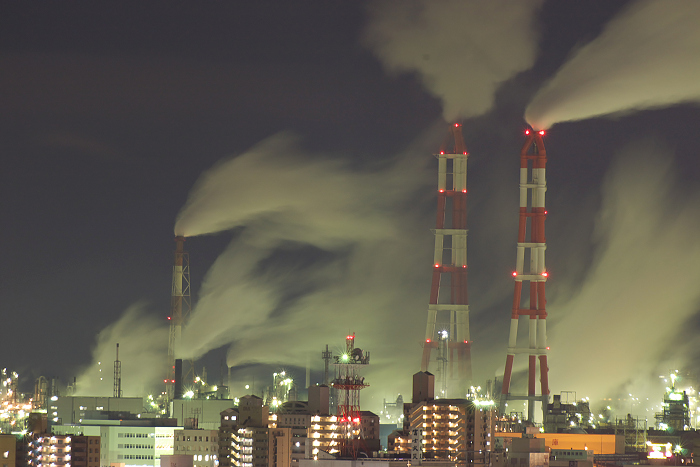
Having lived for a period of about 18 months in Yokkaichi, a city noted for its industrial complexes (as well as a respiratory disease, Yokkaichi asthma 四日市ぜんそく), I can attest to the strange allure of the コンビナート, especially at night:


There are times when Nature faces some serious competition.


Tuesday, February 1, 2011

Across the sea but still in the news

It's cold outside, and inside Amber is lapping up the attention she's receiving from her American set of grandparents, while also reaping the benefits of her birthday loot - six DVD's, courtesy of Barnes & Noble - yes, it's our annual winter visit to the USA. We'll be back to Taiwan 台灣 just before Valentine's Day, but in the meantime I'm making use of my father's (slow) Internet connection to keep up on things going on across the Pacific (as well as to delete annoying comments from Russian spammers). Like this Yomiuri Shimbun 読売新聞/Daily Yomiuri article, for example:


"TAIPEI 台北 - Taiwan government authorities have thrown their support behind plans to form a 'Japan-Taiwan alliance' in semiconductor development and production as a way to help rebuild Taiwanese chip manufacturers in financial difficulty, The Yomiuri Shimbun has learned. A senior Taiwanese official, in an exclusive interview with the Yomiuri on Saturday, said Taiwan authorities were in favor of moves by Japan's leading manufacturer of dynamic random access memory (DRAM), Elpida Memory, Inc. エルピーダメモリ株式会社, to merge and consolidate management functions with its Taiwan counterparts. Elpida has been in consultations with Taiwan's two major DRAM makers, Powerchip Technology Corp. and ProMOS Technologies Inc., to discuss the feasibility of integrating management and establishing a holding company. Speaking on condition of anonymity, the the high-ranking official of Taiwan's Industrial Development Bureau of the Economic Affairs Ministry 中華民國經濟部 said the ministry had asked Elpida to transfer technology to Taiwanese chipmakers in exchange for Elpida's planned listing on Taiwan's stock market. Regarding the management integration prospects of the Japanese and Taiwanese firms, the official said, '[The Taiwanese authorities] have no intention of rejecting the idea [of Elpida's merger with Taiwanese chip manufacturers] as long as it can benefit Taiwanese makers.' Powerchip Technology acknowledged the same day that merger talks were in progress with Elpida, adding, 'There's a possibility of the negotiations leading to a full-fledged collaboration [between Powerchip and Elpida].' Powerchip ranks sixth in DRAM global market share. Elpida, established in 1999 through a merger of the DRAM arms of Hitachi Ltd. 株式会社日立製作所 and NEC Corp. 日本電気株式会社, and later joined by that of Mitsubishi Electric Corp. 三菱電機株式会社, had a 19.4 percent global market share as of the end of 2009, the world's third-largest. The Taiwan authorities' support for the envisioned Japan-Taiwan chip industry alliance is thought to be rooted in the belief that Taiwanese DRAM makers cannot survive on their own against the backdrop of plunging DRAM prices...The ongoing negotiations between Elpida and the two Taiwanese firms are expected to enter a crucial phase before March, when Elpida plans to list on the Taiwan stock market. Over the next month or so, Elpida and the Taiwanese companies are expected to engage in intense wheeling and dealing, with each keen to secure advantageous merger conditions. While the Taiwan authorities have high hopes that the Japanese and Taiwanese firms will strike a merger deal at the earliest possible time, the Japanese and Taiwanese DRAM manufacturers are quoted as saying unresolved disparities exist in the respective firms' business strategies. As the three companies also want to keep a portion of their respective corporate characteristics intact after a merger, the negotiations are expected to focus on how to narrow gaps in their business strategies...There is no telling what moves Elpida and the Taiwanese firms might take from here on, with Elpida scrutinizing measures Powerchip and ProMOS would take to cut their debts, an issue cited by Elpida as a prerequisite to any management integration agreement."

Apparently, the push for greater Japanese-Taiwanese cooperation in chipmaking operations comes from worries by the Taiwanese government that the local companies are slowly losing the DRAM battle to Samsung. It's certainly a more realistic fear than any imagined Korean conspiracies in taekwondo. But this is all so far away, and I'm on vacation, so now it's time to watch a little late night American TV before going off to bed.

Saturday, January 29, 2011

Of red-crowned cameras and cranes

It feels like ages since I last posted something, but ten days isn't that long, actually. I would've written something about last Sunday, when we visited the science museum in the afternoon, and stopped off at a year-end market on the way home, with some pictures inserted to illustrate what we did and saw - only my until-now faithful デジカメ decided to launch Operation Shutdown on the day of my daughter's fifth birthday last week. Instead of doing what it is supposed to do, the Casio カシオ tormented me with messages reading "Lens Error" and "Retry Power On", before refusing to do anything at all. The problem can be fixed (hopefully, knock on wood and all that), but not before we leave this Sunday for our annual Lunar New Year 春節 visit back to the States to reconnect with my family. My wife went out this evening and purchased a Canon キヤノン IXUS 300 HS, so we should have something to enable us to record our Stateside journey, as well as a means to plaster photos of our trip here once we get back to Taiwan in two weeks' time.


In the meantime, here's a short Yomiuri Shimbun 読売新聞 article that can be found on today's Daily Yomiuri ザ・デイリー読売 website (Hokkaidō to give pair of cranes to Taiwan):

"SAPPORO 札幌 - The Hokkaidō 北海道 prefectural and Kushiro 釧路 municipal governments have decided to present a pair of Japanese red-crowned cranes タンチョウ to Taiwan in September, in an effort to breed the bird in a habitat far from its native Hokkaidō. Although red-crowned cranes are designated for special protection, their numbers have increased significantly, according to the prefectural government's Natural Environment Division. The division said the birds, bred at Kushiro Zoo 釧路市動物園, would be sent to Taipei Zoo 臺北市立動物園, which is now constructing a breeding facility for the cranes. The gift also is aimed at celebrating the centennial of the Xinhai Revolution on Oct. 10, which led to the downfall of the Qing dynasty and the establishment of the Republic of China 中華民國, according to the officials. Officials from both countries plan to discuss such details as how to send the birds to Taiwan. In Taiwan, the crane is a popular symbol of longevity and a happy married life."


Monday, January 10, 2011

Fishy chips

Not feeling very 幸せな these days are fishermen on the island of Ishigaki 石垣島, according to this Kyōdō News 共同通信社 article ("Ishigaki fishermen seek pact with Taiwan, brace for China's advance") to comes to us courtesy of Japan Today:

"Fishermen from Ishigaki island in Okinawa 沖縄県, which has administrative jurisdiction over the disputed Senkaku Islands 尖閣諸島, have called on the central government to deal with the increasing presence of Taiwanese fishing boats in nearby waters, which they say threatens their safety and livelihood. Ishigaki islanders have also been largely perplexed by the escalation in tensions between Tōkyō 東京 and Beijing following last September’s collisions between a Chinese trawler and Japanese patrol boats near the Japan-controlled Senkakus in the East China Sea 東シナ海, which exacerbated a longstanding spat over the chain of five tiny uninhabited islands claimed by China and Taiwan. Located some 170 kilometers (105 miles) southeast of the islands, which remain a powder keg for the three Asian economies, fishers of Ishigaki often venture into waters near the Senkakus by navigating for about six hours to reach 'a sea of treasure' harboring tuna, bonito and snapper. But they say a recent rise in demand for fish in Taiwan has resulted in a rising number of Taiwan fishing boats in the sea area south of the Senkakus, raising chances of troubles such as entanglement of each other’s fishing nets and subsequent damage to fishing equipment as well as near collisions between ships. Although fishing vessels from mainland China now operate in the sea north of the Senkakus and do not get into trouble with Ishigaki fishers, locals are concerned that the fast-rising economy will soon begin dispatching fishermen to waters further south in search of high-grade fish to rake in profits amid rising demand in China."

Since the government of Prime Minister Naoto Kan 菅直人 appeared to cave in to Chinese bullying tactics in the above-mentioned collision incident last fall, the odds of further run-ins have increased. What is needed is some sort of mechanism covering who can catch what where, and how much of it, in the absence of a final agreement over who has ultimate sovereignty over the waters:

"Kameichi Uehara, head of the Yaeyama 八重山列島 fisheries cooperative in Ishigaki, which is closer to Taiwan than Okinawa’s main island, said local fishers are at a loss whenever troubles arise since waters near the Senkakus are not covered by the existing Japan-China fisheries pact and Japan and Taiwan do not even have such a treaty. 'It would be desirable if fishing rules are clearly set for the sea area near the Senkakus, but the authorities have left the situation ambiguous because of territorial claims' from China and Taiwan, Uehara said. 'If it is difficult to make clear-cut rules in the near future, we call on the central government to beef up monitoring activities to detect illegal fishing by foreign vessels and ensure safe operations of Japanese fishing boats,' he said. The Japan Coast Guard 海上保安庁 and the Fisheries Agency 水産庁 regularly patrol the sea area, but waters near the Senkakus have become increasingly trouble-prone with a rise in the number of Taiwanese vessels, according to Uehara and other Ishigaki fishers. 'Even though Japan says the Senkakus are an integral part of its territory, the government has been wishy-washy,' he said. 'Japan can prove its effective rule over the islands by making sure that its nationals benefit from fishing resources in waters near the Senkakus, but the government has not taken sufficient measures.' Yoshikazu Nakada, a 47-year-old tuna fisherman from Ishigaki who operates in waters near the Senkakus, said his catches have decreased due to a rise in the number of Taiwanese fishing boats in the sea area. Furthermore, the fishing business overall has been hit hard by recent surges in fuel prices, he added. Nakada, whose grandfather worked at a dried bonito factory that existed in Uotsurishima 魚釣島, the largest among the five Senkaku Islands, was alarmed at the possibility that the lack of fishing rules among Japan, Taiwan and China in the sea near the island chain could lead to overfishing. 'With 1.3 billion people to feed, fish demand in China is certain to jump. Currently, there are even Taiwanese fishing vessels with crews from mainland China' operating in the sea south of the Senkakus, Nakada said. He expected that those crews from mainland China on Taiwanese boats will accumulate know-how on fishing methods in the sea area and serve on Chinese vessels that could advance to southern waters in a few years."

The article concludes by hinting that Japan could reinforce its hold over the Senkakus by allowing development on the islands once again:

"The central government leases plots of land on the islands from private owners and restricts landings on the Senkakus. Beginning around the turn of the 20th century, Japanese entrepreneur Tatsushirō Koga 古賀辰四郎 ran businesses such as bonito processing on the islands, hiring more than 200 workers. With the failure of those businesses by around 1940, the islands were eventually deserted and people linked to Koga’s descendants now own the land plots. An Ishigaki city official, who declined to be named, said Tōkyō has prevented the municipal government from directly inspecting the islands for property tax assessment or research on ecosystems of the uninhabited island chain in recent years. Since the 1972 reversion of Okinawa Prefecture to Japanese sovereignty from U.S. control, which put the Senkakus under the control of Ishigaki, a mayor of the city has never made an official visit to the island chain, according to the official. Since the islands are not equipped with port facilities, Ishigaki fishers operating in the nearby sea area cannot anchor their ships in the event of bad weather, putting themselves in danger. He said the central government should take steps to support those fishers who cannot land on the islands even in emergencies and see their catches decline as they refrain from venturing into troubled waters. 'We are frustrated because as a local government, we cannot engage in matters that could have diplomatic ramifications,' the official said, urging the central government to be more responsible for the management of the Senkaku Islands."

Chinese and Taiwanese fishermen working together to put pressure on Japanese fishermen in Japanese territorial waters? The East Asia region certainly has nothing to fear from the efforts of closer cooperation being urged on by the Ma Ying-jeou 馬英九 administration. Right?


While Japanese-Taiwanese relations are troubled in the water, on land things seem to be going more swimmingly, as reported in this translated Yomiuri Shimbun 読売新聞 article in the Daily Yomiuri ザ・デイリー読売 ("Elpida, Taiwan firms in final tie-up talks"):

"Elpida Memory Inc. エルピーダメモリ, the world's third-largest maker of Dynamic Random Access Memory (DRAM) chips, and two Taiwan chip-makers that are the world's sixth- and seventh-biggest are expected to decide on a comprehensive business integration as they enter the final stage of tie-up negotiations, it has been learned. The Japan-Taiwan chip-maker alliance would be the world's second-largest DRAM maker behind Samsung Electronics Co. of South Korea, which holds the No. 1 spot. Elpida plans to finalize the business integration talks by the end of this month by obtaining approval from Taiwan authorities and securing support from financial institutions in Taiwan, sources said. According to the sources, Elpida President Yukio Sakamoto 坂本幸雄 visited Taiwan and met Thursday and Friday with the heads of Powerchip Technology Corp. and ProMOS Technologies Inc. During the talks, they reached a general agreement that Elpida's Taiwan subsidiary, Rexchip Electronics Corp., would become a holding company with Powerchip and ProMOS under its umbrella, the sources said. Earlier, a capital tie-up, in which Elpida would invest in the Taiwan firms, and other options were being considered. But during negotiations, a business integration emerged as the preferred option, as it would bring the benefits of large-scale operations earlier, according to the sources...Sakamoto reportedly plans another visit to Taiwan again this month as Elpida seeks approval from Taiwan authorities for the tie-up plan. The firm will also begin talks with Taiwan's financial institutions to reduce the liabilities of Powerchip and ProMOS and provide support for the firms' restructuring. After the integration, Elpida will transfer the production of DRAM chips for personal computers to Taiwan and concentrate the development and production of chips for smartphones domestically, the sources said."

Friday, November 19, 2010

Play ball

Sports are in the news now in Taiwan, but for all the wrong reasons, as the country reacts with disbelief and fury over the disqualification of Taiwanese taekwondo athlete Yang Shu-chun 楊淑君 at the Asian Games in Guangzhou, China. Rather than throw my two cents-worth into the maelstrom of anti-Chinese and anti-Korean conspiracy theories, I'll refer you to an article in the Daily Yomiuri ザ・デイリー読売 about baseball, that shared national pastime among the USA, Japan and Taiwan. The veteran baseball writer Jim Allen, in his regular Hot Corner column, has a piece on efforts being made in Japan to expand the grand old game in the international market, with a large part of the article referring to Taiwan ("Taiwan next stop on road to future"):

"...Nippon Professional Baseball 日本プロ野球 Commissioner Ryōzō Katō 加藤良三 met with his counterparts from Australia, South Korea and Taiwan in September. As a result of that meeting, Taiwan has offered to host a revived Asia Series in November 2011. The club championship started in 2005 and was held at Tōkyō Dome 東京ドーム four times. 'It's been our goal to unite Asian baseball,' Richard Wang, the secretary general of Taiwan's Chinese Professional Baseball League 中華職業棒球大聯盟, told The Hot Corner by phone on Tuesday. 'From many years ago, we had a dream of having a champion of the Asia Series play against the major league champion.' Taiwan makes an interesting setting for the Series' revival, considering the CPBL is undergoing its own rebirth nine months after being rocked by a massive game-fixing scandal. 'It [the scandal] was somewhat of a disaster,' Wang said. 'But since then, we've gotten great support from the Taiwan government's baseball revival plan. We had trust issues. Baseball had been tainted with bad influences.' Wang says the government's recognition of pro baseball's role in the nation has been crucial. 'It's not just from government policy, but from law enforcement,' he said. 'This is so helpful to keep the bad things away from baseball.' Wang believes the more visible government role will make it easier to secure sponsors. 'More than just getting their names out in public, companies will see involvement with baseball as a positive thing,' he said.

As a crucial part of today's baseball business, sponsorship - or the lack of it - can make or break a venture. The Asia Series began as the Konami Cup and for three years participating teams reaped the rewards of the sponsorship deal. In 2008, the tournament operated without Konami's コナミ cash and hasn't been played since. In the meantime, Japan's champion and the winning team from the Korean Baseball Organization have squared off in a single game. A year ago, the Yomiuri Giants 読売ジャイアンツ beat the KIA Tigers in Nagasaki 長崎. On Saturday, the Chiba Lotte Marines 千葉ロッテマリーンズ defeated the SK Wyverns at Tōkyō Dome before a crowd of 32,743. The strong gate ensured a profit, but was more a reflection on the Marines' fanatic local following than an indication of the tournament's popularity. 'Making money is good,' Wang said. 'But we need to build this Asian Series. It's our goal to unite Asian baseball. In the process, we try to make money.' A challenge for the 2011 tournament, will be finding a way to include a team from Australia, a difficult prospect considering the Australian Baseball League's schedule begins in early November, just as the Japan Series 日本選手権シリーズ is ending. Teams from Taiwan and South Korea already have to wait until the Japan Series ends in early November to meet Japan's champions. To make international competition work, there needs to be coordination and compromise among teams and leagues, particularly in the touchy area of scheduling. It isn't going to be easy, but when individual owners believe their operations will benefit from baseball having a higher international profile, they will jump on the bandwagon like nobody's business."

It's a good article, and one hopes the professional leagues in the various countries will be able to bring about a revival of the Asia Series. There are many obstacles to holding a true World Series with the Major League champion, however. The season is long enough as it is, and MLB is talking about expanding the playoffs further, starting in 2012. The MLB Players Association would also have to be involved in any negotiations to bring about a trans-Pacific championship.

As for Taiwan, Wang sounds very optimistic on the issue of gambling, but considering all the controversies that have beset the league since its formation in 1989, it's doubtful the specter of game-fixing has gone away.

Thursday, September 16, 2010

The continuing story of the Diaokakutai Islands

And so it goes on, according to this Yomiuri Shimbun 読売新聞 from today's Daily Yomiuri ザ・デイリー読売:


"A Taiwan fishing boat carrying two protesters entered Japan's contiguous zone near the Senkaku Islands 尖閣諸島 in the East China 東シナ海 Sea early Tuesday, in what appeared to be a failed attempt to land on the disputed islets, the Japan Coast Guard 海上保安庁 said. The encroachment is believed to have been made in response to the arrest of the Chinese captain of a trawler that collided with two JCG patrol vessels last week near the Senkaku Islands. The fishing boat entered the contiguous zone - a 12-nautical-mile (22-kilometer) strip of water extending from the outer edge of Japan's territorial waters - at a point east-southeast of Uotsurijima island 魚釣島, the main island in the Senkaku Islands, at about 2:35 a.m. Tuesday. The 11th Regional Coast Guard Headquarters based in Naha 那覇 issued repeated warnings to the vessel and dispatched patrol boats and aircraft. The fishing boat, which left a northern Taiwan port Monday, stopped near Uotsurijima island when five Taiwan and JCG patrol boats surrounded it at about 4 a.m. About 2-1/2 hours later, the fishing boat moved west and headed toward Taiwan, leaving the contiguous zone at about 8 a.m. at a point west of Uotsurijima island. At about 10:30 a.m., the boat left Japan's exclusive economic zone. According to the JCG, the activists are members of a private organization, the Chinese Association for Protecting Tiaoyutai. Both China and Taiwan claim the Senkaku Islands, which they call Tiaoyut'ai 釣魚台群島. In the contiguous zone, which is within Japan's EEZ but outside its territorial waters, foreign vessels are not allowed to engage in economic activities such as surveys for natural resources without permission. But they can sail through the zone as long as they do not violate the rules. In Taiwan, the Chinese Association for Protecting Tiaoyutai announced Tuesday morning it had abandoned its effort to land on the islets and the fishing boat was expected to arrive in Taiwan on Tuesday night. In Tōkyō 東京, Chief Cabinet Secretary 内閣官房長官 Yoshito Sengoku 仙谷由人 expressed regret over the incident. 'We lodged a protest with the Taiwan government through diplomatic channels. The Senkaku Islands are an integral part of Japan, both historically and under international law,' Sengoku said at a press conference Tuesday morning. '[The JCG's action to prevent the activists from landing on the Senkaku Islands] was appropriate.'"

Not surprisingly, the Taiwanese government expressed its "deep dissatisfaction" and lodged a protest with the Japanese government, while a small group of protesters burned Rising Sun flags 旭日旗 and threw dead fish in front of the Japan Interchange Association 財団法人交流協会 in T'aipei 台北. Perhaps not so coincidentally, today's Taipei Times had this story on its front page, in addition to a report on Taiwan's protests at Japan's "interference":


"A massive military exercise of potential importance to Taiwan will be staged in December on and around the Ryūkyū Islands 琉球諸島 by the Japan Self-Defense Forces 自衛隊 and ships from the US 7th Fleet...the exercise is aimed at perfecting plans for recapturing the lightly protected islands should they be invaded by China...One possibility...is that the Chinese might stage a narrowly focused attack on the Ryūkyū Islands designed to open a corridor through the archipelago. A prime candidate is Miyako Island 宮古島, which abuts both Miyako and Ishigaki 石垣島 straits...Alternatively, the (Chinese People's Liberation Army) could try to capture the entire Ryūkyū chain from Japan in an effort to bar maritime Asia to US reinforcements while keeping forces already in the theater from entering the Taiwan Strait...PLA forces entrenched along the island chain could supply air and sea cover for (People's Liberation Army Navy) vessels cruising off the east coast of Taiwan...An obvious step, (one) study says, would be for Japan to fortify the islands themselves against attack, 'sparing Japanese forces the hazards of retaking them from PLA occupiers. Dug-in and armed with anti-ship and anti-air weaponry, Japanese troops could make the Ryūkyūs exceptionally hard targets to capture for PLA forces operating far from their bases,' it said."

I've been thinking of visiting Ishigaki, in Okinawa Prefecture 沖縄県, on my next trip to Japan. The way things are going, I might have to speed up preparations before things get out of hand.

Saturday, September 11, 2010

In the news

From the Yomiuri Shimbun 読売新聞, by way of today's Daily Yomiuri ザ・デイリー読売:


"Japanese expatriate Toyoharu Kitamura 北村豐晴 has made a splash in Taiwan with the new comedy 'Love You 10000 years' - his first film as a professional movie director and Taiwan's first movie to be directed by a Japanese. Kitamura has lived in Taiwan for the past 13 years. He has set down roots so deeply, he said, that 'I don't feel any linguistic or cultural barriers.' His film tells the story of a Japanese woman studying in Taiwan who signs a three-month contract requiring her to be the girlfriend of a local rock star. He is already enthusiastic about his next film project, and says, 'I want to make movies only a Japanese man living in Taiwan can.' Kitamura, originally from Shiga Prefecture 滋賀県, was a member of an Ōsaka 大阪 drama troupe before moving to Beijing to study Chinese to enrich his acting repertoire. After a short visit, he moved to Taiwan and began studying at a school there. It was at this point that he decided switch from acting to directing. The decision came after a graduate professor of Kitamura's suggested that he expand one of his short films into a full-length feature. Kitamura is now married to a Taiwanese woman, with whom he has a son. The director has made Taiwan his home and plans to remain there. His approach to life is to 'build something from nothing,' an Chinese saying. 'I'll be a Japanese immigrant here, just as there are Chinese immigrants in many other countries,' he said. 'I'll also send my works back home to Japan.'"