Saturday, October 5, 2013

Japan and Taiwan: Days 11-13 and 15.

After ten days traveling in Japan, I flew from Haneda Airport 羽田空港 in Tōkyō 東京 to Taipei's 台北 Songshan Airport 台北松山機場. Once again, a typhoon threatened to change my plans. Announcements were made prior to boarding that the flight may have to be diverted or even forced to return to Tokyo due to the storm that was on course to batter much of Taiwan. But as things turned out, we arrived at Songshan on time and in just a light rainfall. 

I would stay four days in total, all of them at the Taichung 台中 home of my best friend Steve and his family. With the exception of a day trip to the southern city of Tainan 台南 (the subject of a later blog post), I didn't do any sightseeing. Instead, I spent the time catching with Steve, whom I hadn't seen in over a year. I also had the opportunity to meet up with others, including having lunch with some old students of mine from my teaching days in Fengyuan 豐原, Stacey, Amanda and Eric; sitting down to dinner and drinks with Michael Turton; and spending an enjoyable afternoon with Michael Klein, his wife Hui-chen and their adorable daughter Phoenix. I said hello to my parents-in-law and had a good chat over a meal with my brother-in-law; and I even stopped in at the kindergarten where I used to work in order to pay a courtesy call. There were many others I wish I could've gotten together with, but didn't have enough time on this brief visit; hopefully, the next time I'm in Taiwan, I'll be able to do so.
Coming back to Taiwan after a 16-month absence and after having lived almost four months in Shàng​hǎi 上海 drove home just how different the former is from China, despite the all the ideology and propaganda. My apologies for hurting the feelings of the Chinese people, but that's the reality. Truth be told, Taichung (and even Tainan) looked much grittier and more run-down in comparison to Shanghai, but in terms of friendliness and quality of service, China still has a lot to learn from the Taiwanese. Still, while it was nice to be back on Formosa, I have no regrets about moving on, and have no desire to go back to my old life there. Then again, while I'm enjoying living and working here in Shanghai, I'm glad we're only scheduled to be here for two years. An Old China Hand is one thing I don't want to become.


Bidding a fond farewell to Tokyo and the rest of Japan from the observation deck at Haneda.


Somewhere between Taipei and Taichung on Taiwan's High-speed Rail 台灣高鐵


Steve and his son Eli pose in front of his school, Teacher John English, located in the southern part of Taichung. Steve has worked hard getting his school ready, which hasn't always been easy as he's tried to follow all the regulations (read obstacles) as determined by Taiwan's impressive bureaucracy (it's no wonder so many kindergartens and bǔ​xí​bān 補習班 operate outside the law). The result has been official certification, as shown by the white sign on the wall to the right of the entrance.


Eli and I on the grounds of the large library across the street from Steve's school. It was rainy off-and-on while I was in Taichung, but the feared typhoon never reached us.


The view from the third floor of the house where Steve, his wife March, daughter Zoey and son Eli reside.


I'm not sure why Zoey found this so amusing. It was the time of the Mid-Autumn Festival 中秋節, after all.


Steve, Zoey and Eli...and a lot of ducks


A typical Taichung street scene


Waiting for a train at Daqing Station 大慶車站 . Taichung is in the midst of two massive transportation projects - one the construction of the city's first subway system and the other, which you can get a glimpse of here, is the elevation of parts of the railroad tracks that run through it. 


On the local train heading north out of Taichung. This shot was taken somewhere between Houli 后里車站 and Tai-an 泰安車站 stations.


The scene out in front of Xinfeng Station 新豐站, in Hsinchu County 新竹縣. It was here that I was met by the Bushman himself, who took me to his home, introduced me to his 11-month-old cutie of a daughter, treated me to lunch at a neighborhood restaurant and then went to the trouble of driving me out to Taoyuan Airport 台灣桃園國際機場. Michael is one of the nicest people I've had to pleasure to meet in Taiwan, and I look forward to meeting up with him again (and of being able to return some favors) when the chance comes.


After years of criticizing the beer situation in Taiwan (I had a bottle of Taiwan Beer 台灣啤酒 the other night here in Shanghai, and it was just as awful as ever), I was pleasantly surprised to find this. Ignore the Taiwan Beer glass - King Wujhou isn't produced by the government-run Taiwan Tobacco and Liquor Corporation 台灣菸酒公司. Unfortunately, I can't find anything about in English online. It was good, though.


Michael with his wife Hui-chen and daughter Phoenix


One last milk tea 奶茶 at Taoyuan Airport while waiting for my flight to Shanghai


After touching down at Shanghai's Pǔ​dōng Airport 浦东机场, I treated myself to a ride on the Shanghai Maglev Train 上海磁浮示范运营线. It only took six minutes from the airport to the terminus at the Lóng​yáng Road Metro station龙阳路站 , but the 301-kmh (187-mph) journey did cut some time off the trip back to our home in the Hóng​qiáo 虹桥  area...


...and it was a fun ride.


Friday, October 4, 2013

Japan and Taiwan: Day 10 - Sendai

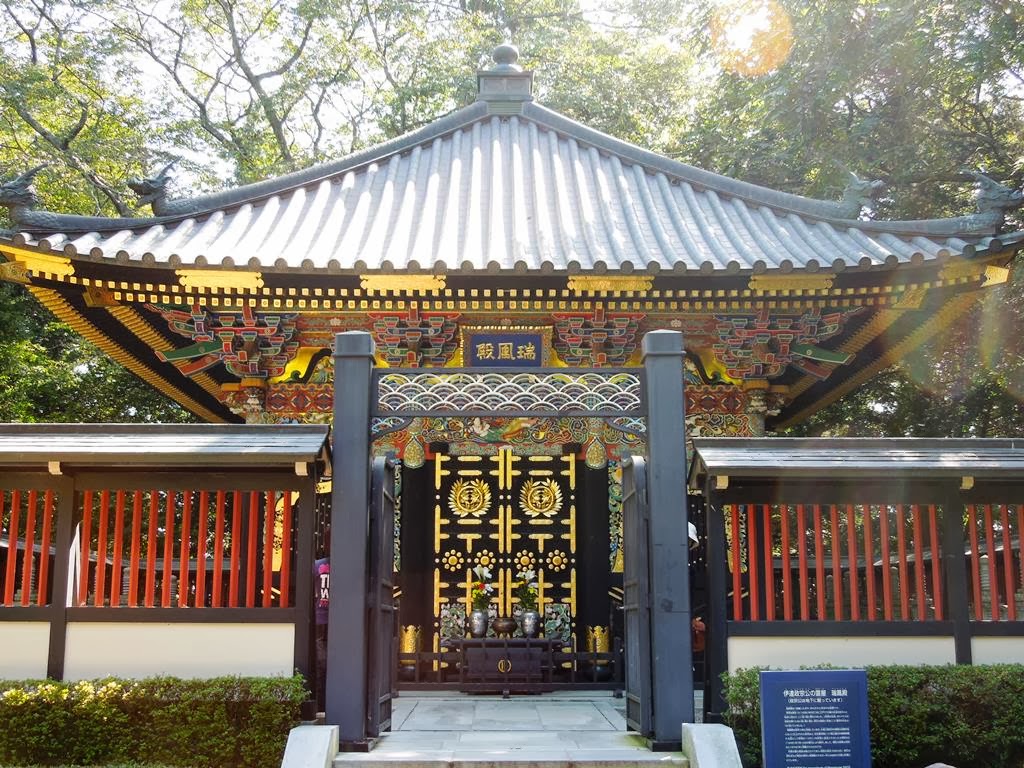
The steps leading up to the Zuihoden


Sendai 仙台. I couldn't believe I was in Sendai again. Actually, I've been having difficulty remembering exactly when and with whom I was last there. I have vague memories of a short spell in the city sometime in the early 1990's, but I can't recall if I went there with an ex-wife or a former girlfriend (or a girlfriend who later became an ex-wife). This is somewhat odd as my memories of where I've been in Japan are usually pretty clear, but for some reason the first time to Sendai is getting lost in the mists of time. Not so with this most recent trip, however, especially now that I have a blog to help keep those memories lucid as time marches on.

Sendai is the largest city in the northeast region 東北地方 of Japan's main island of Honshū 本州 and, from all accounts, is a modern metropolis and a nice place to live, with plenty of stores and a very active nightlife. For the traveler, Sendai is an important transportation center, but in terms of sightseeing, with the exception of the annual Tanabata Matsuri 七夕祭り (the Star Festival, held every August 6-8), there isn't much to keep one busy for more than a day. But it was enough on this Friday, my last full day in the country before leaving for Taiwan the next day.


Taking advantage of the city's sightseeing bus, Loople Sendai るーぷる仙台, which, as its name suggests, makes a loop of Sendai's main sights (a one-day pass was a bargain at ¥600), I had myself dropped off at the Zuihō-den 瑞鳳殿. Located on a wooden hillside, the Zuihoden is the site of three mausoleums - those for Date Masamune 伊達政宗 and his two successors. More than any other person, Masamune was responsible for making Sendai the important regional city it is today. As the feudal lord overseeing his domain, he laid out the city's original grid pattern in the 17th century, and his clan ruled Sendai for 270 years, governing from a huge, ornate castle during the Edo period 江戸時代. After Masamune died in 1636, he was interred in the Zuihoden, pictured above. Unfortunately, the original mausoleums were lost during air raids in World War II, but the modern reconstructions you can see today are faithful reproductions and are no less impressive. 


Contrary to what many people perceive as the aesthetics of traditional Japan, the mausoleums are colorful and opulent. They were originally constructed in the style of the Azuchi-Momoyama period 安土桃山時代, a time when, as Wikipedia describes it:

The ornate castle architecture and interiors adorned with painted screens embellished with gold leaf were a reflection of a daimyō's 大名 power but also exhibited a new aesthetic sense that marked a clear departure from the somber monotones favored during the Muromachi period 室町時代.

The famous shrine at Nikkō 日光東照宮 is another example of Momoyama-style architecture and design. In fact, a number of the weathered wooden buildings still standing in Japan after three or four centuries were originally built in this colorful style, only to have the paint gradually flake off over time.


The main gate of Zuihoden, made from cypress. The name of the gate, Nehammon 涅槃門, comes from the Japanese word for nirvana, nehan 涅槃.


The Kansenden 感仙殿, the mausoleum of Date Masamune's successor, Date Tadamune 伊達忠宗, who became the second feudal of the Sendai-han 仙台藩 feudal domain.


The mausoleum of the third daimyo, Date Tsunanume 伊達綱滑, is called the Zennōden 善応殿. Like the Zuihoden and Kansenden, the original was destroyed by American bombers. 


The mausoleums are located on pleasantly-wooded grounds. After spending an hour or so here, I hopped on the next Loople bus as I continued my journey uphill.


I got off at the next stop, the Sendai City Museum 仙台市博物館. The displays covered the history of the city from the Stone Age to the present, but the majority of the exhibits were naturally concerned with Date Masamune and his ilk. This portrait of Masamune, like all others made during his lifetime, depicts him with two eyes, despite the fact he lost one of his eyes during childhood.


Swords and armor used by the samurai 侍 of the Sendai-han. Note the distinctive crescent moon on the helmet.


The next bus stop was Aobayama-kōen, the site of Sendai Castle, or Aoba-jō 青葉城 as it's more popularly known (the city's main thoroughfare is called Aoba-dōri 青葉通り). The castle is long gone, but the statue of Masamune riding his horse has become the symbol of the city (and it accurately depicts him as having only one eye).


Masamune looks out over the city that still owes so much to him


While atop Aoyama-koen, I had one of Sendai's specialty foods for lunch. Gyūtan 牛タンis cow's tongue, which I grilled at the table while quenching my thirst with a beer. 


Getting on the Loople one more time, I rode the tourist bus back to the downtown area, where I took a walk through a couple of Sendai's long, covered shopping arcades.


It was soon time to get back to Tōkyō 東京 however, so I retrieved my bags and bought a ticket for the bullet train 新幹線,  my JR Pass having expired the day before. A self-portrait of the traveler waiting for his train at Sendai Station 仙台駅, reading The Japan News (formerly The Daily Yomiuri) and sipping an iced cocoa アイスココア.


I soon found myself back where I started, in Tokyo's Shinjuku 新宿 district, where I dropped my bags off at my hotel and, starving, wolfed down a bowl of katsudon カツ丼. And then I was off to meet another old friend, Jun. Kicking back with way too many bars at an izakaya 居酒屋, the two of us had some catching up to do, and catch up we did. And just as with my friend Aviva, I was so caught up in our conversation that I neglected to capture any moments on film, which was a damn shame.

And thus ended the Japan leg of my two-week vacation. In addition to some great travels in Tōhoku, this trip was made even more pleasurable by virtue of having been able to see some wonderful people again after too many years. And so to Aviva, Doug and Jun, I bid you a fond じゃまた (not さようなら), and hope to meet up with you again someday soon.


Thursday, October 3, 2013

Down on Duolun Street

Today is the last day of the three days off from work I've had as a result of the Chinese National Day holiday (I could be facing more time off thanks to the shutdown of the federal government, but I am going into work tomorrow as scheduled). For the first two days we didn't do much other than go over to a dinner party one evening organized by one of the Taiwanese wives that my spouse has gotten to know at the U.S. Consulate here. So today I was determined to get out and about in the city, and decided that the Duō​lún Road Cultural Street 多伦文化名人街 in Shàng​hǎi's 上海 Hóng​kǒu 虹口 area was as good a destination as any, so off we went. 


Getting to Duolun Culture Street was amusing, to me anyway. From the Dōng​bǎoxīng Road metro station 东宝兴路站, we had to pass through a neighborhood that was obviously a holdover from the days before Shanghai became the filthy rich metropolis that it is today - cramped houses the occupants of which were spilled out onto the narrow lane to conduct their businesses, while a steady stream of horn-blaring scooters passed back and forth (in the old days it would've been bell-ringing bicycles, I'm sure). The look on my wife's face was priceless as we passed by the communal toilet. And when I suggested having lunch at one of the numerous small eateries in the area, Pamela hesitated, no doubt concerned about the hygiene (or lack of), until she relented and agreed to sit down to noodles at a Fú​jiàn 福建 hole-in-the-wall restaurant. Though my wife was born and raised in Tái​wān 台灣 and speaks the dialect fluently, she's always considered herself to be "Chinese", an identity she derives from an idealized image she has of the country (prior to our being posted in China, she had only been to the mainland once, and that was with a tour group of fellow Taiwanese). Which is why I take a sadistic form of pleasure watching her reactions when the China of her fantasies comes face-to-face with the China that exists on the ground, especially the further away you get from central Shanghai. Stay tuned...


My initial impression of Duolun Culture Street was disappointing when we finally got there. The Old Film Café 老电影咖啡馆 was closed to the public due to a movie or TV shoot that was going on, and I couldn't even get a picture of the Charlie Chaplin statue out front. And all along the street, couples were having their wedding photos taken. While they were interesting to watch at first, especially the women in their qí​páo 旗袍 dresses and 1920's style hairdos, it quickly became tiring having to step around these people while walking on the street. At one point, the three of us were standing and discussing where to go next when a man came up and asked us to get out of the way because we were in the background of a shot. It's times like that I wish I weren't a diplomat.


Further disappointment ensued when I learned that the Máo Museum 毛泽东像章馆 wasn't open today.


Things began to brighten up, however. For one thing, the street itself was interesting to stroll down, lined with traditional Shanghai houses known as shíkùmén 石库门. Many of these now operate as antique and curio shops, making them fascinating places to pop your head into and look around. 


A short walk down one of the side streets led to the Museum to the League of Left-wing Writers  中国左翼作家联盟会址纪念馆. The league was a group of radical writers who formed in this house in 1930 and ended up being persecuted by the Kuomintang 國民黨 -led Republic of China 中華民國 government before being lionized, in turn, by the Chinese Communist Party 中共. The displays inside were naturally of a political nature, but my interest lay with the building itself, a beautiful relic that was erected in 1924.


In the small garden to the side of the building, my daughter posed in front of a statue of five writers who were brutally executed by the KMT, an event crudely depicted by a diorama inside the museum. 


Back on the main street, another beautiful building was the former residence of H.H. Kung 孔祥熙, a wealthy Chinese banker and KMT politician, who married one of the Soong sisters 宋家姐妹 . His home bears some Middle Eastern influences in its design.


Having reached the end northern end of Duolun Culture Street, we reversed course and headed back down. On the way, we went into this antique shop.


"We must liberate Taiwan!" An original propaganda poster was hanging on the wall, and I wanted it, badly! At an asking price of 15,000 RMB ($2450), I had to regretfully pass on it, however. I'll have to content myself with finding a reproduction somewhere in this city. I'd like to get this, and a KMT poster calling for the liberation of the mainland, and hang them up side-by-side in my home.


This poster of Communist icon Léi​ Fēng 雷锋 was another original with a much more reasonable asking price of 500 RMB ($82). Sitting here writing this, I'm now wishing I'd bought it.


What I did pick up, though, was a 1966 first edition of Quotations from Chairman Mao Tse-tung, the infamous "Little Red Book" and a bargain at only 170 RMB ($27.75), and paid for with money earned working for the imperialist paper tiger.

The 18.2 meter (60 feet) high Xīshí Bell Tower 


From the explanatory plaque: "Uchiyama Kanzō 内山完造...native of Okayama 岡山, Japan; owner of Nèishān Bookstore 内山书店; a foreign friend to the Chinese people; and a close friend of Mr. Lǔ​ Xùn's 鲁讯 residing in Hongkou from 1916 to 1947." Lu Xun was one of the earliest and best-known of China's modern writers, and his presence can seen and felt all over the Hongkou area.


We stopped to take a look inside the 1928 Hóngdé Temple 鸿德堂, which despite its name and appearance was actually a Christian church. Inside, visitors were sitting in pews, watching a video about Jesus.


Amber suggested we go inside the Shanghai Duolun Museum of Modern Art  上海多伦现代美术馆, much to her father's pleasure. The building's architectural style, unfortunately, clashed with the rest of Duolun Culture Street, but there was a view of the surrounding area from the third floor, even if was through grimy, heavy plastic sheeting.

On the way back to the station, I stopped to have a chat with Lu Xun...


...while Pamela bought some ointment from a street vendor, and Amber posed next to a fruit stand, causing at least one local to do a double take.