Showing posts with label Shanghai.. Show all posts

Sunday, February 1, 2015

Bang a Gong (Get it on)

Having made it through the post-funeral, post-food poisoning blues, the family unit ventured outside yesterday on a chilly Saturday afternoon to Shànghăi's 上海 post-industrial waterfront area to have a gander at one of the city's up-and-coming art museums, the Power Station of Art. The suggestion to do so came from my now-nine year old daughter, who read about the gallery in an article in Connections, the in-flight magazine of China Eastern Airlines, while we were returning home from a weekend visit to Xiàmén 厦门 earlier this month (see here and here). Impressed with the photograph of the chimney-turned-thermometer, she expressed a desire to go, and once we got there yesterday, she led the way, guiding us from floor to floor, and room to room. Afterward, she declared the museum to be "fun", although she found some of the video installations to be disturbing. My wife, on the other hand, complained that the experience had cost her several hours of her life that she would never get back (from a woman who thinks the Mona Lisa is overrated).

And what was my take on the Power Station of Art, you're probably not wondering? Like most modern art museums, the exhibits were largely hit or miss. Some were interesting, a few even thought provoking; many others crossed the line into pretension, trying to hard to say something, anything. The biggest peeve I had wasn't with the installations themselves, but with the way the curators took it upon themselves to tell the viewers the meanings behind what they were looking at, instead of letting us interpret in our own ways what it was we were experiencing. Art, contemporary or otherwise, doesn't work well when someone is taking you by the hand and leading you around. 


The Power Station of Art is housed in a converted power plant. The building is apparently over 110 years old.


One of the exhibits that leased impressed Pamela. My wife said she could throw an egg against a wall, let the mess dry and then market it as "art". I wish she would - the additional income from her new-found fame could someday help pay for Amber's college tuition.


One of the more interesting exhibits was that by a Taiwanese artist whose name I unfortunately neglected to note down (let alone remember). His or her subjects included the Losheng Sanitorium 樂生療養院 issue and a photographic series on displaced factory workers struggling to get by in the Bādé District 八德區 of Táoyuàn City 桃園市 in Taiwan.


The sound installation work 1999 by Lu Ding. Amber preferred the phones that played music rather than the ones that had recordings of voices speaking.


I liked this drawing not only for its technical skill, but because I was one of the few visitors at the museum that probably understood all the cultural references it contained.

My daughter points out the ghostly faces superimposed over the images


After careful examination, Amber concluded that the black disks in the pictures on the far right above were not, in fact, UFO's, but instead must be black holes.


The video installation Black Face, White Face combined visuals of coal and limestone miners with images of their workplaces. The more observant of you may have already noticed the nude curled up in the fetal position in the bottom-left corner of the screen.


Puppet by Peter Friedl. Unless we're talking about the old Thunderbirds TV series, I consider marionettes to be right up there with clowns when it comes to creepiness. F.A.B. not!

News Blues, in which live actors performed what sounded like Gregorian chants in Mandarin while reading newspapers. Ever the art critic, Pamela just smirked...


Passion fruit trees withering on the vine due to the lack of sunlight, suffering in the name of art.


Being a former power plant, the Power Station of Art has plenty of open space, with a maximum unblocked height of 45 meters (148 feet).


The view from one of the upper floor windows


One of the most interesting exhibits for me was the video installation of residents of Kesennuma 気仙沼, Miyagi Prefecture 宮城県, Japan talking about the effect the March 11, 2011 Tōhoku earthquake and tsunami 東北地方太平洋沖地震 has had on their lives.


Another installation that I enjoyed contained aural and visual images captured from one of Shanghai's older neighborhoods.


The sixth-floor roof had an outdoor terrace that we ventured onto despite the cold. The view overlooking the Huángpŭ River 黄浦江 was almost worth the price of admission. 


The building across the river from the museum was itself a work of art


These futuristic buildings are vestiges of Expo 2010, which was held in Shanghai. Fading posters of the event can still be found scattered around the city.


The 165 meter-high (541 feet) chimney that towers over the complex now acts as a thermometer. It was reading 3° Celsius (37° Fahrenheit) at the time were outside. There's a pricey restaurant on the top floor of the Power Station of Art, with a thuggish-looking security guard stationed on the floor below checking everyone's tickets to make sure nobody dared attempt to enter the museum from the even-more pretentious "fusion" dining establishment.


"Provid(ing) the public with a platform for exhibition and study of contemporary art; remov(ing) the barriers between art and life; promot(ing) cooperation between different kinds of art and culture and creation of knowledge." 

Now if they could only do something about the fascist on the 6th floor. Unless his presence was also one of the museum's installations...




Sunday, August 3, 2014

Can you tell me how to get to Foreigners Street?

"Lăowài老外"

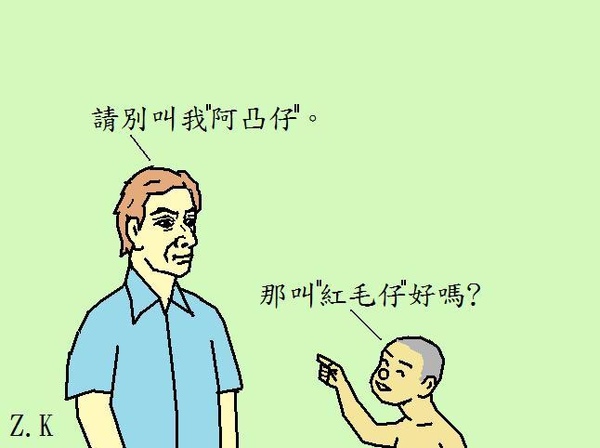
Anyone of the non-Asian persuasion who has spent any time at all in China will no doubt be familiar with this word as they will have heard it on many an occasion, usually accompanied by stares as people point out the obvious to their companions. In a country that the government likes to trumpet as a multi-ethnic society, it's a common refrain, especially as you leave the major urban areas and tourist sites. Chinese people will say it's a term of respect (probably because it includes the character for "old", reflecting Confucian values yada yada yada); in any case, laowai (along with wàiguórén 外国人) are words you just need to get used to if you want to preserve any sense of sanity while living in China. And, in any case, they're certainly much more preferable to the oft-heard in Taiwan "ah dok ah" 阿凸仔, aka "Big Nose".

A short walk from our housing compound in Shànghăi 上海 is a street called Lăowài Jiē 老外街, aka Foreigners Street. The name is no more offensive than calling a section of a Western city "Chinatown". It's a roughly block-length stretch of restaurants and bars, the overwhelming majority of which serve Western cuisine that is mediocre in quality and inflated in price. Still, everyone needs a break from Chinese food every now and then, and so it comes as no surprise to find significant numbers of Shanghai's expat community strolling up and down Laowai Jie, especially on weekends (though the sight of middle-aged Western men moving around in packs in the evenings is a little disconcerting). What amuses me is the way the street is promoted to the Chinese as a tourist sight, complete with brown street signs pointing the way (as in Taiwan, in China the color brown on signs at intersections denotes sightseeing areas) and even a tourist information booth at one end of the street. It makes me wonder what the average Chinese visitor to Laowai Jie finds more interesting - the different restaurants serving exotic foods or the exotic people dining indoors and walking around outdoors. 


A train sits parked at one entrance to the street (the one closest to where we live). Why it's there isn't exactly clear from the English explanation on the wall plaque. 


My daughter poses on the street. The girls came back to Shanghai just over a week ago, after spending a month in Taiwan visiting family. Bachelorhood wasn't all it was cracked up to be.


The lucky receiver of our much-desired patronage this afternoon was Fat Cow, a burger place that has only recently opened for business, in the process leaving Laowai Jie bereft of any French restaurants. The food wasn't bad, but like much of the Western fare in Shanghai, it sat like a stone in my gut for a long time afterward. The bill came to RMB 221 ($35.80) - roughly equal to what we would pay eating out as a family in the U.S., but a lot more that what we usually fork out when we eat as the locals do (the $8 chocolate milkshake certainly played a big part in the final bill). We have neighbors who go to Fat Cow on an almost-weekly basis. With all the cheaper and better-tasting dining options available in Shanghai, it'll probably be a long time before we go back.


It may be called Foreigners Street, but there are still subtle reminders of where you actually are.


A local animal shelter had set up on this Sunday afternoon, trying to find homes for needy cats and dogs. It reminded me of a similar scene we often saw in Taichung 台中 on weekends, opposite People's Square.


A Thai restaurant we haven't tried yet. In addition to American-style burger joints and brewpubs, there are Iranian, Greek, German, Japanese, Belgian and Mexican establishments. Ironically, the best place we've been to so far on Laowai Jie, both in terms of quality of food and reasonableness of price, is a Chinese restaurant called Amy's


Amber points to a so-called Taiwanese restaurant. The cuisine served there is listed as being "Taiwan China" and the flag of the People's Republic of China 中华人民共和国 is used. Which shouldn't come as a surprise, of course. The local English-language Shanghai Daily often refers to Formosa as "China's Taiwan" and officials in the government there as "Taiwan authorities", never as "Taiwanese".


Lurking across the street from Laowai Jie sits one of those large emporiums full of cheap clothing outlets, shady jewellery stores and aggressive sales staff that you find all over Shanghai (and probably the rest of China). I took this photo while standing in front of a popular pirated-DVD store selling movie and television titles from the U.S. and Japan. 


Enjoying a cold cup of milk tea 奶茶, especially welcome on this hot, humid afternoon (though the weather this summer has been much better compared to the brutal furnace-like conditions we endured upon arrival in the city last year). This năichá came courtesy of Yī Diăndiăn 一點點, a Taiwanese chain of tea stands that has been making an aggressive push into the Shanghai market in recent months, opening up outlets all over the city. While making my purchase, the woman running a small food stand next door was in the midst of an epic argument with some construction workers on the other side. Apparently, she was upset with the impact their work was having on her business, and a couple of times she picked up a heavy piece of wood and had a go at the building at the center of the dispute. Scenes such as these are an almost-everyday occurrence as I go about my business in China. People here are under a great deal of stress, and with so many competing for the relatively few resources, it comes as no surprise to see someone snap. The police and the courts are of little help, so often things get settled either through intimidation or by acts of violence. It makes one glad there's no equivalent to the Second Amendment in this country.

Laowai Jie - Foreigners Street. So when is Taichung going to set up Ah Dok Ah Jie - Big Nose Street? I'd look forward to seeing Compass Magazine struggle to put a positive spin on that!


Saturday, March 15, 2014

Crowd control

Spring is on its way...

When you live in a city that has an official population of 23,710,000, you're going to have put up with crowds every now and then. Like this afternoon, for example, when the family and I took the Metro to People's Square 人民广场 for the purpose of visiting the Shànghăi Museum of Contemporary Art 上海当代艺术馆.


Getting through People's Park 人民公园 proved to be the first of several obstacle courses we would encounter today. In this case, it was the Shanghai marriage market - every weekend, parents and grandparents converge on the public space to list marriage advertisements extolling the attributes (height, education, income etc.) of their children and grandchildren in hopes of finding suitable partners.The only information missing from most of the posters was photographs of the potential cosmic soul mates.


The point of our going to MOCA Shanghai was to see the current exhibition there, A dream I dreamed, an exhibit of some of the works of the Japanese artist and writer Yayoi Kusama 草間弥生. I figured my daughter would enjoy the pop art aspects of Kusama's work, but upon arrival we were faced with a long line of people standing outside, waiting to get in. I had hoped that with this current retrospective coming to an end in two weeks' time after a 3½-month run, and with a major Monet show having just rolled into town, it would've been easy to get into MOCA. Guess I'd figured wrong.


Seeing as we didn't have tickets for the MOCA exhibition and being unable to locate any box offices, we decided not to wait around but to try our luck somewhere else. That somewhere else turned out to be the Pŭdōng 浦东 area, where a short taxi ride from People's Park had us soon lined up, waiting to get to the top of Shanghai's fascinatingly hideous icon, the Oriental Pearl TV Tower 东方明珠广播电视塔. Did I say "wait"? It took us roughly 90 minutes from the time we purchased our exorbitantly-priced tickets to when we finally reached the highest of the three observatories inside the 468 meter (1535 feet)-high tower. 


The "Space Capsule" sightseeing floor at 351 meters (1152 feet) was a classic tourist trap. The location of the afternoon sun prevented any decent photos of Shanghai's iconic Bund 外滩 waterfront from being taken, but the views were pretty impressive despite the haze, especially of the other buildings making up the Pudong skyline. In the photo above, you can see the Shanghai World Financial Center 上海环球金融中心, looking like a giant bottle opener; the Chrysler Building-resembling Jīnmào Tower  金茂大厦; and the soon-to-be-completed Shanghai Tower  上海大厦中心, which was recently scaled by a Russian and a Ukrainian, who naturally posted their bowel-cleansing video onto YouTube.


Far down below on the Huángpŭ River 黄浦江, two tugboats made quick work of getting a large passenger liner turned around and pointed in the direction of the ocean. 


Considering the cost and the long wait it took to get to the top, I was thinking it had been a mistake to have paid to have gone to the highest observatory (the Oriental Pearl TV Tower has a byzantine ticket-pricing system based on which of the three observation floors you choose to visit, along with incidentals like a revolving restaurant), but when we ventured down the to the sightseeing floor at 263 meters (863 feet), I felt a little exonerated. True, the Bund was easier to make out at this lower height...


...and the views in the other directions weren't bad, either...


...but as the look on Amber's face attests, there were a lot more people to deal with on the lower and cheaper level. Tired families sitting down in front of the windows meant it was difficult in places to get a good look at the world on the other side of the glass.


I was leery and my daughter was afraid, but my wife at least enjoyed the Transparent Observatory, looking down from 259 meters (850 feet) above the ground.


Our admission tickets also included entry to the excellent Shanghai History Museum  上海城市历史发展陈列馆, located at ground level. I had visited on Labor Day last year, but this was the first time for Amber and Pamela. Among the many things we learned was that Communists weren't capable of turning out anything but ugly passenger cars, as the 1950's-era Shanghai and Fénghuáng (Phoenix) 风凰 Sedans pictured above so painfully make clear.


An example of a palanquin used in traditional wedding ceremonies. The most interesting exhibits, of course, were those related to Shanghai's period as a treaty port controlled by foreign powers. The captions accompanying some of the displays referred to the sense of national humiliation and semi-colonization that China underwent following its defeat at the hands of the British during the first Opium War of 1840-1842, feelings that are constantly being reinforced through officially-approved popular media (along with rabid anti-Japanese sentiment, of course). Still, while I can understand how the Chinese might feel about this period in their history, it's hard to feel sympathy for a Han Chinese-dominated empire that was created over the centuries by subjugating and dominating their neighbors in ways similar to how the Western imperialist powers imposed themselves in places like Shanghai up until the end of the Second World War. 


Official narratives aside, the Shanghai History Museum does a very good job at presenting tableaux giving an idea of what life in the city was like in the time before the city's "liberation"...


...including opium dens and houses of prostitution. 


Back at ground level, the lights of the city were starting to come on as dusk fell. 


Dinner at Yoshinoya 吉野家, located on the 8th floor of the huge Superbrand Mall. My daughter shows off a box of chocolates we purchased on our way of out of the Oriental Pearl TV Tower. We had been successful in running the gauntlet of souvenir shops as you make your way out of the tower after having visited the observatories, but our willpower had been seriously weakened by the time we reached the chocolate stand, the last shop encountered before returning to the outside world. Resistance proved to be futile.


The Oriental Pearl TV Tower - overpriced, crowded, touristy and just plain ridiculous to look at, but if you're going to be spending any time at all in Shanghai, it's hard to avoid its siren call.