Showing posts with label sightseeing.. Show all posts

Saturday, March 14, 2015

Conceding to the French


For once, the rain was welcomed. Not because Shànghăi 上海 is in the midst of a crippling drought (it isn't). No, the rain meant that the heavy mist we saw as we left our house around noon today wasn't smog as we first thought, but was actually the result of precipitation. Or maybe the rain clouds just showed up later and washed all the PM2.5 from the sky.

In any event, the rain failed to put a damper on our walk around the eastern part of the French Concession 法租界. The area may have been a source of humiliation to many Chinese both then and (thanks to post-June 4, 1989 "patriotic education" efforts) now, and was home to many of Shanghai's most notorious gangsters and prostitutes (not to mention revolutionaries and writers), but its legacy to the city can be seen today in the elegant homes and tree-lined streets that make the French Concession one of Shanghai's nicest neighborhoods. There are no "must-see" sightseeing spots, but any visitor to Shanghai should take some time to explore its streets and soak up some of the atmosphere.

We began by exiting from the South Shaanxi Road subway station 陕西南路站 and walking over to Ruìjīn Èr Lù 瑞金二路, where my wife quickly spotted a shop specializing in wicker ware. Following the end of her shopping spree, our daughter spent the remainder of the afternoon looking as if she was on her way to a picnic:


Further south along Ruijin Er Lu is the Ruìjīn Hotel 瑞金宾馆, formerly the estate of Benjamin Morris, whose family owned the North China Daily News and who used to raise greyhounds for the Shanghai Race Club. According to my Rough Guide to Shanghai guidebook, the houses were spared from the insanity of the Cultural Revolution due to their being occupied by high officials in the Chinese Communist Party. Those radical revolutionaries certainly had good taste, as a walk around the grounds of the hotel showed:


Pamela was less impressed, however, commenting that if the Morris family missed England so much, they should've returned to Albion rather than trying to recreate home in the middle of Shanghai. We exited the grounds onto Màomíng Nán Lù 茂名南路, where the boutiques and tailor shops grew in number the further north we walked. Along the way we passed the Cathay Theater, dating from 1932 and still showing movies today:


We entered the grounds of another of the French Concession's five-star hotels, the Ōkura Garden Hotel Shanghai 花园饭店上海, erected on the site of the old French Club. As we walked around, the Art Deco masterpiece (or monstrosity, depending on your point of view) that is part of the Jĭnjiāng Hotel complex loomed on the other side of the road:


Preparations were being made for an outdoor wedding as we walked around the garden. Today had probably been chosen after the couple had consulted a fortune teller for an "auspicious" date. Too bad he or she couldn't have predicted the weather (forecasting wasn't in the cards or the tea leaves?):


Amber strikes a pose in the lobby of the hotel:


The building housing the rooms towers over the old French club, which serves as the reception area (there's also a small Mitsukoshi 三越 on the ground floor). Outside, a few plum blossoms were showing off:


The three of us then crossed Maoming Road to the Jinjiang Hotel complex to get an up-close look at the Art Deco colossus, known as the Grosvenor Villa. Prior to World War II, this was the most fashionable (and therefore most expensive) residence in Shanghai:


Amber poses in front of another building in the complex, while the Okura Garden Hotel rises in the background:


Another Art Deco building on Maoming Nan Lu is the 1931 Lyceum Theater, the former home of the British Amateur Dramatic Club:


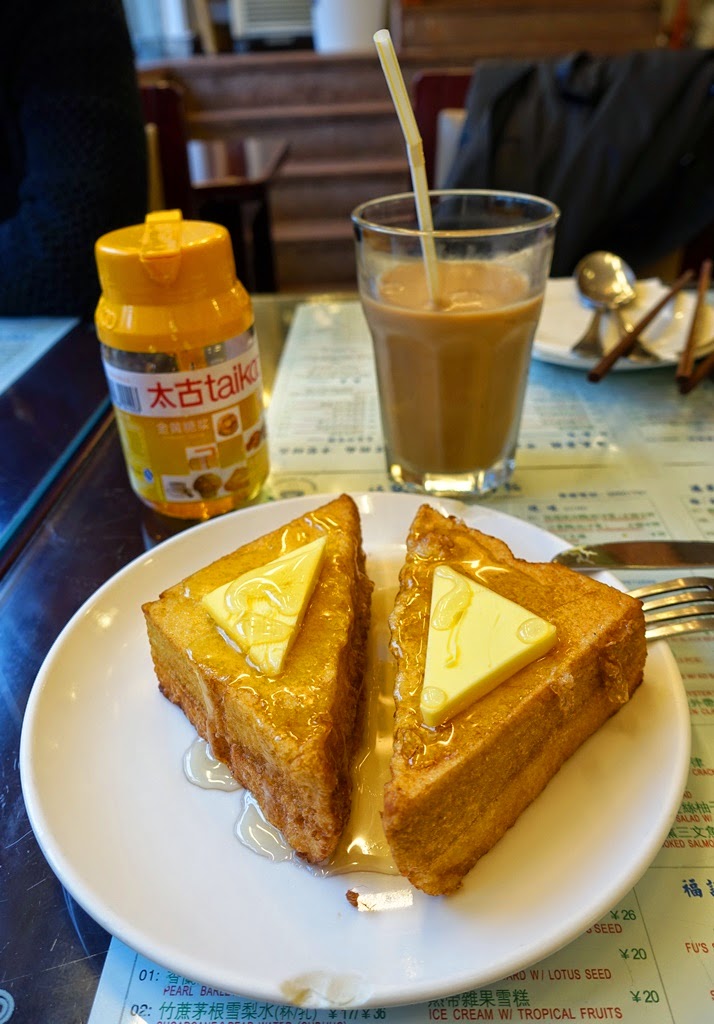
Taking a break of French toast and milk tea at a Hong Kong-style cafe on Shaanxi South Road, complimenting the lunch we had earlier at a Hong Kong-style restaurant across the street from the subway station. Our feet may have been in Shanghai, but our stomachs this afternoon were someplace else:

The Héngshān Moller Villa 衡山马勒别墅饭店 is yet another former residence that has been converted into an upscale hotel, with grounds open to members of the public to come in and have a look around. The house belonged to Eric Moller, a Swedish businessman, until it was taken over in 1949 by the Communist Youth League. The story goes that the residence was designed by Moller's 12-year-old daughter, which might explain its fairy-tale appearance. In any event, my daughter got a kick out of it:


On the way back to the subway station, we stopped off at Garden Books, one of Shanghai's best foreign-language bookshops and a great source for publications on China in general, and on Shanghai in particular. Pamela ended up purchasing four books for children on various topics related to China, including emperors both good and bad, Chinese food and filial piety. The last one produced a classic whinge from my daughter, who uttered a complaint that only a bi-cultural kid could make: "But I don't want to learn about filial piety!":


The beautiful Russian Orthodox Mission Church. Since the establishment of the People's Republic in 1949, it's been used as a washing machine factory, a disco and a teahouse. It's now currently unused, which is a shame. I'd like to see it revert to its original function or become a museum. In any event, I'd just like to be able to go inside and have a look:


As I finish up writing this in the warmth and dryness of our home, it's time to relax with a Jaga Draft beer じゃがドラフト, one of several varieties of Abashiri Beer 網走ビール from Japan sitting in my fridge:




Friday, December 26, 2014

Boxing Day on the heights of Shanghai - return to Sheshan

Christmas this year has certainly been a time of mixed emotions. Yesterday's present openings went well, with our eight year-old satisfied with the gifts she received. However, we learned later in the morning of a death in the family, the news of which has struck particularly close to home for my wife. As a result, we canceled our planned overnight visit to Xītáng 西塘 for this weekend as no one is in the mood for traveling. 

Life goes on, however, and with the weather having warmed up a little and the skies staying relatively clear, we paid a return visit this afternoon to Shéshān 佘山, the highest "mountain" within the Shànghăi 上海 city limits, protruding from the surrounding countryside to a staggering height of 100 meters (328 feet)...an elevation dwarfed by the highrises in the city's Pŭdōng 浦东 district.

Amber in a typical Christmas scene:


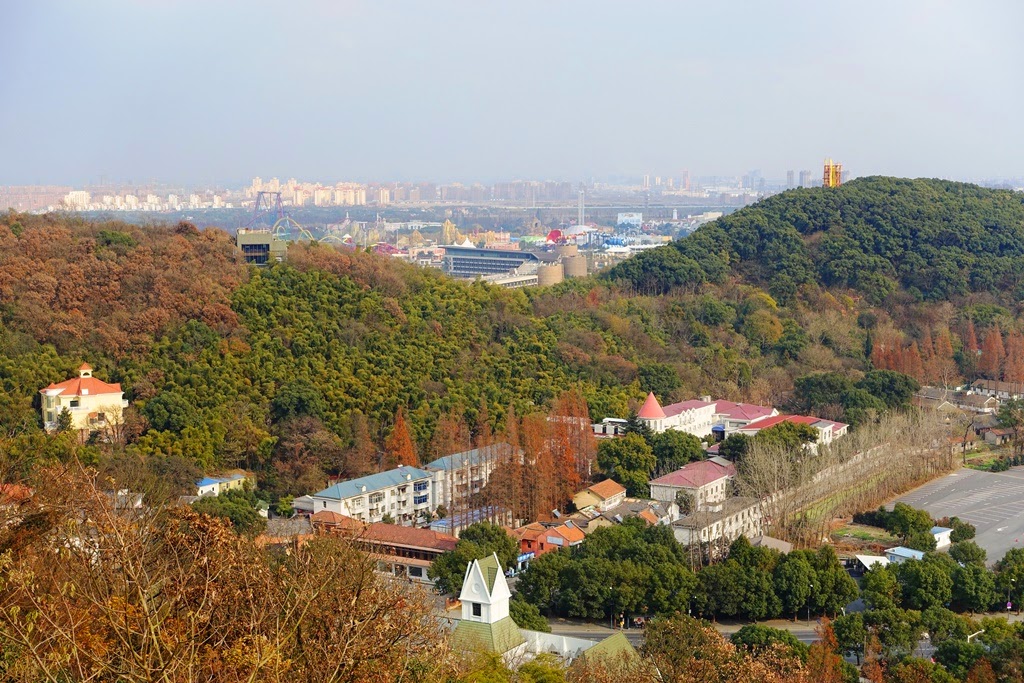
Compared with our first time on Sheshan, the air quality today was much improved, meaning we could actually make out shapes in the distance from the top of the hill...er, mountain:


The last time we were here, the Shanghai Astronomical Museum, housed in a former Jesuit observatory, was closed for renovations. Today, it was open again for business and my daughter and I went inside to have a look:


Of all the gifts she received yesterday, this dragon appears to be her favorite:


Amber takes a look at an armillary, a device used to measure the position of celestial bodies:


Amber was also impressed with the massive old telescope on display inside the old observatory:


On the roof of the observatory:


Next door is the Sheshan Basilica:


Back inside, where the small museum gives an overview of the history of Chinese astronomy, acknowledging the contributions of the Jesuits in this field. At the height of Chinese imperial power, the only things the West could offer that impressed the rulers of the Middle Kingdom were clocks and the knowledge gleaned from celestial observations (others found themselves hooked on opium, but that's another story):


One more look at the surrounding countryside before exiting the astronomical museum:


My daughter and I then popped in for another look at the basilica. Though hardly devout myself, I was still bemused by the reactions of the Chinese visitors who looked thoroughly confused at what the building represented and how they should behave while inside it. Amber, meanwhile, was relieved to see that, other than the usual crucifixion depictions, this church didn't contain any gruesome images of saints being tortured, unlike the cathedrals we visited on our recent trip to Belgium. On the way out, we followed in reverse order the Stations of the Cross as we made our downhill:


Though hardly a "hike" (despite what my wife may think), the trails on Sheshan do make for a nice change of pace from Shanghai's usual concrete and asphalt pathways:


From Catholicism to Buddhism as we passed by the Xiùdàozhě Pagoda 秀道者塔, standing 20 meters (66 feet) high, on our way back to the parking lot. It was reassuring the see the graffiti that had defaced the base of the ancient tower (supposedly dating from the 10th century, though it doesn't appear to be that old), and which had bothered me on our previous visit, has since been whitewashed (much like a lot of events in postwar Chinese history):


This hasn't been the most joyous of holidays, but considering what has happened, Pamela is coping well. The rest of this weekend will no doubt be spent quietly, and I may even go into the office over the weekend in an attempt to catch up on some of the work that has piled up in the last couple of weeks. Hopefully your holidays have been happier ones.


Saturday, December 20, 2014

Just another Shanghai Saturday...

With Christmas just five days away, this morning saw my daughter engage in intense negotiations with a representative from the North Pole. Amber assured Father Christmas that she had been, and will continue to be, "good", while Santa Claus pledged to seriously consider her request for a certain present. Both parties described the talks as "productive" and resolved to meet again a year from now to review progress, though some observers present at the negotiations expressed skepticism that the eight year-old girl would still believe in Old St. Nick in a year's time.


Lunch this afternoon was at the Captain Bar, located on the 6th floor of the Captain Hostel on Fúzhōu Lù 福州路, close to Shànghăi's 上海's iconic Bund 外滩. The food wasn't bad, though the prices were somewhat high (especially for mediocre beers like Tiger), but all sins were forgiven for the excellent view of Pŭdōng 浦东.


The Art Deco Hamilton House, formerly an apartment building, constructed in the 1920's. Its twin across the street, the Metropole Hotel, was covered up in scaffolding.


A passerby stops to check out the former American Club, built in 1924. Many of the historic buildings in Shanghai have plaques out front listing the original occupant, the year it was erected and the architectural style of its design and construction.


Amber poses in front of the Foreign Language Bookstore. Not one of the most imaginatively named business establishments in the city, but it is one of the best sources for English-language reading material, especially for books on China.

 
Fuzhou Lu, a street full of shops selling art supplies, books and stationery. And attracting a lot of people in the process.


Raffles Mall 莱福士广场 , one of Shanghai's busiest (in a city bursting at the seams with shopping centers). Despite the Christmas music playing in the background and the attempts at seasonal decorations, the festive Noel air was lacking. My daughter said it was because the tree was red, not green.


Shanghai No. 1 Department Store, another edifice whose planners didn't spend much time on naming. Once the city's most upscale shopping outlet, it still attracts Chinese visitors from out of town. My wife sneered that the fashion on offer was dated. Pamela, by the way, grew up in rural Taiwan.


Close to the department store on Nánjīng Dōng Lù 南京东路 is Taikang Foods, the place to go if you're in the market for flattened pig heads. My wife settled instead for something labeled as "Streaky Bacon" (which, I've since been informed, is actually what normal bacon is called. Forgive my ignorance).


Shanghai First Food Store is another fine purveyor of flattened pig heads. The second floor specializes in traditional food and snacks, including that most Chinese of dining establishments, Màidāngláo.


The site of the former Wing On, opened in 1918 and once considered one of the "big four" department stores in Shanghai. Walking through the first floor today, it's hard to conjure up the building's former glory.


Nanjing Dong Lu after the sun goes down and the neon comes on. Though certainly lively with all the pedestrian traffic, the shopping options are desultory for the most part, and the constant offers of crappy kids toys and knockoff watches and bags get tiring quickly (and had it not been for the presence of Amber and Pamela, I'm sure I would've been given ample opportunities for procuring the services of "girls" and/or "massages").


Gold shops proliferate along the pedestrianized street. As China's middle-class continues to grow, the demand among the nouveau riche 土豪 for tasteless jewelry to show off the new-found wealth of Wēnzhōu's 温州 prosperous factory owners shows no signs of abating.


While many of the items for sale in the shops along Nanjing Dong Lu were lacking in taste, the same couldn't be said of the food. You can't go too wrong in China in this regard.